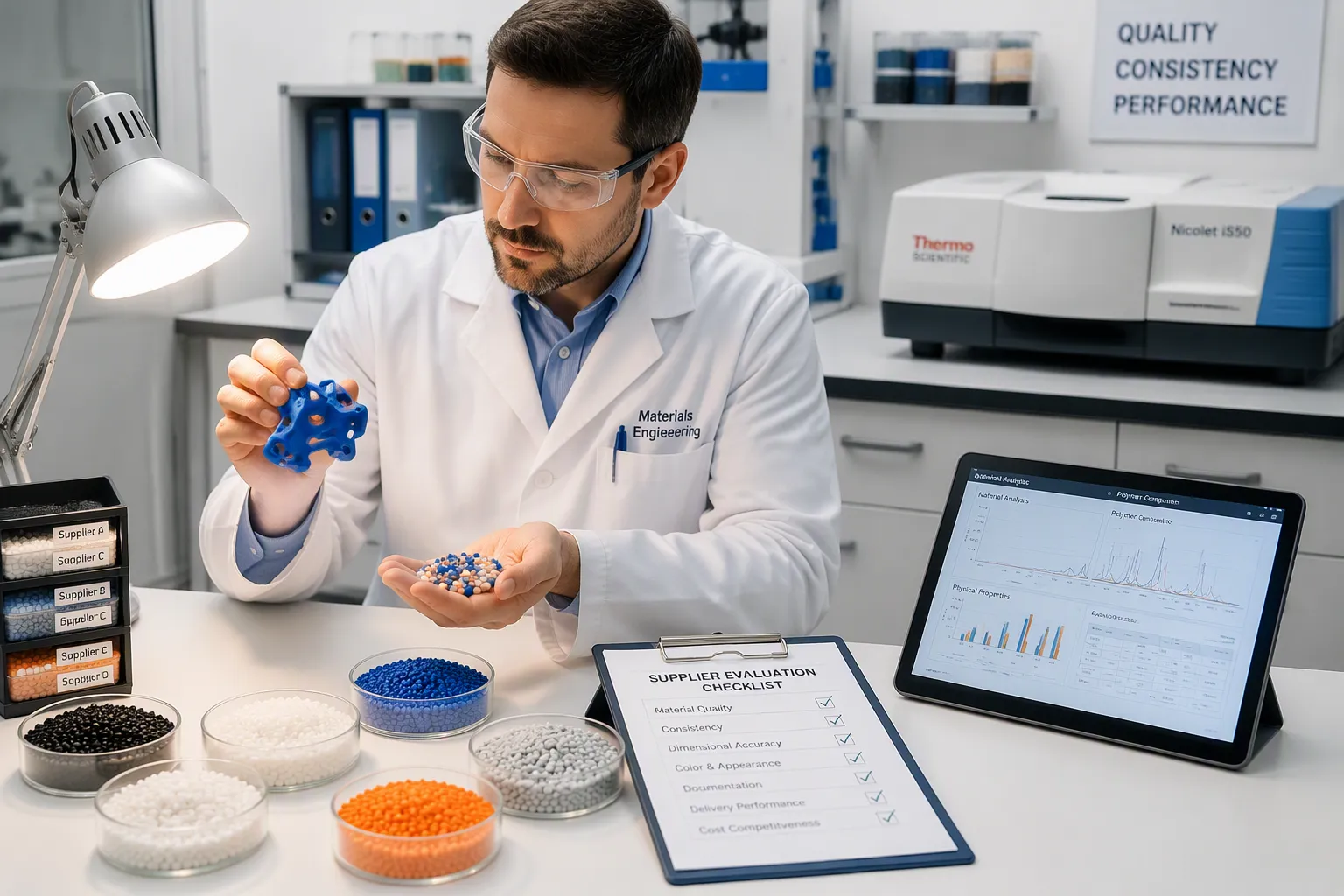

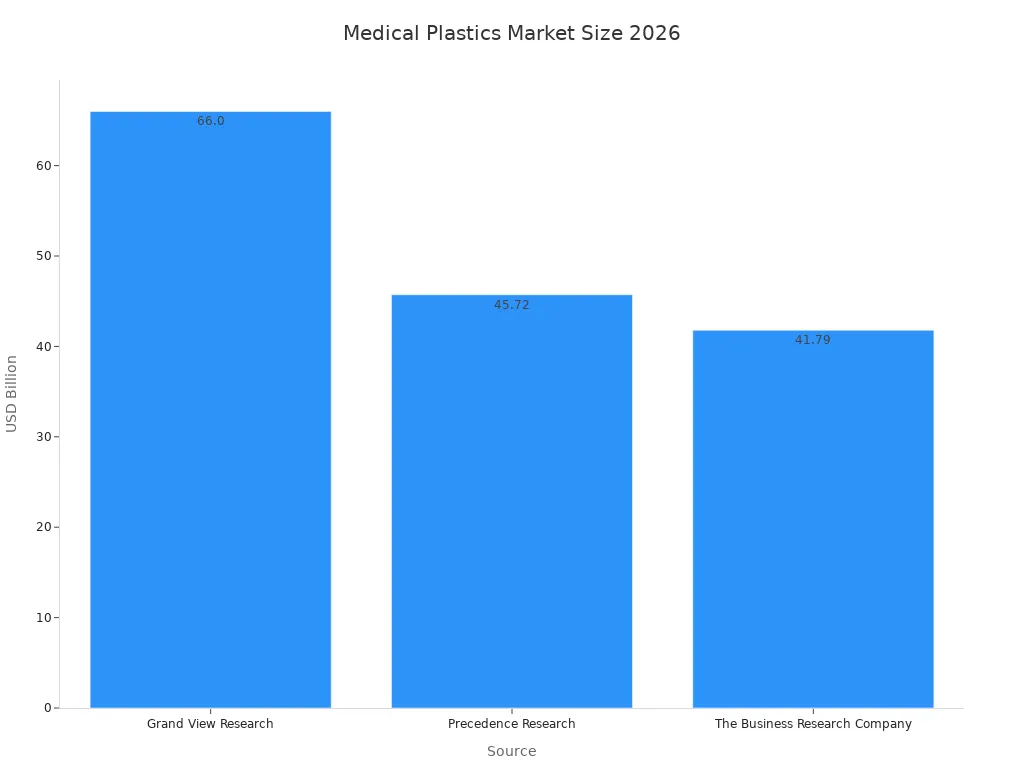
How do you pick a plastic material manufacturer for medical equipment in 2026? Begin with three must-haves: regulatory compliance, material certification, and supply chain resilience. The medical plastics market will hit USD 66.0 billion in 2026, says Grand View Research. Demand for advanced polymers keeps going up.
You need a clear plan to judge suppliers. This guide gives you checklists for every step. You will check certifications, test material performance, inspect manufacturing capabilities, stress-test supply chains, and weigh total cost against partnership value. Each step helps you tell reliable plastic material manufacturers from risky ones. Use these tools to make a confident choice.
Key Takeaways
Look for ISO 13485 and FDA certifications to make sure the company follows the law and meets quality standards.
Check the materials for biocompatibility and sterilization compatibility to meet safety standards.
Check the maker's cleanroom class and automation to keep production steady.
Get ready for supply chain problems by using two suppliers and keeping extra stock on hand.
Think about the full cost of owning the equipment and the value of the partnership, not just the price.
Regulatory and Quality Standards
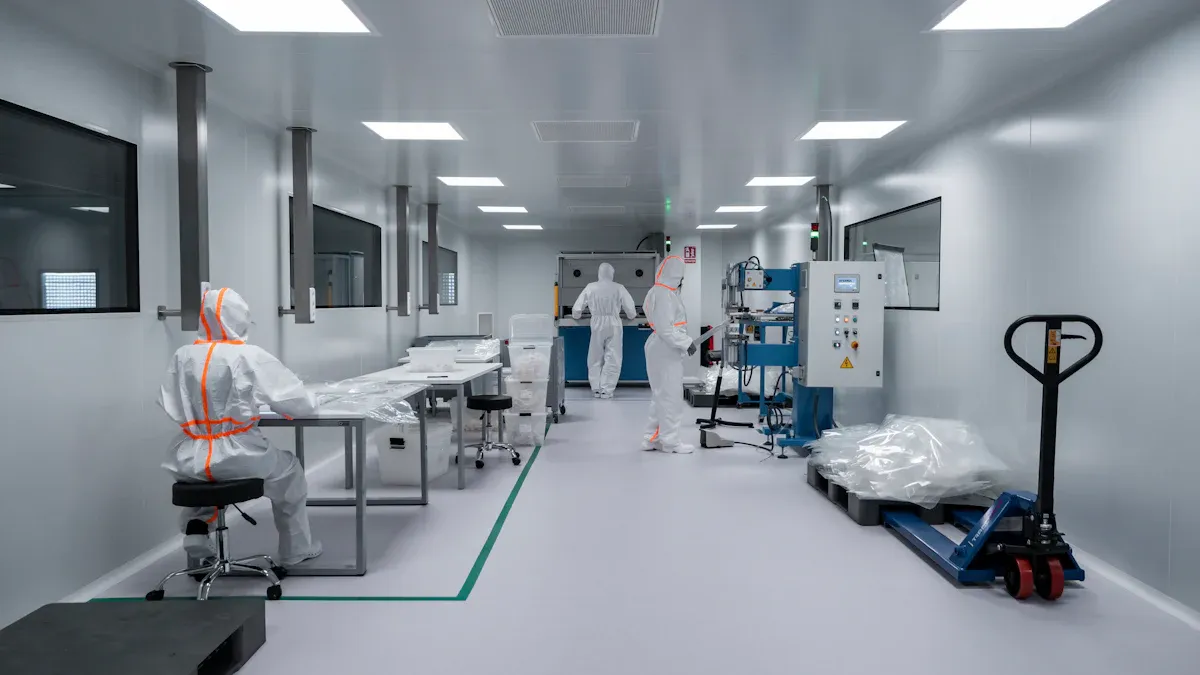
Regulatory compliance works as your first filter. A supplier without the right certifications cannot legally help your medical device program. You waste time and money on a partnership that fails at the audit stage. Start every evaluation here.
ISO 13485 and FDA Compliance
ISO 13485 sets the global benchmark for medical device quality management. The standard covers eight major areas. You should check that your plastic material manufacturer holds a current certificate and understands each clause.
Scope and normative references
Terms and definitions
Quality management system requirements
Management responsibility
Resource management
Product realization
Measurement, analysis, and improvement
Documentation and record control
A certified molder keeps track of raw materials and finished products from start to end. The system includes risk management and validation processes. Regular audits confirm ongoing compliance. Ask for the approved supplier list, supplier corrective action requests, and process validation records. These documents prove the supplier controls its own vendors.
FDA compliance adds another layer. A plastics machining facility that makes medical devices must register with the FDA. Registration proves that the facility has the right equipment and skilled workers. It also involves a yearly audit and a yearly registration fee. Most registered facilities must list the devices they make. If a device needs premarket approval or notification, the owner must give the FDA submission number, such as 510(k) or PMA. Using an unregistered material is dangerous. It has not been listed, cleared, tested, or approved by the FDA.
FDA-compliant plastics must meet strict safety standards for materials that touch medical products directly. They must be non-toxic, resist bacterial contamination, and stay chemically stable. They must not react with medicines. Quality and safety must hold throughout the material's service life.
EU MDR and Global Certifications
The European Union Medical Device Regulation (EU MDR) controls market access in Europe. Your supplier must align with EU MDR, FDA Quality System Regulation, and UKCA requirements in addition to ISO 13485. Multi-jurisdictional compliance separates serious manufacturers from casual ones.
Use this checklist when you audit a potential partner.
Certification | What It Proves |
|---|---|
ISO 13485 | Medical device QMS with risk management and traceability |
FDA registration | Facility meets U.S. manufacturing mandates |
EU MDR | Compliance with European medical device rules |
ISO 9001 | General quality management foundation |
UKCA | Access to the UK market |
Niche experience changes which pathways apply. In vitro diagnostic (IVD) devices follow different regulatory routes than implantables. Implantable devices demand stricter biocompatibility testing and long-term aging data. A supplier with IVD experience may lack the documentation depth for implantable work. Match the supplier's regulatory history to your specific device category. Ask for prior submissions in your niche before you commit.
Material Selection and Testing
You must match the resin to your device's lifecycle, environmental exposure, and functionality. A material that works for a disposable syringe will fail in an implantable pump. Start by mapping how long the device touches the body, what chemicals it meets, and what mechanical loads it carries. Then verify the supplier's portfolio covers your needs. A broad portfolio signals a manufacturer that can tailor polymer solutions rather than push a single resin.
Biocompatibility and USP Class VI
Biocompatibility testing follows ISO 10993. The FDA evaluates the whole device in its final sterilized form, not individual materials. You need a Biological Evaluation Plan, testing, and a Biological Evaluation Report. Three tests are commonly required for every device: cytotoxicity (ISO 10993-5), sensitization (ISO 10993-10), and irritation (ISO 10993-23). Additional tests depend on contact type and duration.
ISO Standard | Testing Scope |
|---|---|
ISO 10993-5 | Cytotoxicity |
ISO 10993-10 | Sensitization |
ISO 10993-23 | Irritation |
ISO 10993-18 | Chemical characterization |
ISO 10993-17 | Toxicological risk assessment |
USP Class VI is the strictest plastics classification. It requires three in vivo tests: the Systemic Injection Test, the Intracutaneous Test, and the Implantation Test. These tests use polar and nonpolar extracts to detect systemic toxicity or local irritation.
USP Class VI compliance is often a requirement for regulatory approval. Materials that do not meet it may not be approved, which can delay the process and increase costs.
Sterilization and Chemical Resistance
Sterilization method affects material choice. Ethylene oxide (EtO) is a low-temperature gas process compatible with PVC, polycarbonate, polyethylene, and ABS. Plastics can absorb EtO, so aeration is needed to dissipate residuals. Gamma radiation can make plastics brittle. Steam autoclave can melt heat-sensitive resins. Ask your supplier for sterilization compatibility data before you commit.
Chemical resistance matters for devices exposed to disinfectants. Polycarbonate is susceptible to cleaning chemicals. PC/ABS blends add impact protection and some chemical resistance. Polypropylene offers high chemical resistance and withstands stress cracking. Infusion pumps need plastics resistant to environmental stress cracking due to rigorous sanitization. Request test evidence for ESC, strength, and chemical resistance.
Evaluating a Plastic Material Manufacturer's Capabilities
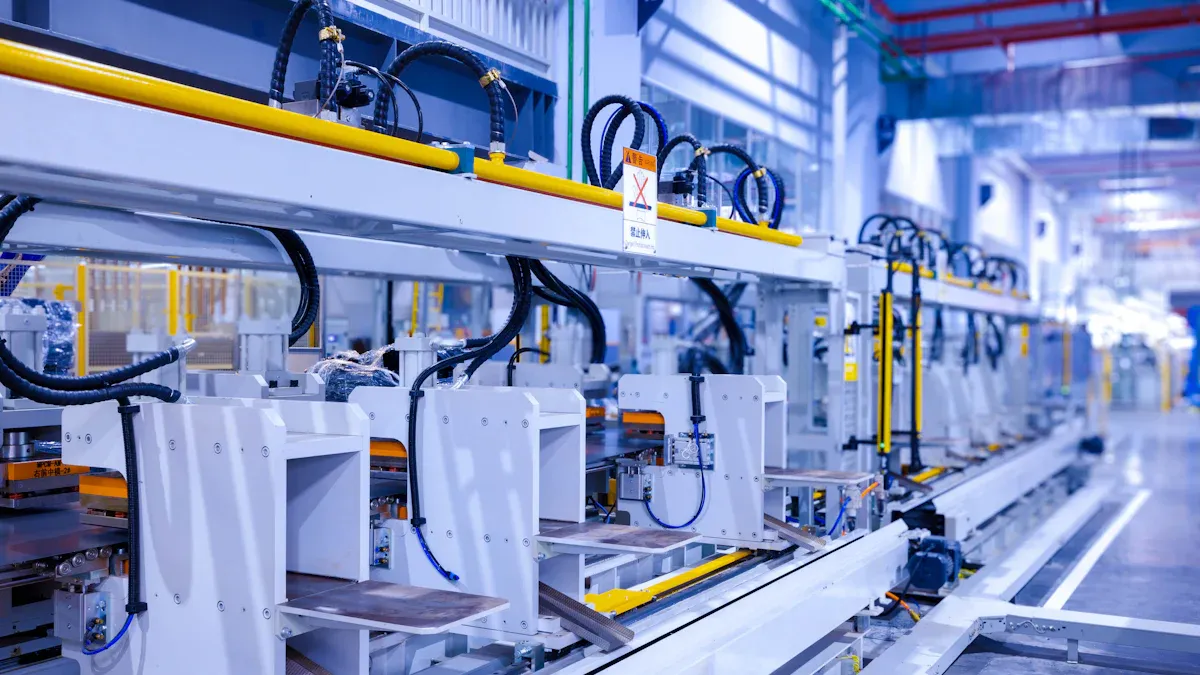
You have checked certifications and material performance. Now you must look at the factory floor. A supplier's equipment, environment, and processes decide whether your device meets specifications at scale. This step separates capable partners from those that only look good on paper.
Injection Molding and Cleanroom Operations
Start with molding precision. Ask how the manufacturer defines part requirements before picking a material. Function, interfaces, dimensional tolerances, and assembly needs should guide resin choice, not a generic "medical-grade" label. A resin that works for one component may fail in another. Review their approach to design and manufacturability. Tight tolerances and complex geometry need early engineering reviews. Tooling, injection molding, and assembly should work as connected stages, not isolated services.
Cleanroom class matters for contamination control. Match the class to your device category.
Cleanroom Class | Particle Limit | Example Devices |
|---|---|---|
ISO 7 | No more than 10,000 particles per square foot | Stents, implants, catheters, infusion pump systems |
ISO 8 | No more than 100,000 particles per square foot | Syringes, surgical equipment, medical housings |
ISO Class 8 cleanrooms follow ISO 14644-1 and allow a maximum of 3,520,000 particles per cubic meter at 0.5 microns. HEPA filtration gives 99.97% efficiency at 0.3 microns. Positive pressure stops contamination from getting in. Ongoing monitoring under ISO 14644-2 includes airborne particle sampling, surface sampling, and pressure differential checks. Personnel must wear low-linting coveralls, hair covers, face masks, and gloves.
Automation and Process Validation
Automation level affects consistency and cost. Ask about closed-loop process controls, automated inspection, and real-time monitoring. Higher automation cuts human error and improves repeatability.
Process validation follows a strict sequence. You cannot skip steps.
Stage | Purpose | Key Activities |
|---|---|---|
Installation Qualification (IQ) | Confirms equipment is installed per manufacturer requirements | Checking connections, power supply, calibration dates, and environmental conditions |
Operational Qualification (OQ) | Confirms equipment operates correctly and establishes limits | Testing temperature controls, motor RPM, timers, alarms, and worst-case conditions |
Performance Qualification (PQ) | Demonstrates consistent acceptable results under real production conditions | Running the process with trained operators, approved materials, and intended utilities |
Each phase needs an approved protocol that defines test objectives, data collection, and acceptance criteria. Calibration must be confirmed before testing starts. The phases must happen in order: IQ, then OQ, then PQ. Per 21 CFR 820.75, you should perform IQ/OQ/PQ where results cannot be fully verified by later inspection, such as injection molding and sterile package sealing.
Quality control documentation must cover design controls, document controls, purchasing controls, traceability, production controls, and labeling. Under 21 CFR Part 820, manufacturers must keep records at every production stage. Any change to a validated process requires re-validation. A reliable plastic material manufacturer documents inspection results, parameter settings, and deviations with reasons. Production may only begin after all validation procedures are completed and approved.
Supply Chain and Risk Management
Lead Times and Inventory Strategies
You need to check lead times before signing any contract. Ask your supplier about current production lead times, raw material lead times, and shipping transit times. In 2026, where a supplier is located adds more risk. A supplier with only one factory in a place prone to natural disasters or political trouble carries higher risk. You should map every level of their supply chain and find single points of failure.
Safety stock protects you from demand spikes and supply interruptions. Keep extra amounts of your most important supplies to handle delays or disruptions. Any device that ran short in a similar situation should be kept at a higher level to stop it from happening again. Watch conditions around your supplier — weather, man-made disasters, business decisions, and government factors — to predict possible problems. Tell key logistics partners so everyone stays on the same page and ready to handle issues.
Contingency Planning and Dual Sourcing
One backup plan is not enough. Supply chain expert Lisa Anderson suggests building several workable options across suppliers, production facilities, transportation modes, routes, and logistics partners. A backup supplier that cannot make more products is not a real backup plan. You must build capacity and skills before you need them.
Dual sourcing gives you both leverage and protection. Follow these practices:
Keep relationships with multiple suppliers to reduce risks like natural disasters or financial problems.
Aim for an 80/20 split between primary and secondary suppliers to keep leverage while building strong partnerships.
Add multiple suppliers to your Approved Supplier List (ASL) early, because qualifying a new supplier can take months.
Conduct supplier audits to keep visibility into their processes and results.
Scenario planning helps you figure out ahead of time how different disruptions could affect customers, production, inventory, and profits. This approach lets leadership evaluate options and set priorities before a crisis hits. Resilience comes from your ability to anticipate, adapt, and respond as conditions change.
Cost and Partnership Evaluation
Total Cost of Ownership
Price per kilogram tells you very little about the real cost of a plastic material manufacturer. Total cost of ownership includes material cost, tooling design and tool steel selection, mold maintenance across its lifecycle, engineering support, part design strategy, production volume matching, project management, metrology equipment, skilled personnel, and relevant ISO certifications. A low quote often hides weaknesses in these areas.
You should compare quotes against the full scope of services each supplier provides. A partner with strong engineering support may charge more per part. That partner can still save you money by catching design flaws before tooling begins. Ask each supplier to break down costs for tooling, validation, regulatory documentation, logistics, and risk mitigation. This breakdown lets you compare apples to apples.
Communication and Long-Term Collaboration
Trust separates a standard supplier relationship from a strategic partnership. When trust exists, you bring manufacturers into conversations earlier. You share historical performance data, previous challenges, and long-term goals. This openness lets manufacturers offer more informed recommendations and identify improvements that might otherwise go unnoticed. Your team can proactively anticipate problems, evaluate alternatives, and set realistic expectations from the outset. Transparency also strengthens accountability through honest communication and shared ownership of outcomes.
Evaluate these areas before you commit.
Evaluation Area | What to Assess |
|---|---|
Communication | Responsiveness, production visibility, collaborative problem solving, practical engineering feedback |
Engineering Support | Early collaboration on material selection, part geometry, production flow, assembly integration, cost efficiency |
Scalability | Ability to support changing volumes and expanded production requirements over time |
Supply Chain Reliability | Internal multi-process support, scheduling visibility, lead time management, operational efficiency |
A strong partner demonstrates this partnership model through its R&D commitment and cross-industry solutions. The company develops materials for automotive, agricultural, electronics, and smart home applications. That breadth builds problem-solving experience you can apply to medical device challenges.
You now have a five-part plan: rules, material testing, factory skills, supply chain strength, and cost/partner fit. In 2026, doing your homework means checking ISO 13485 and FDA records, reviewing cleanroom work, and testing your supply chain for single-source risks. Use the checklists in this guide to judge every plastic material manufacturer. Ask for FDA Form 483 observations and warning letters before you sign a letter of intent. Pick long-term trust over short-term savings. A partner with strong regulatory support and open communication keeps your device program safer than a low price ever could.
FAQ
What certifications should a medical plastic manufacturer hold?
ISO 13485 is your starting point. Add FDA registration for the U.S. market and EU MDR for Europe. ISO 9001 backs up the general quality system. UKCA covers the UK market. Match the supplier's legal history to your device type, because IVD and implantable paths are not the same.
How do I verify biocompatibility before committing?
Ask for ISO 10993 test data, such as cytotoxicity, sensitization, and irritation results. Confirm USP Class VI compliance if your device needs it. The FDA checks the final sterilized device, so request a Biological Evaluation Plan and Report. Also review chemical characterization and toxicological risk assessment records.
Which sterilization methods should I confirm with my supplier?
Ask for compatibility data on ethylene oxide, gamma radiation, and steam autoclave. EtO works with PVC, polycarbonate, polyethylene, and ABS, but aeration removes leftovers. Gamma radiation can make some resins brittle. Steam autoclave can melt heat-sensitive plastics. Get written proof before you lock in your resin choice.
What cleanroom class does my device need?
Match the class to your device type. ISO 7 works for stents, implants, catheters, and infusion pump systems. ISO 8 fits syringes, surgical equipment, and medical housings. Make sure the supplier tracks particles under ISO 14644-2 and enforces gowning rules for workers.
How do I protect against supply chain disruptions?
Build several workable options across suppliers, facilities, and transport routes. Aim for an 80/20 split between primary and secondary suppliers. Add backups to your Approved Supplier List early, since qualification takes months. Run scenario planning before a crisis hits, not after.