
Finding a reliable modified plastics manufacturer in China can feel like looking for a needle in a haystack—especially when your whole product line depends on their quality. You need a partner who truly understands OEM requirements, not just a factory with extrusion machines. What sets a real expert apart from a generalist? The answer comes down to five key pillars: technical depth, quality systems, production flexibility, communication, and cost transparency. This post gives you a practical checklist to guide your review, from first checks to long-term partnership. You will learn what questions to ask, what documents to request, and what warning signs to avoid when choosing your Manufacturer in China.
Key Takeaways
Pick a maker with strong research and testing labs. They should give you custom mixes and use computer models to test ideas.
Look for IATF 16949 certification. It shows the factory uses data to control quality, not just words.
Make sure the factory can handle the amount you need. Flexible minimum order sizes let you start small and scale up to full production.
Clear communication and detailed quotes help prevent expensive mistakes. Always get written confirmations and itemized costs.
Treat the choice like a team effort. Look for lasting worth, not just the cheapest cost.
Assessing Technical Expertise of a Manufacturer in China
A true expert in modified plastics does more than just follow a standard recipe. They create new formulas from the ground up. When you check out a possible Manufacturer in China, you need to see their research and development team in action. Ask them about their patents. Request case studies of custom compounds they have made. A generalist might hand you a list of ready-made materials. An expert will ask about your application's specific needs—heat exposure, impact loads, chemical resistance—and then suggest a custom solution.
Evaluating In-House Compounding and Formulation Skills
You want a partner with a proven history of new ideas. Look for proof of advanced material development. For example, Super Dragon's Polysikon paint-free plastics achieve a smooth, shiny surface without any painting step. This formula cuts production costs and lowers environmental impact at the same time. You will find this material in robot parts, smart home devices, and automotive components. Another example is the Polysesle electric-ready materials. These compounds offer custom electrical insulation for protective cases around sensitive electronics. Manufacturers use them in high-precision control boxes, switch cases, and robot parts.
Beyond these top products, a skilled formulator can create glass-reinforced grades for stiffness, heat-stabilized compounds for high-temperature settings, and impact-modified polymers for tough jobs. They also make flame-retardant materials that meet UL 94 V-0 standards at thicknesses from 0.8 to 1.6 millimeters. These custom formulas serve industries from agricultural tools to solar connectors. When you talk to a possible supplier, ask for specific examples of their custom work. Request data sheets and test results. A confident R&D team will share this information without hesitation.
Verifying Testing and Simulation Equipment
The best formula means nothing without proper checks. You need to make sure that your supplier owns the right testing equipment. A leading manufacturer should have an electronic universal testing machine for tensile strength checks. These machines usually follow ISO 527 or ASTM D638 standards. Impact testing machines, such as the JB series for Charpy or Izod tests, measure toughness under sudden force. Some facilities even offer ultralow-temperature impact testing down to -196°C, following ISO 148-1 or ASTM E23 standards.
Equipment Category | Specific Models / Capacity | Relevant Standards |
|---|---|---|
Electronic Universal Testing Machine | WDW series, 1 kN to 600 kN | ISO 527, ASTM D638 |
Impact Testing Machine | JB series (Charpy/Izod); WTI-W series (ultralow-temp to -196°C) | ISO 148-1, ASTM E23, GB/T 229 |
Polymer & Rubber Testing | Melt Flow Index Tester, rubber tensile fixtures | Not specified |
The manufacturer's product range explicitly includes plastic testing equipment and wood plastic testing machines under its material testing machines category. This confirms the availability of equipment directly relevant to a modified plastics manufacturer.
Simulation software matters just as much as physical testing. Mold Flow Analysis lets engineers predict how molten plastic will fill a mold before anyone cuts steel. One large customer with a highly visible new product worried about part strength. The OEM ran multiple Mold Flow Analyses to move the location of weld lines, which are known weak points. These analyses shifted the weld lines off both visual surfaces and structural areas. This prevented a costly rework of a mold valued at over $200,000, saving significant time and money.
Mold Flow Analysis also improves product design by simulating the forming process. It predicts defects like short shots, weld lines, flow marks, and air traps before production begins. This lowers defective rates and shortens cycle time. The software saves material and provides estimated injection settings for temperature, pressure, and clamping force. When you tour a facility, ask to see their simulation tools. A manufacturer who invests in this technology shows a commitment to quality and efficiency.
Verifying Quality Control and Certifications
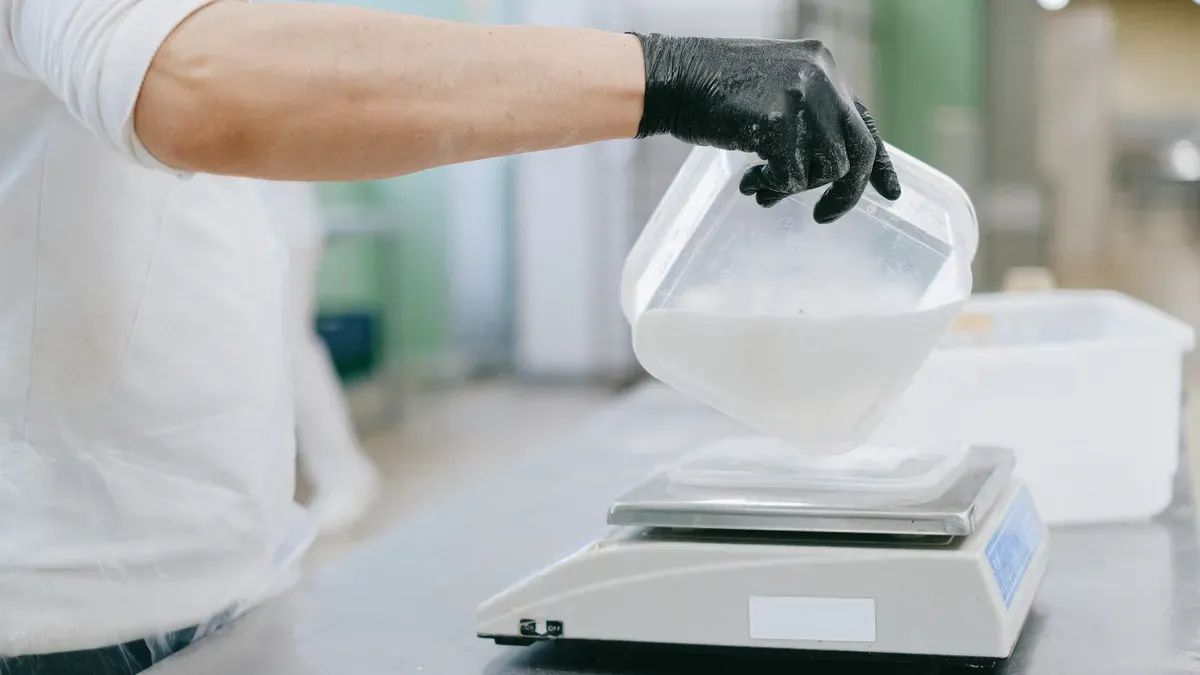
Quality certifications show how seriously a factory manages its processes. You cannot judge quality just by looking at finished pellets. You need written proof that the manufacturer checks every step. When you review a possible Manufacturer in China, first ask for their quality certificates. Then request inspection records from recent production runs. A confident supplier will share these documents without delay.
IATF 16949 vs. ISO 9001 Standards
Many plastics factories hold ISO 9001 certification. This standard gives any business a strong base. It requires risk-based thinking, clear process paperwork, and leadership responsibility. However, ISO 9001 only asks you to manage your manufacturing process. It does not require proof of that management.
IATF 16949 goes much further. This automotive-grade standard builds on ISO 9001 but adds strict rules. You must use Advanced Product Quality Planning (APQP), Production Part Approval Process (PPAP), Failure Mode and Effects Analysis (FMEA), and Statistical Process Control (SPC). You also need formal supplier development programs. The real difference matters a lot for your project.
Aspect | ISO 9001 | IATF 16949 |
|---|---|---|
Scope | Foundational QMS for all industries | Automotive-specific, layered on ISO 9001 |
Core Requirements | Risk-based thinking, process documentation, leadership accountability, continual improvement | Adds APQP, PPAP, FMEA, SPC, formalized supplier development |
Practical Implication | Requires you to control your manufacturing process | Requires you to prove process control with auditable evidence |
A factory with IATF 16949 must show you their control charts and corrective action reports. They cannot just say they have good processes. They must prove them with data. This level of openness protects your product quality from day one.
Implementing Incoming and Outgoing Inspection Protocols
A reliable manufacturer follows a clear inspection sequence. You should ask about each stage during your vetting process. The best suppliers will walk you through their full protocol without hesitation.
Incoming material inspection — Raw resin and additives get tested before entering the production floor. This stops contaminated or off-spec materials from ruining a batch.
In-process checks — Operators watch critical parameters during compounding. Temperature, pressure, and cycle time all affect the final product.
First article inspection (FAI) — When a new mold or formula starts production, the first pieces get a full dimensional and material check.
Statistical process control (SPC) — Control charts plot key parameters over time. This visual method shows process drift before defects happen.
Final inspection — Finished pellets undergo testing for tensile strength, impact resistance, and other specified properties before shipment.
SPC deserves extra attention. Control charts track temperature, pressure, and cycle time across production runs. When a parameter falls outside control limits, the system triggers immediate corrective action. For example, injection pressure changes can cause short shots or flash. Real-time monitoring catches these issues right away. Industry 4.0 integration adds automated sensors that send alerts and detailed analytics directly to quality engineers. This continuous improvement cycle cuts waste and boosts consistency.
You can check these claims through a remote audit or factory video tour. Ask to see their inspection stations and control charts in action. Request examples of past problem-solving. A manufacturer who can show you how they fixed a quality issue proves real capability. This practical evidence matters more than any marketing brochure.
Evaluating Production Capacity and Customization Flexibility
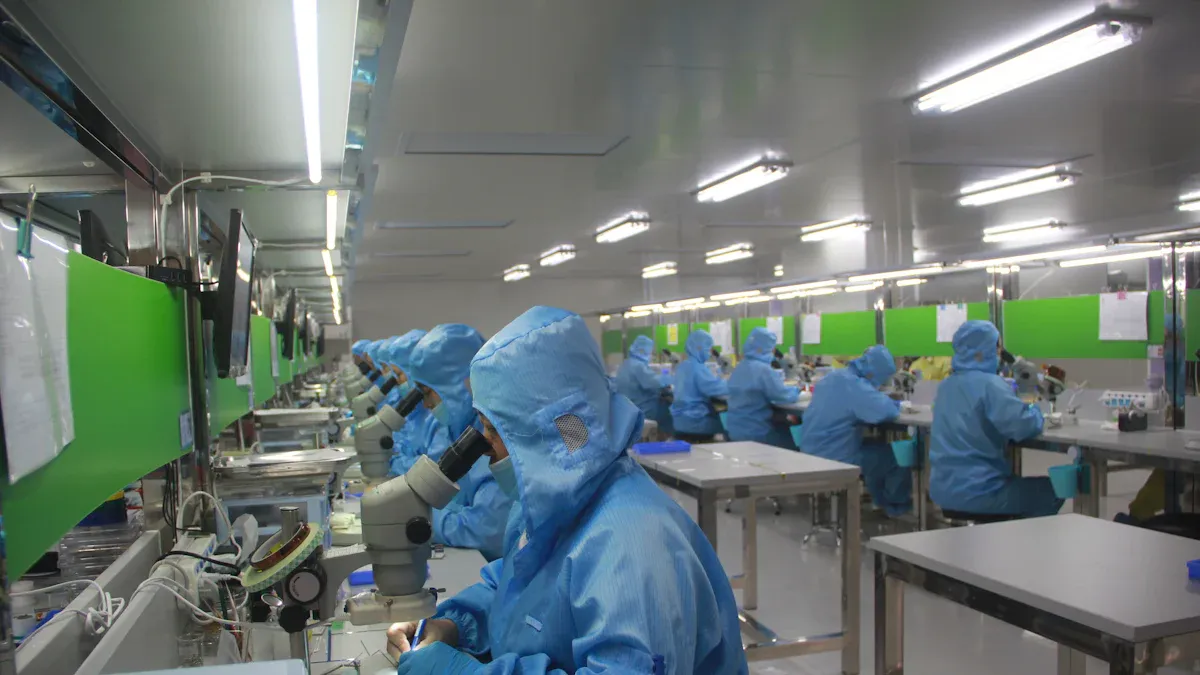
Your project needs a manufacturer who can meet your volume needs without lowering quality. Some suppliers do well with small batches. Others are great at huge production runs. You need to find the right match for your current growth stage.
Matching Production Volume to Your Project Needs
Minimum order quantities differ a lot across the industry. You should ask about MOQ early in your talks. A supplier who needs huge volumes might slow down your pilot phase. A supplier with flexible MOQs can help you from testing all the way to full launch.
Our standard MOQ usually starts from 1,000 pcs per item and color, depending on product structure and material.
Our minimum order quantity is 100 pieces, making us ideal for both small batch production and large-scale manufacturing.
These two examples show the range you might see. Some manufacturers support small startups. Others focus on well-known brands with steady demand. Your choice depends on your current needs and your growth plans.
Scaling from prototype to mass production takes careful planning. A reliable Manufacturer in China follows a step-by-step approach:
Use Design for Manufacturing (DFM) principles early to avoid costly redesigns once tooling starts.
Switch to production-grade materials before finalizing designs, since prototype materials rarely scale well.
Bring manufacturing partners in early through joint design reviews to match design with real capabilities.
Run pilot production to test workflows, find bottlenecks, and lower risk before full launch.
Build quality control and compliance planning into the process from the start.
Move to volume production only when yield is steady, assembly is repeatable, suppliers are reliable, and QC systems work.
These steps stop the quality drops that often happen when moving from a prototype to full production.
Navigating OEM vs. ODM Service Models
You need to know the difference between OEM and ODM services. OEM means you give the design and specs. The manufacturer makes exactly what you ask for. ODM means the manufacturer offers their own designs and you adjust them. Both models have benefits depending on your situation.
Turnkey services add another layer of ease. A full-service manufacturer handles tooling, molding, and assembly in one place. This approach lowers your coordination work. You work with one partner instead of juggling many vendors. Mold quality matters a lot here. Modern machinery and precise tooling directly affect your part quality and consistency.
Protecting your intellectual property requires a Non-Disclosure Agreement (NDA). You should ask for an NDA before sharing detailed drawings or formulas. A trustworthy manufacturer will sign without delay. This legal protection keeps your proprietary designs safe throughout the partnership. When you check a possible Manufacturer in China, ask about their NDA process and their experience with OEM projects. Their answers show how seriously they treat your intellectual property.
Ensuring Transparent Communication and Cost Structures
Clear communication is key to a good OEM partnership. You need a Manufacturer in China who speaks English well, especially during technical talks. Details about tolerances, material properties, or testing standards need exact words. A small mistake can cause costly errors in production. In your first talk, ask about their engineers' language skills. Ask for a video call with their technical staff, not just sales. This simple step shows how well they can communicate.
Overcoming Language and Time Zone Barriers
Time zone differences can slow down cross-border projects. You can handle these gaps with the right tools and expectations. Email is the main way to send formal requirements and key decisions. Expect replies within 12 to 24 hours. For daily updates, use WeChat or WhatsApp for instant messages. These tools let you ask quick questions and get fast answers. Schedule video calls on Zoom or Teams for technical reviews and project meetings. These sessions help you connect and build trust.
For cross-border OEM projects, a professional sourcing agent acts as your local team. They make sure all communication is recorded and updates come on time. The process includes step-by-step sample approvals and written confirmations. These serve as the acceptance standard for mass production. This method prevents arguments and tracks every stage with formal records.
Follow a simple rule: write down every key decision. Verbal agreements can cause confusion. Written records protect both sides. If you get no reply within 48 to 72 hours, send one follow-up message. Then try a different contact method if needed. This step-by-step approach keeps your project moving without frustration.
Deciphering Pricing Models and Hidden Costs
Cost transparency helps you spot trustworthy suppliers. Ask for a detailed cost breakdown before signing any agreement. A proper quote includes raw materials, processing, tooling, and logistics. Each part should show clear numbers you can check.
Cost Category | China Cost (USD) | Notes |
|---|---|---|
Tooling (8-cavity steel mold) | $48,000 | 61.6% savings vs. US |
Material (per unit, ABS resin) | $2.65 | Includes freight and duty |
Processing (per unit) | $1.15 | Machine time + energy |
Logistics (per unit) | $1.35 | Higher than US due to shipping |
Total per unit | $7.99 | 52.4% savings vs. US |
First-year total cost | $1,997,500 | For 250,000 units |
Another example shows a different cost structure. Tooling costs $58,000. Material costs $6.35 per unit. Processing adds $2.25 per unit. Quality control adds $3.15 per unit. Regulatory compliance adds $3.95 per unit. The total unit cost reaches $15.70. These numbers show why you need itemized quotes. Compare each category against market averages.
Be careful with quotes that are much lower than average. Low prices often mean poor materials or skipped quality checks. A cheap quote today can become expensive rework tomorrow. Ask suppliers to explain their pricing logic. A confident manufacturer will walk you through every line item. This openness builds trust and prevents bad surprises later.
Your search for a reliable modified plastics partner comes down to five pillars: technical expertise, quality systems, production flexibility, clear communication, and transparent cost structures. Each pillar directly affects your project's success. The cheapest quote rarely saves money when quality failures and downtime interrupt your production schedule. Treat this selection process as a partnership, not a transaction. Conduct thorough due diligence with virtual factory audits and reference checks from past clients.
Create a detailed Request for Quotation based on the criteria discussed in this post, and start your search with confidence.
Leading manufacturers like Super Dragon also commit to sustainability—carbon peaking by 2030 and carbon neutrality by 2050—which can differentiate your brand with forward-thinking buyers.
FAQ
How long does a typical OEM project take from start to delivery?
Timelines vary with complexity. A simple material adjustment might take 4–6 weeks. A custom formulation with new tooling can span 3–6 months. Ask your supplier for a detailed project timeline during your first discussion. They should break down each phase from formulation to pilot run.
What information should I include in my Request for Quotation?
Your RFQ needs clear specifications. List the application, required material properties, operating temperatures, and any regulatory standards. Include expected annual volume and target price. Add your quality expectations and testing requirements. A detailed RFQ helps the manufacturer give you an accurate quote the first time.
Can I visit the factory before placing a large order?
Yes, most reputable manufacturers welcome visits. If travel is difficult, request a live video tour. Ask to see their compounding lines, testing labs, and inspection stations. A virtual audit works well when you prepare specific questions in advance. This step verifies their claims before you commit.
How do I protect my proprietary formula or design?
Sign a Non-Disclosure Agreement before sharing sensitive details. A trustworthy manufacturer will sign without hesitation. Ask about their internal data security policies. Confirm they restrict access to your information to only essential staff. Written agreements protect both sides throughout the partnership.