
Picking the wrong insulation plastic can wreck equipment, cause safety dangers, or waste money. Based on U.S. Department of Energy data, insulation-related downtime and fires in industrial sectors cost the world economy over $1.4 billion USD every year. You prevent these results by matching material properties to what your application needs.
Voltage, temperature, mechanical stress, and environment guide every choice you make. Electrical Insulation Plastics must handle all four without failing. This guide gives you a step-by-step plan. You also get specific material comparisons. No history lessons here. You begin with the criteria that matter.
Key Takeaways
Learn how your equipment works. This includes its voltage, temperature, physical strain, and surroundings. These details shape every decision.
Compare the main traits of each plastic. Look at dielectric strength, arc resistance, moisture resistance, thermal stability, and mechanical strength. This comparison shows the trade-offs.
Match each plastic to its job. Think about the equipment's role and environment. This step boosts safety and reliability.
Test prototypes under real conditions. Lab results do not predict field performance. Real-world testing prevents failures.
Talk with material suppliers. They check your choice. They suggest other choices. This teamwork stops costly mistakes.
Key Criteria for Electrical Insulation Plastics
Voltage, Temperature, and Mechanical Load
Voltage needs decide how much dielectric strength you need. Dielectric strength and arc resistance are key to handle high voltage without breakdown. You must check these properties with strict testing. ASTM D149 covers dielectric breakdown voltage testing. ASTM D150 measures dielectric constant and dissipation factor. Partial discharge inception voltage measurements find where localized breakdown starts. Long-term aging tests under combined heat and electrical stress show how materials hold up over time.
Temperature changes dielectric properties a lot. Polymer chain movement rises with heat, which lowers breakdown voltage. You need materials that keep working at your operating temperature. PEEK keeps its properties up to 260°C. PPS melts at 280°C. PEI works up to 171°C. PTFE works from -190°C to +260°C. Automotive enclosures must handle -40°C to 125°C with over 1,000 thermal cycles.
Plastics that hold conductors usually need UL94-V0 flammability ratings. This is the strictest vertical burn rating. The material puts itself out within 10 seconds after each flame is applied. It makes no dripping particles and does not burn up to the specimen clamp. A UL 94 rating is only good at the tested thickness. A material rated V-0 at 1.5 mm may not keep that rating at 0.8 mm. You must check the rating on the UL Yellow Card at your exact minimum wall thickness.
Mechanical strength matters for keeping shape and impact strength. Your material must resist wear, impact, and load without bending. Processability also affects your choice. Think about wall thickness, gate location, and moisture absorption during molding.
Environmental and Chemical Exposure
Environmental and chemical exposure factors often decide how long a material lasts. Hygroscopic matrices like polyamides and polyesters make conductive pathways and lower resistivity when they soak up moisture. Interface integrity between matrix and fiber boundaries must avoid voids and differential thermal expansion that focus electric fields.
Chemical resistance changes a lot across materials. PEEK offers high chemical resistance. Polycarbonate resists many acids but breaks down with alkaline solutions. PPS resists acids, alkalis, and solvents with no known solvent dissolving it below 200°C. PTFE resists most substances. You should test your material using ASTM D543 for thermoplastics and thermosets. This standard covers immersion in dilute acids, alkalis, salts, solvents, fuels, and oils at 7, 30, and 180 days. ASTM D570 measures water absorption after 24 hours or equilibrium at 23°C.
Flame safety standards group plastics by flammability. UL 94 includes 5VA (highest, no burn-through after 5 flame applications), 5VB, V-0, V-1, V-2, and HB (lowest). For unattended appliances and industrial equipment, end-product standards often also require glow-wire ignition temperature or glow-wire flammability index performance per IEC 60695-2-11/12/13. UL 94 alone is not enough in those cases.
Regulatory compliance may apply to your application. ISO 10993 covers biological evaluation for medical devices. USP Class VI includes three biological reactivity evaluations. Cleanroom standards like ISO Class 7 and FM4910 apply to semiconductor manufacturing.
Comparing Electrical Insulation Plastics
Dielectric Constant, Loss, and Arc Resistance
You compare materials using six properties: dielectric constant, dielectric loss, arc resistance, moisture resistance, thermal stability, and mechanical strength. Dielectric constant tells how much electric charge a material can store. Lower values work better for high-frequency signals. Dielectric loss shows how much energy is lost as heat. Arc resistance tells how well a surface stops conductive paths from forming under electrical stress.
The table below shows typical values for common Electrical Insulation Plastics.
Polymer | Dielectric constant ε (range) | Dissipation factor DF (as reported) |
|---|---|---|
ABS | 2.70–3.20 | 50–190 |
PAI | 3.90–7.30 | 60–710 |
Polycarbonate, 20–40% glass fiber | 3.00–3.50 | 9–75 |
Polycarbonate, high heat | 2.80–3.80 | 69–100 |
Polycarbonate, PAI, Nylon, ABS, and Acrylic all have high dielectric strength. Phenolic laminate, polyester laminate, and NEMA grade insulation sheets work well in high-performance systems. Glass-epoxy, glass-silicone, and glass-melamine thermoset systems give both dielectric performance and mechanical reinforcement. A thermoplastic may handle the temperature, but it may not have the same arc resistance or tracking resistance.
Super Dragon's Polysesle Electronic and Electrical Materials and Super Dragon Engineering Materials make high-performance modified plastics for these tough jobs.
Moisture Resistance and Thermal Stability
Moisture and heat control long-term reliability. This list compares key behaviors of different materials.
Arc resistance: Ultem gives excellent arc resistance. PTFE also gives arc resistance and high surface resistivity.
Moisture resistance: PEEK, polycarbonate, PTFE, and G10/FR-4 handle moisture well. Nylon suits dry conditions.
Thermal stability: PEEK and PTFE stand up to high temperatures. Ultem works well in high heat. Nylon can take heat up to about 265°C. Polycarbonate handles heat and is flame retardant. ABS has lower heat resistance.
Mechanical strength: Ultem gives high strength and stiffness. PEEK has a high strength-to-weight ratio. Nylon brings strength, durability, and elasticity. Polycarbonate resists impact. ABS is tough and rigid. PTFE has low tensile strength and high wear. G10/FR-4 offers high mechanical strength.
Thermoset laminates usually stay rigid under a steady load better than many unreinforced thermoplastics. Those thermoplastics can creep under heat and stress. Thermoset laminates are stiffer for static loads. Thermoplastics bend more and handle impacts better.
Phenolic laminate takes in 0.5–1.5% water after a 24-hour soak at 23°C. It takes in less than 3.0% after a 2-hour boiling water test per ASTM D570. Its linear expansion stays below 0.3% after moisture exposure. Paper phenolic laminate soaks up moisture more easily. Moisture can change its size and lower dielectric performance in damp conditions. Glass phenolic laminate keeps strong dielectric properties and gives better moisture resistance for outdoor or high-humidity use.
Glass polyester GPO-3 has an E-class thermal rating up to 105°C continuous. Its dielectric strength reaches about 700–1,000 V/mil (around 27–39 kV/mm). It absorbs about 1.0–1.5% moisture after 24 hours in boiling water. You must dry it after moisture exposure to keep insulation performance. NEMA G-11 epoxy glass laminate has an H-class rating up to 150°C continuous. Its dielectric strength is at least 1,500 V/mil (about 59 kV/mm). It absorbs about 0.3–0.5% after boiling. Lower moisture absorption helps it keep dielectric properties in damp environments.
Matching Materials to Equipment
Motors, Capacitors, and Circuit Boards
Your application decides which material to use. For circuit boards, common substrate materials are phenolic glass cloth laminate, epoxy glass fiber laminate, and cyanate resin. Bakelite circuit boards give a stable, non-conductive base for mounting electronic parts. Their high mechanical strength and heat resistance keep boards strong and reliable. Their insulating properties stop short circuits.
Capacitors depend on biaxially oriented films. Polypropylene film at 0.015–0.02 mm suits power capacitors and makes up about 48% of usage. Polyester film at 0.006–0.01 mm covers about 36% of usage. Polystyrene film at 0.02 mm and ceramic-filled PTFE film at 0.02–0.04 mm work at usable temperatures from 60–250°C. You also see polycarbonate, polyethylene, and polyimide in these roles.
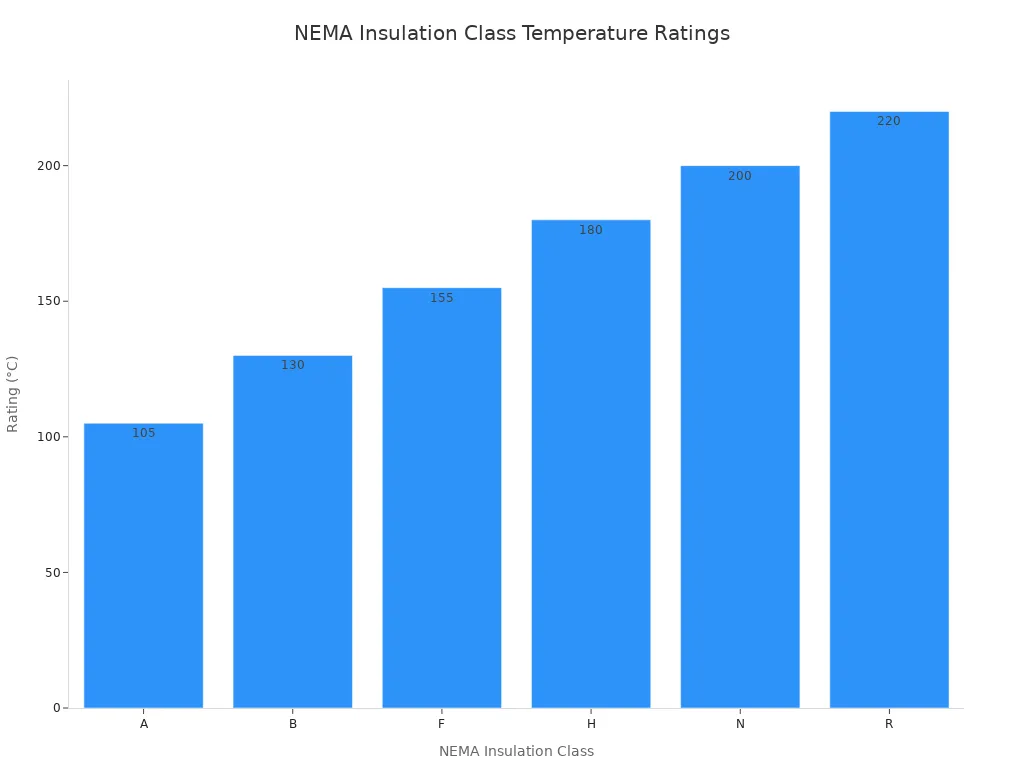
Motor insulation depends on temperature, voltage, and mechanical strength. The NEMA insulation class system ranks materials by heat limits. Class A works to 105°C, Class B to 130°C, Class F to 155°C, and Class H to 180°C. Class N and Class R go to 200°C and 220°C. Flexible insulation and tape products need strong mechanical strength. These materials protect the metal stator core from magnet wire in motors. They must resist abrasion and prevent grounding or failure.
Switches, Connectors, and Power Distribution
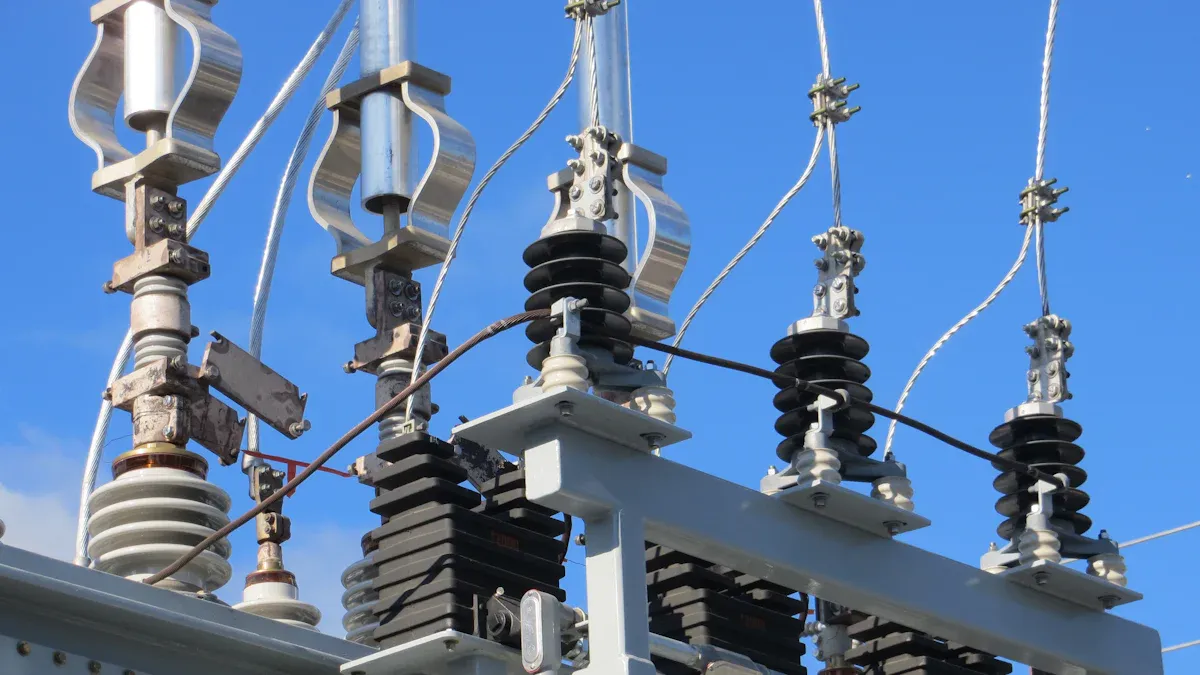
Switchgear and control panels use insulators to separate conductive parts. This protects equipment from electrical faults and improves reliability. Polypropylene works well for switches and battery casings. It has a high melting point, resists chemicals, absorbs little moisture, and insulates well. Phenolic fits switches, connectors, and high-temperature electrical parts. Nylon gives switches, connectors, and circuit breakers great mechanical strength and heat resistance. Polycarbonate offers connectors, terminals, and housings a high strength-to-weight ratio. ABS handles connectors and electrical enclosures by resisting impact and flame. PTFE works for connectors, sockets, and high-temperature wiring because it insulates well and handles heat.
In wires and cables, PVC and polyethylene stop current leaks and protect people from live conductors. Polyethylene also appears in insulating bushings and transformer parts. It resists arcing and corona discharge.
Polypropylene sheets like Formex can be cut, scored, and folded to surround circuitry and devices. Formex GK-17 is a flame-retardant polypropylene sheet, 0.017 inch (0.43 mm) thick. It has UL 94 V-0 certification and a Relative Thermal Index of 115°C. It absorbs only 0.06% moisture. You use it for overvoltage protection enclosures, lighting ballast housings, and power supply partitioning. For power generation uses, top Electrical Insulation Plastics include polycarbonate, PAI, Nylon, ABS, and Acrylic.
Pitfalls and Best Practices
Material Selection Mistakes to Avoid
Knowing the common traps helps you avoid most failures. A frequent mistake is treating dielectric strength as the only sign of quality. A material may show great breakdown voltage but do poorly against moisture, tracking, abrasion, or thermal cycling. Another error is assuming thick insulation cannot fail. Voids, cracks, contamination, and localized electric fields still cause breakdown, and extra thickness may reduce heat dissipation.
You should also question the belief that visual inspection is enough. Many defects are internal or microscopic. Partial discharge, low insulation resistance, moisture absorption, and hidden delamination require electrical and environmental testing. Do not blame the material for every failure either. Incorrect assembly, too much voltage, poor cooling, contamination, not enough creepage distance, and incompatible chemicals all play a role. A system-level review is essential.
Lab data does not promise field performance. Lab values come from set conditions. Real equipment faces vibration, humidity, pollution, voltage transients, and thermal cycling all at once. Your qualification testing should match the intended service environment.
Part Design and Processing Considerations
Wall thickness sits at the center of part design. One case example shows a 7.600 in. long nylon part with a nominal wall thickness of 0.012 in. That wall was twice the thickness needed for electrical insulation, yet it was too thin for injection molding to flow the full part length. The wall must meet insulation needs and still work for the molding process.
Gate location, moisture absorption during molding, and post-machining also affect performance. You should ask material suppliers and molders to check your choice. Request technical datasheets and processing guides. Get samples or trial pellets for hands-on evaluation. Run prototyping with 3D printing for early fit-and-function checks, then pilot injection molding runs to test real molding conditions.
Best practices include requesting UL94-V0 documentation and testing prototypes under real operating conditions. Verify RoHS, REACH, and UL certification before you finalize. These steps protect your Electrical Insulation Plastics from early failure.
You now have a clear plan for choosing Electrical Insulation Plastics. First, figure out your voltage, temperature, mechanical, and environmental needs. Next, compare dielectric constant, arc resistance, moisture resistance, and thermal stability. Then match materials to your equipment's specific needs. Finally, test your design with prototypes under real conditions.
No single plastic works best for every job. There are always trade-offs. You must decide which properties matter most for your situation. A material with great heat resistance may not handle impact well. One with excellent dielectric properties may soak up moisture easily.
Talk to material suppliers and engineers to validate your specific application. They can confirm your choices and suggest other options. Ask for a material selection guide or contact a technical specialist today to protect your equipment from costly failures.
FAQ
Which material properties should you compare first?
Begin with voltage, temperature, mechanical load, and environment. These four set the stage for all other choices. After that, look at dielectric strength, arc resistance, moisture resistance, thermal stability, and mechanical strength. No single plastic is best in every area. You have to decide which trade-offs matter most for your equipment.
How do you verify a UL94 V-0 rating?
Look at the UL Yellow Card for your exact minimum wall thickness. A V-0 rating at 1.5 mm might not apply at 0.8 mm. Ask your suppliers for UL94-V0 paperwork. If the equipment runs unattended, also check glow-wire performance under IEC 60695-2-11/12/13.
Which plastics resist moisture and heat best?
PEEK, polycarbonate, PTFE, and G10/FR-4 all handle moisture well. PEEK and PTFE also stand up to high heat over long periods. PPS fights off acids, alkalis, and solvents. Nylon does best in dry places. Pick the material that fits your humidity and heat exposure.
What causes most insulation failures?
Most failures come from ignoring temperature limits, flame resistance, mechanical stress, or real-world testing. Many flaws are hidden inside the material or too small to see. A visual check will not find them. Lab results do not guarantee field results. Test prototypes under real working conditions before you lock in your choice.