


When you choose a manufacturer of impact resistant plastics, you check four areas: technical performance, application fit, regulatory compliance, and cost. Technical performance tells you how the material acts under impact and load. Application fit shows whether a supplier's grades and engineering support match your industry. Regulatory compliance confirms that the material meets the standards your market requires. Cost covers pricing terms and the total cost of ownership across the part's life. Each area counts equally in the final decision. A supplier who is strong in one area but weak in another creates risk for your project. You need evidence in all four before you commit to a partner.
Key Takeaways
Look at technical data like Notched Izod and Gardner impact values. These show how the plastic handles different types of hits.
Pick the plastic grade that fits your specific use, and ask for engineering help to customize it if you need to.
Check that the certificates cover the exact grade you will use, such as UL 94 and ISO 9001, to confirm it meets regulations.
Compare the total cost, including pricing terms and long-term reliability, not just the price per pound.
Test samples in the shape of your actual part before you choose a manufacturer.
Technical Performance
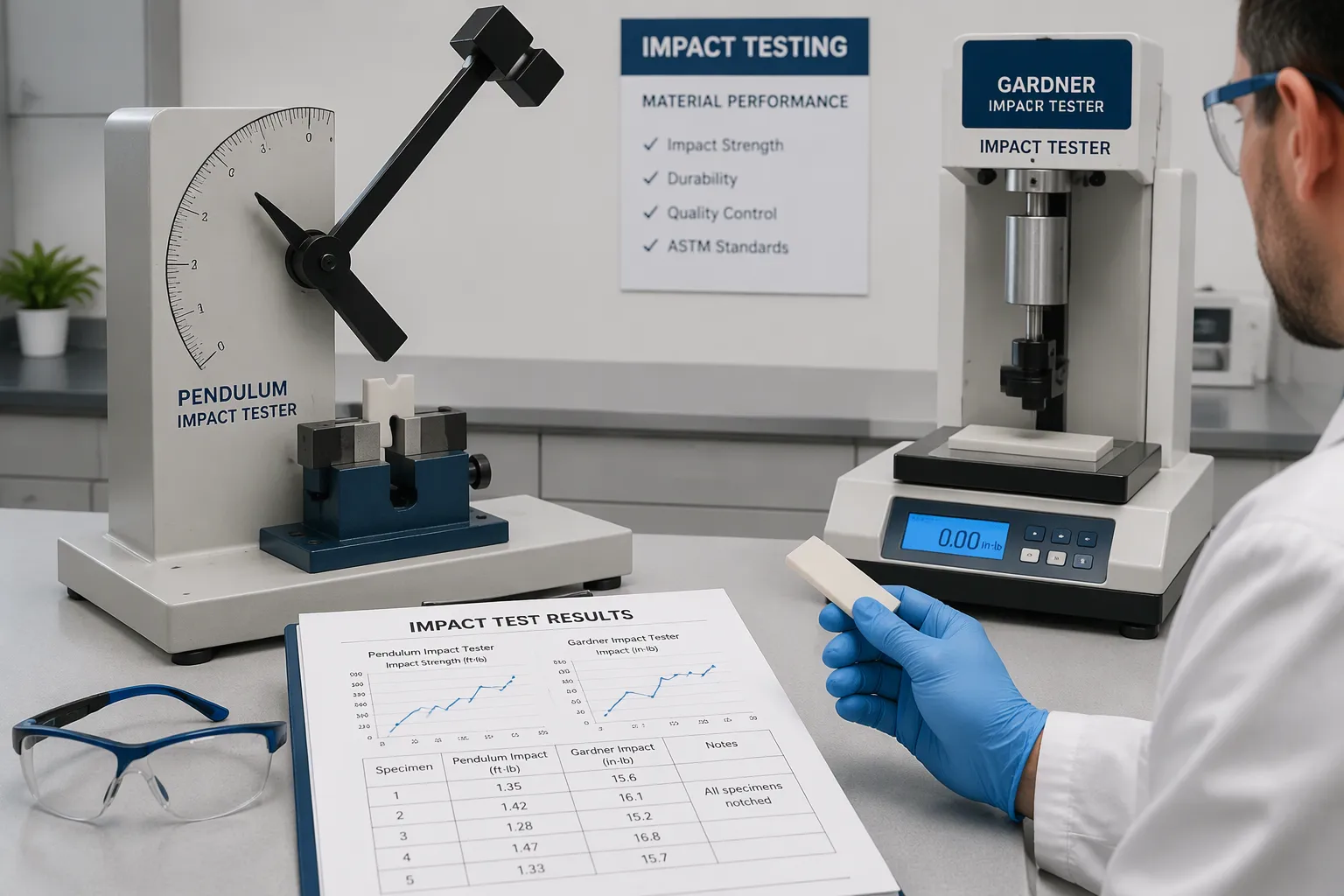
Technical performance is what separates a reliable impact resistant plastic from one that breaks easily. You need to read the data sheet carefully. Two test methods and one strength benchmark give you the clearest picture of how a material will act in your part.
Impact Testing Methods
Notched Izod Impact and Gardner Impact are the two metrics you should check first on any data sheet. Notched Izod Impact measures the energy a notched specimen absorbs when a swinging pendulum hits it. The notch concentrates stress, so this test shows how a material performs at a sharp corner, a molded rib, or a machined edge. Gardner Impact takes a different approach. It drops a weighted striker onto a flat plate and records the energy at which the sample cracks. This test reflects how a broad, unsupported surface behaves under a blunt blow.
The two tests answer different questions. Notched Izod tells you how the material handles a stress concentrator. Gardner tells you how it handles a direct hit across a panel. Ask your candidate manufacturer for both values. A supplier who reports only one number gives you an incomplete picture. Compare the values across grades, not just within a single data sheet. A grade with a high Gardner number but a low Notched Izod figure may crack at a sharp corner in your assembly.
Strength and Toughness Balance
Tensile strength sets a practical floor for structural parts. Look for a tensile strength of at least 7000 psi in load-bearing applications. A material below that threshold may bend or yield under service loads, even when its impact numbers look strong.
Toughness and pliability pull against each other. A stiffer grade resists bending and holds its shape under load. A more pliable grade absorbs impact energy and resists cracking. You cannot maximize both in one formulation. Match the balance to your part. A structural bracket needs stiffness. A protective housing or a snap-fit latch needs pliability. Tell the manufacturer how the part will fail in the field, and let the technical team recommend the grade that fits.
Polymer type drives this balance. Acetal (POM) offers good stiffness and consistent impact performance, which suits gears, bearings, and precision components. Nylon (PA) delivers high toughness and wear resistance, and it performs well in parts that see repeated loading. UHMW polyethylene provides outstanding impact absorption and a low-friction surface, which fits liners, guides, and wear strips. Each family has grades tuned for different points on the toughness-versus-pliability curve. Review the specific grade data, not just the polymer family name.
How to Choose a Manufacturer by Application Fit

A strong data sheet does not mean the material will work well in your part. You also need a supplier whose grades and engineering team match your industry. This is where you pick a manufacturer based on application fit, not just on raw material numbers.
Matching Grades to Use Cases
Every industry asks different things of an impact resistant plastic. A supplier with many grades can point you to one that already fits your use case. Super Dragon shows this approach well. Its automotive materials aim at weight reduction and impact resistance for fuel efficiency and safety. Its engineering materials give high strength and thermal stability for demanding mechanical parts. Thermoplastic elastomer materials mix flexibility with durability for grips, seals, and soft-touch components. Electronic and electrical materials offer reliable insulation and performance for components. Smart home appliance materials focus on safety, long life, and energy efficiency in household devices.
Ask your candidate supplier for reference cases in your field. A grade proven in automotive brackets may not fit an electrical housing. The polymer family is only the starting point. The specific grade, its additives, and how it processes decide the fit. Request samples of the recommended grade and test them in your actual part shape. A supplier who can name similar applications and share test data gives you confidence in the match.
Engineering Support and Customization
Off-the-shelf grades cover many needs, but some parts need a custom formulation. Check the manufacturer's engineering support before you commit. Ask whether the technical team reviews your part design, wall thickness, and gate locations. Ask how the supplier handles a color match, a flame-retardant requirement, or a stiffness adjustment. A capable partner can change a base grade to hit your target balance of toughness and rigidity.
Customization capability sets a material vendor apart from a true development partner. Super Dragon backs its grades with a commitment to innovation and quality, and it tailors special materials for unique industrial challenges. That kind of flexibility matters when your application falls outside standard catalogs. Request a joint design review during the sampling stage. Confirm the supplier's lead time for a custom formulation and its process for validating the change. When you choose a manufacturer for a demanding part, weigh engineering depth as heavily as price. A supplier who works with your design team early will catch fit problems before they reach production.
Regulatory Compliance
If a material fails a market requirement, your product gets stopped at the border or in an audit. Checking compliance protects your launch schedule. It also protects your brand from recalls and fines.
Certifications to Verify
Ask each manufacturer you are considering for current certificates, not marketing claims. The certificate should name the exact grade you plan to buy. If a supplier certifies a polymer family but not your grade, that leaves a gap you have to close.
Flammability ratings matter for electronics, appliances, and automotive interiors. Ask for the UL 94 rating for the exact grade and wall thickness you will mold. A rating earned at a thicker wall may not hold at a thin section. For quality systems, confirm the manufacturer holds ISO 9001 certification. For market access, check RoHS and REACH compliance statements for the European Union. Make sure each document has a valid issue date and a scope that covers your application.
Documentation and Traceability
Traceability lets you answer a customer complaint or a regulator's question months after shipment. Ask how the manufacturer links a finished part back to its production lot. A strong system ties each batch to its raw material records, process parameters, and test results.
Ask for a sample certificate of analysis and review what it contains. It should list the grade, the lot number, the test methods, and the measured values. Confirm the supplier keeps these records for a set period and can retrieve them on request. Ask whether the manufacturer tells you when a formulation changes. A silent change can void your certification and break your own compliance file. Test the system before you sign. Request documentation for a past lot and time how long the supplier takes to deliver it. A fast, complete response shows the traceability system works in practice, not just on paper.
Cost and Supply Reliability
Pricing and Volume Terms
The price per pound is just the beginning of a cost discussion. Ask each manufacturer you are considering for a written quote. It should show the unit price, the volume tier it applies to, and how long it lasts. Resin markets change, so a quote with no expiration date tells you little. Confirm how the supplier handles a price change after you place a purchase order. A clear policy protects your budget from surprises.
Volume terms deserve the same careful look. Ask for the minimum order quantity for your grade and the price break at each higher tier. A custom formulation may carry a higher minimum than a catalog grade, so confirm that number early. Ask whether the supplier charges for tooling, color matching, or sample runs. These one-time costs belong in your comparison, not in a footnote. Request the same quote structure from every supplier, then compare line by line.
Total Cost of Ownership
The purchase price covers only a small share of what a part costs over its life. Look at the full picture. A grade that resists cracking reduces scrap, rework, and warranty claims. A material that processes at a stable cycle time keeps your molding line productive. A supplier who ships on schedule keeps your inventory lean. Each of these factors carries a real cost, and each one belongs in your evaluation.
Ask the manufacturer about lot-to-lot consistency and its process for handling a quality deviation. A cheap resin that forces frequent line adjustments costs more than a stable grade at a higher price. Request the supplier's on-time delivery record and its plan for a supply disruption. Confirm whether the manufacturer holds safety stock for your grade or produces it to order. A partner with reliable supply and consistent quality protects your production schedule. Weigh that protection against the quoted price before you sign.
You now have a clear path. Check technical performance through Notched Izod and Gardner data plus a tensile strength floor. Confirm application fit through proven grades and engineering support. Verify regulatory compliance with current certificates and lot traceability. Weigh cost through pricing terms and total cost of ownership. These four areas work together. A gap in any one of them puts your project at risk.
Use this framework the next time you choose a manufacturer. Request samples of the recommended grade and test them in your part. Ask for a joint design review with the technical team. Request a written quote with clear volume terms. Super Dragon stands ready to support your next project with proven impact resistant plastics.
FAQ
Which impact test value matters most for my part?
It depends on the shape of your part. A part with sharp corners or molded ribs needs strong Notched Izod results. A flat panel that takes blunt hits needs strong Gardner Impact results. Ask for both values and compare them across grades.
Should I test samples before placing an order?
Yes. Ask for samples of the recommended grade and mold them in your actual part shape. Data sheets describe standard test specimens, not your design. A sample run shows how wall thickness, gate location, and processing affect impact performance in production.
Can a supplier adjust a standard grade for my application?
Many can. Ask whether the technical team will review your design and tune the formulation for color, flame retardancy, or stiffness. Confirm the lead time for a custom grade and the process for validating the change before you commit.
Which compliance documents should I collect?
Collect certificates that name your exact grade: a UL 94 rating at your wall thickness, an ISO 9001 certificate for the quality system, and RoHS and REACH statements for market access. Check that each document has a valid issue date.
How do I compare quotes from different suppliers?
Ask each supplier for the same quote structure. Include unit price, volume tier, quote expiration, minimum order quantity, and one-time costs such as tooling or color matching. Then weigh lot-to-lot consistency and on-time delivery against the quoted price.