


How does a procurement team find engineering plastics suppliers that reliably serve customers across borders? The answer depends on five evaluation factors: technical capability, export track record, regulatory compliance, logistics strength, and cost-value. Supply stability matters most when raw material volatility and logistics disruptions threaten production. Technical support ensures correct material selection and application. Global sourcing reach guarantees access to multiple polymer families and supply channels. Application expertise prevents costly material errors and speeds development. Suppliers strong across all these areas deliver reduced production risk, stronger supply chain resilience, and improved product performance. Readers can apply the practical checklist below directly during supplier selection and comparison.
Key Takeaways
Check a supplier's technical skills and product range. They should offer many material grades and share performance data.
Look for export experience and knowledge of global markets. They should handle customs paperwork and local rules well.
Check that the company follows rules and quality standards. Certifications like ISO 9001 and batch traceability records are important.
Check how strong their logistics and supply chain are. Quick lead times, nearby warehouses, and backup plans keep production going.
Compare the total cost of ownership, not just the unit price. Think about tooling, freight, and lead times to find the best value.
Technical Expertise and Product Range
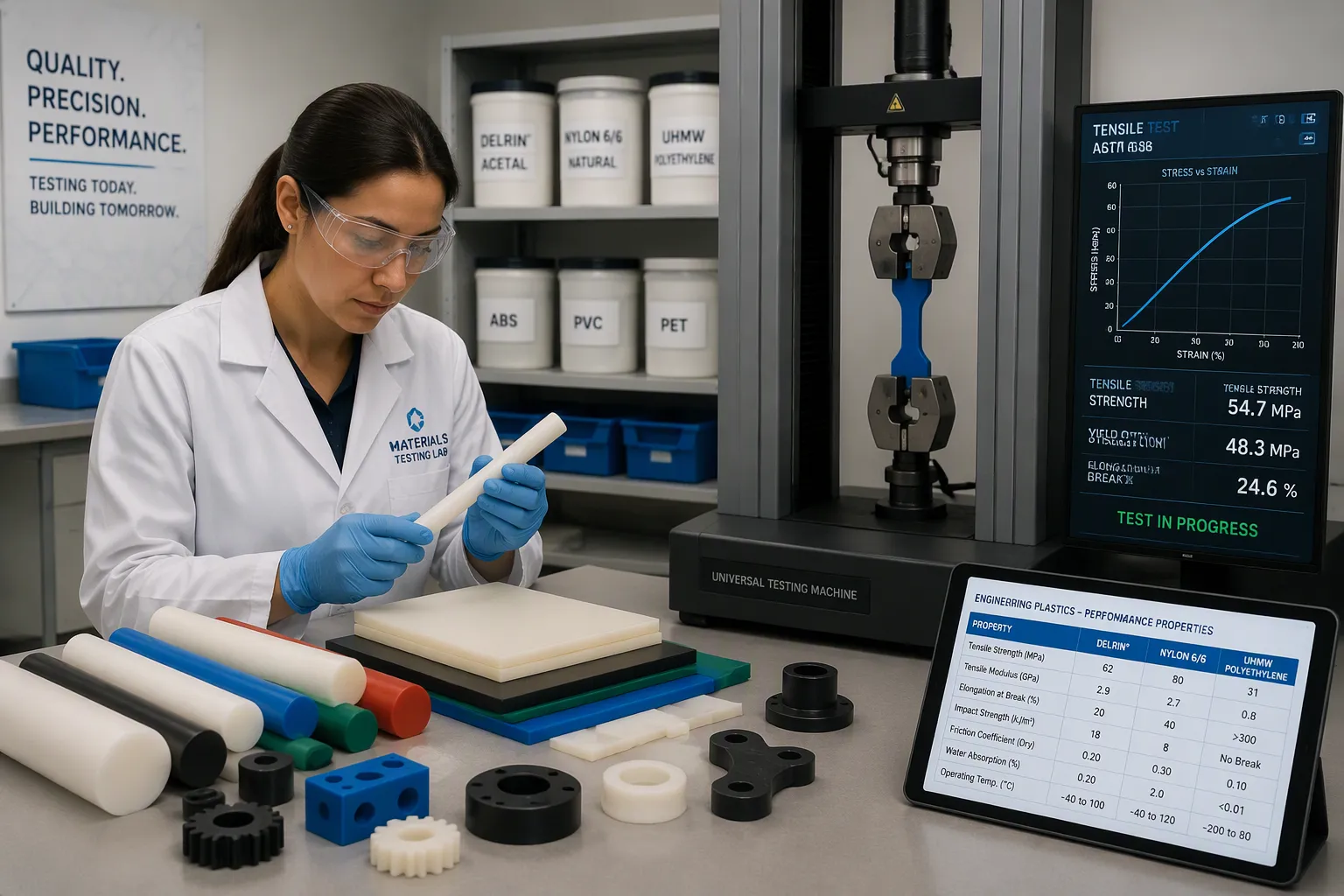
Technical skill is what makes a supplier truly capable, not just a reseller of catalogs. Buyers should check three things: how many material grades are offered, how good the performance data is, and how deep the application support goes. Super Dragon shows these signs through its Engineering Materials product line. This group of high-performance polymers offers outstanding mechanical strength, thermal stability, and chemical resistance. Manufacturers in automotive, electronics, industrial machinery, and consumer goods all depend on these materials for lightweight parts, durable parts in harsh settings, and precision-molded assemblies.
Material Grades and Performance Data
A strong supplier shares performance data for each grade and supports it with batch testing. Super Dragon tests every material batch carefully against international standards. That habit gives buyers trust in consistency from one lot to the next.
Customization is what sets a wide portfolio apart from a narrow one. Super Dragon adjusts formulations to fit specific needs. Reinforced grades increase stiffness. Flame-retardant grades serve safety-critical uses. Wear-resistant grades work well for moving parts. The table below shows how wear resistance appears across common engineering polymers.
Material | Key Customization or Property |
|---|---|
Delrin (Acetal) | Low friction, wear resistant, machinable |
Nylon 6/6 | Wear resistant, impact resistant, machinable |
UHMW Polyethylene | Outstanding abrasion resistance, low friction, impact resistant |
Industry practice supports this range. Teknor Apex reports that its teams adjust reinforcement level, impact resistance, friction and wear behavior, flame retardance, color, and processing characteristics to meet set performance and regulatory targets. Its examples include glass fiber reinforced polyamides and glass-filled halogen-free flame retardant polypropylene rated UL94 V0. Its polyester portfolio also includes glass and mineral reinforced, flame retardant, and impact modified grades. Buyers should expect the same flexibility from any serious partner.
Processing versatility matters too. Super Dragon materials work with common methods: injection molding, extrusion, and blow molding. This flexibility supports efficient manufacturing and design freedom.
Application Support and Customization
Material selection goes wrong without engineering input. Leading suppliers build application support into the sales process. Common services include:
Application development centers that review designs for functionality, processability, assembly, and cost-effectiveness, with early input that shortens cycle times.
Design engineering collaboration that uses CAD tools to catch moldability and assembly issues before production.
Rapid prototyping through 3D printing for hands-on review, which allows early design changes and lowers the risk of part failure.
Super Dragon offers technical support and system solutions that help customers improve designs and production processes. This support turns a material purchase into a partnership. Buyers get faster development cycles and fewer costly material errors. A supplier that pairs tested grades with hands-on engineering help lowers risk at every stage, from concept through full-scale production.
Export Experience and Global Market Knowledge

Export experience is what makes a supplier capable instead of just local. A supplier with a long export record knows how demand changes in different regions. That supplier also knows how to move material through customs without delays. Buyers should see this knowledge as a real asset, not just a vague claim.
Regional Track Record
Market size shows buyers where opportunity is growing. The global engineering plastics market should grow from USD 178.44 billion in 2025 to USD 355.92 billion by 2035 at a 7.15% CAGR. Another forecast puts the market at USD 254.91 billion by 2034 at a 7.3% CAGR. Both projections point to steady, long-term growth. A supplier with broad regional reach can serve customers as demand spreads across continents.
Sourcing regions deserve close attention. India offers a clear example. Its market should move from USD 8.75 billion in 2025 to USD 9.40 billion in 2026, then reach USD 16.67 billion over the following years. Global engineering plastics suppliers should watch such regions for both supply and demand. A supplier with a regional track record can shift volume toward growing markets and keep lead times steady.
Value-chain dynamics complete the picture. Supply, demand, and prices move together. Upstream feedstock costs push prices up or down. Downstream demand from automotive, electronics, and industrial machinery pulls supply the other way. A supplier with export depth reads these signals early. That supplier adjusts sourcing and pricing before a shortage reaches the buyer. Buyers should ask how a supplier tracks these forces and how fast it responds.
Local Requirements and Documentation
Every export market has its own rules. A strong supplier knows the documents each destination requires. Common items include certificates of origin, safety data sheets, and material test reports. Missing paperwork can hold a shipment at the border for days. Buyers should confirm that a supplier handles these documents as routine work.
Local standards also differ by region. A material that meets one market's rules may need changes for another. A supplier with export experience points out these gaps before an order ships. That supplier also keeps records ready for customs review. Buyers should ask for sample documents during evaluation and check them for accuracy.
Communication matters as much as paperwork. Time zones, languages, and business customs differ across markets. A supplier with a proven export record gives clear contacts and responds within agreed windows. Buyers should test this during the quoting stage. Fast, clear answers on a first inquiry show how a supplier handles a live order.
Regional knowledge and documentation discipline work together. A supplier that understands both lowers border risk and keeps production on schedule. Buyers gain a partner who sees problems coming instead of reacting to them.
Regulatory Compliance and Quality Standards
Following the rules is what separates a serious export partner from a casual trader. Buyers should check certifications first. Then they should make sure batch records back up every claim.
Certifications and International Standards
A trustworthy supplier holds management system certifications. It also tests materials against recognized methods. ISO 9001 covers quality management and process control. ISO/IEC 17025 confirms that a testing lab produces valid, repeatable, and fair results. ISO 14001 and ISO 45001 address environmental and workplace health and safety management. Buyers should ask for copies and check the scope of each certificate.
Test methods matter just as much. The table below pairs common standards with the properties they measure.
Test Method(s) | Property Tested |
|---|---|
ASTM D638; ISO 527-1, -2 | Tensile properties |
ASTM D790; ISO 178 | Flexural properties |
ASTM D256; ISO 180 | Izod pendulum impact resistance |
ASTM D648; ISO 75-1, -2 | Deflection temperature under flexural load |
ASTM D1238; ISO 1133-1, -2 | Melt flow rates |
ASTM D3801 | Flammability |
Flame-retardant grades also need UL 94 and IEC 60695 evidence. Automotive programs often reference OEM standards such as VW PV 3942 or BMW GS 93016. A supplier that reports results against the right method gives buyers data they can defend in an audit.
Batch Traceability and Consistency
Consistency depends on records, not promises. Resin chemistry and filler variation can shift transition temperatures, dielectric properties, and mechanical strength. Strong suppliers record supplier lot numbers for resin, glass fabric, fillers, and flame retardants. Certificates of analysis carry matching lot numbers. They list resin viscosity, filler percentage, and flame-retardant type. Incoming material stays quarantined until sampling and rechecking finish.
Purpose-built ERP systems extend this discipline. They track full lot genealogy from raw material receipt through production and shipment. Process parameters tie to each batch, and quality records store against batch IDs. Regrind use is tracked and capped at defined thresholds. Automated certificates of analysis then support audits and recalls. Buyers should ask for a sample traceability report during evaluation.
Logistics and Supply Chain Capabilities
Lead Times and Shipping Options
How fast a supplier delivers shows if it is a strong export partner or a slow one. Port Plastics, a distributor, offers same-day delivery from 11 locations. That setup shows the logistics strength that global markets need. A supplier with regional warehouses ships faster and lowers freight costs. Buyers should ask where stock is kept and how quickly an order leaves the dock.
Shipping choices should fit the order. Small urgent lots work best by air freight. Bulk resin moves best by sea. A strong supplier quotes both and explains the pros and cons. Buyers can also check candidates through top engineering plastics distributor lists ranked by tracked professionals. These lists show which engineering plastics suppliers have proven global reach.
Inventory and Disruption Response
Inventory policy shows how a supplier handles shocks. Strong players spread sourcing across regions, such as Asia Pacific and the Middle East, to lower exposure to physical risk. They keep buffer stock of critical materials. They also add backup suppliers for key raw materials, a lesson the electronics industry learned during the pandemic.
Planning tools make this response stronger. Demand forecasting and AI analytics predict changes. Real-time inventory tracking keeps stock steady. Regional sourcing, such as localizing resin procurement, cuts reliance on distant suppliers. Buyers should confirm a supplier keeps safety stock for overseas components and reviews risks like natural disasters, pandemics, and supplier bankruptcy. Clear contingency plans let a supplier adjust quickly. Solid supplier relationships and close performance monitoring keep raw material flowing. Buyers who test these capabilities gain a partner that keeps production running when disruption hits.
Evaluating Engineering Plastics Suppliers on Cost and Value
Price tags tell only part of the story. A low quote can hide tooling, freight, and inventory costs that show up later. Buyers should compare engineering plastics suppliers on total cost. They should also check how openly each one shares commercial terms.
Total Cost of Ownership
Unit price rarely shows what a buyer actually pays. Several cost factors shape the real number. Each one deserves a line in the comparison model.
Cost Factor | How It Affects Total Cost of Ownership |
|---|---|
Tooling amortization | A one-time die cost is spread across production volume. It is tiny on large runs but can double the effective price on small runs. So amortization should be modeled at real annual volume. |
MOQ economics | Minimum order quantities protect supplier setup costs. But extra inventory carrying and cash-flow costs can erase per-unit savings. |
Secondary operations | In-line cutting, drilling, and printing cost far less than outsourced fabrication. |
Landed cost analysis | Freight, duties, tariffs, and packaging can make a higher domestic quote cheaper than an imported one. |
Lead time / working capital | Longer overseas lead times (e.g., 10–14 weeks vs. 2 weeks domestic) tie up inventory and reduce demand responsiveness. |
Communication, IP, and quality oversight | Time-zone friction, IP exposure on custom dies/compounds, and harder quality oversight at distance add hidden costs that savings must fund. |
Material selection | Commodity resins (PVC, PP) are widely stocked with fast quotes. Engineering polymers (PC, PETG, PEEK) carry higher resin cost and longer procurement lead times. |
"Total cost beats unit price" — a slightly higher cost per foot often delivers a lower landed cost once tooling amortization, scrap rates, and secondary operations are included; the full landed cost should always be modeled before comparing quotes side by side.
Pricing Transparency and Terms
Clear answers separate strong partners from weak ones. Buyers should clarify minimum order quantities against current demand. They should also ask how long quoted prices hold, payment schedules, packaging formats, and delivery timing. Forecast flexibility and safety stock arrangements matter just as much. Evasiveness on documentation, origin, or continuity is a warning sign.
Negotiation works best with preparation. Long-term contracts lock in prices against market swings. Bulk purchasing and accurate demand forecasting improve rates. Regular market research strengthens leverage, and vendor diversification spreads volatility risk. Data-driven talks built on historical pricing and open communication keep terms favorable over time.
The five criteria support each other. Technical depth, export experience, compliance, logistics, and cost-value together show a supplier built for cross-border work. A partner strong in only one area leaves gaps elsewhere.
Buyers can use a short checklist during evaluation:
Confirm tested grades and documented performance data.
Verify export records and paperwork for each destination.
Request certifications and sample batch traceability reports.
Check lead times, shipping options, and plans for disruptions.
Model total cost of ownership, not unit price alone.
Weigh fit across every criterion. Price alone rarely predicts reliable supply. Super Dragon Engineering Materials shows a partner committed to high-quality, cost-effective solutions for global buyers. Procurement teams that evaluate engineering plastics suppliers this way select with confidence.
FAQ
How can a buyer verify a supplier's export track record?
Buyers should ask for shipment records, sample export documents, and references from customers in target regions. They can also check distributor rankings by tracked professionals. Clear answers on customs paperwork and regional demand patterns show real cross-border experience.
Which certifications should an engineering plastics supplier hold?
Look for ISO 9001 for quality management and ISO/IEC 17025 for testing lab competence. Flame-retardant grades need UL 94 evidence. Automotive programs often reference OEM standards. Buyers should confirm each certificate's scope and match test reports to recognized methods such as ASTM D638 or ISO 527.
How do batch records support material consistency?
Strong suppliers link certificates of analysis to specific lot numbers for resin, fillers, and flame retardants. They quarantine incoming material until rechecking finishes. Full lot genealogy from receipt through shipment lets buyers defend data in audits and trace problems quickly.
What logistics signs indicate a disruption-ready supplier?
Regional warehouses, buffer stock of critical materials, and backup raw material suppliers all signal resilience. Port Plastics, with same-day delivery from 11 locations, shows the warehouse depth global buyers need. Buyers should also ask how the supplier forecasts demand and tracks inventory in real time.
Why should buyers compare total cost of ownership instead of unit price?
Tooling amortization, minimum order quantities, freight, duties, and longer lead times all add hidden costs. A higher unit quote can deliver a lower landed cost once buyers model these factors at real annual volume. Price alone rarely predicts reliable supply.