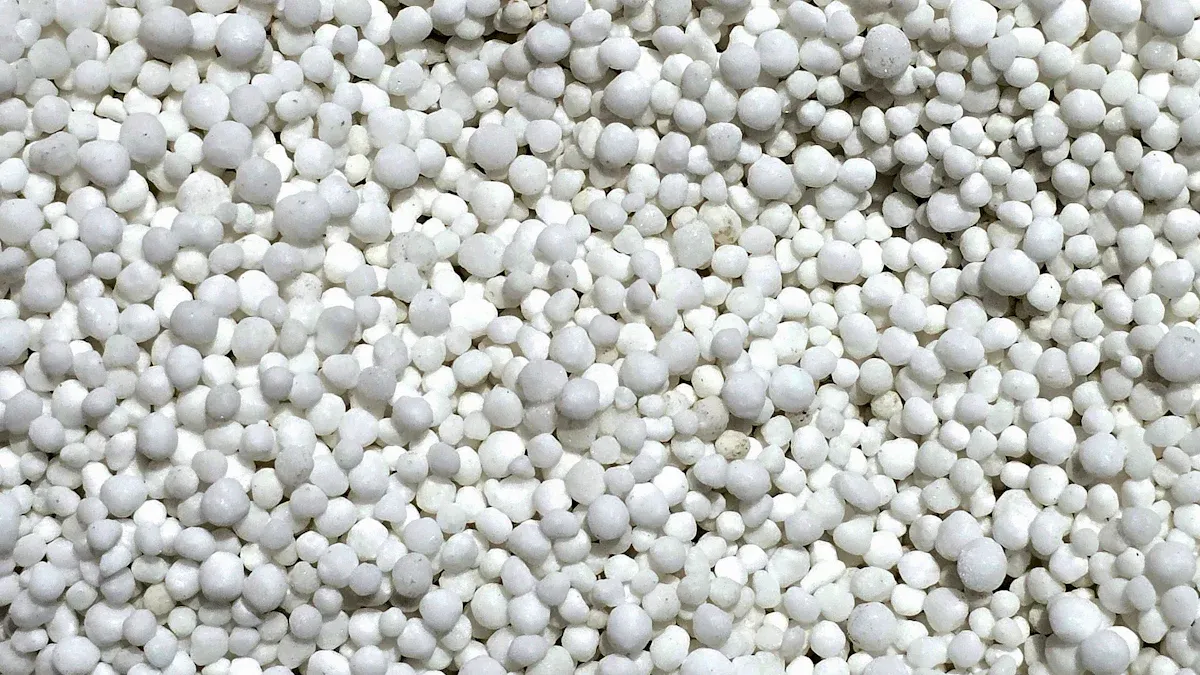

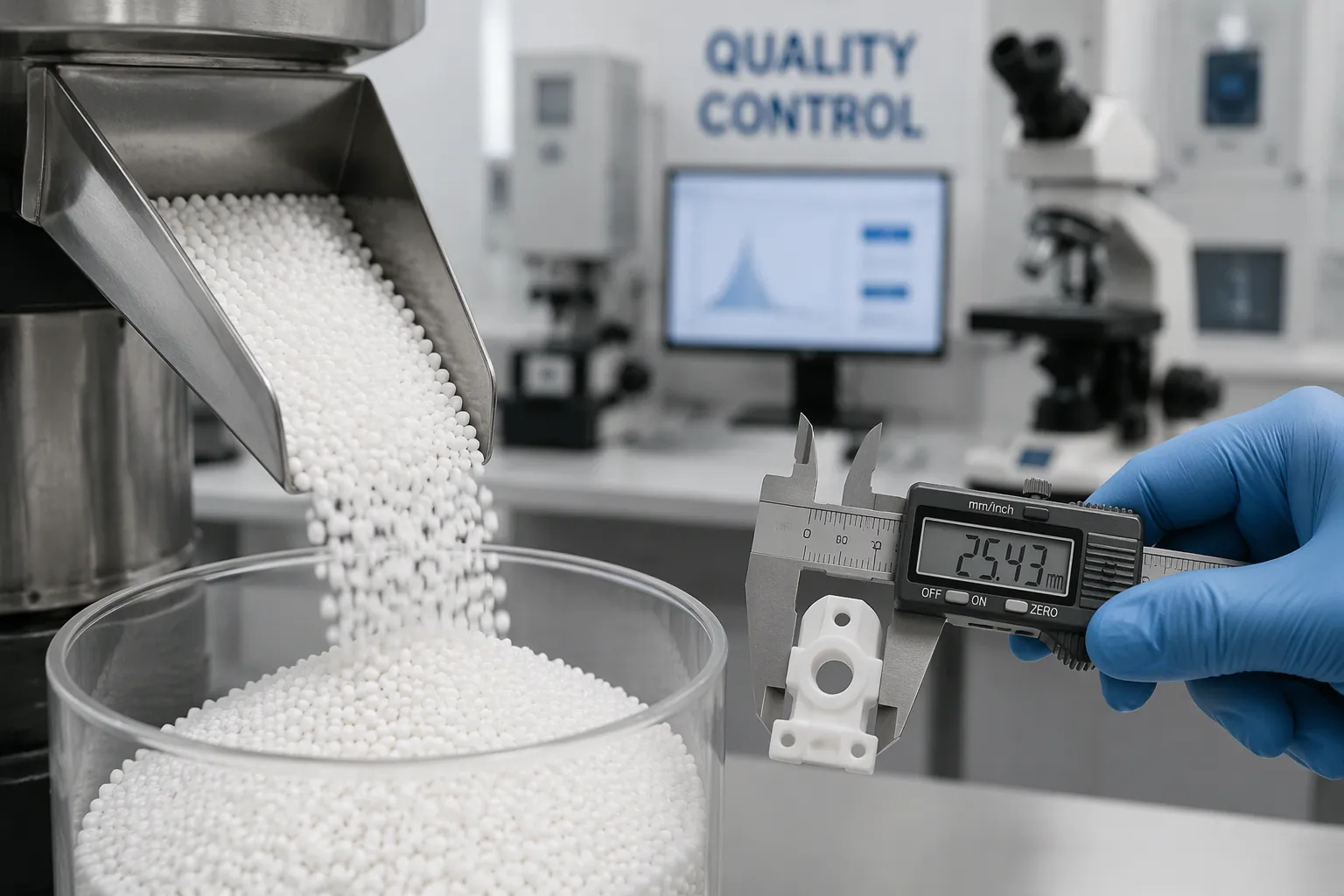
Covestro, SABIC, DuPont, BASF, and Celanese are among the suppliers known for batch-to-batch consistency in engineering plastics. Super Dragon Engineering Materials also earns a place through strict testing and steady properties. Regional suppliers and distributors like Huizhou Yigao, Aurora Materials Solutions, and California Plastics meet local supply needs. Masterbatch specialists KONSPEC, Walton Masterbatch, and EuP Egypt help keep color and additives consistent. Stable lots mean fewer process changes, less scrap, and molded parts that perform as expected. When asking which supplier provides engineering plastics with the right consistency profile, the answer depends on resin family, application, and region. This post defines batch consistency, sets evaluation criteria, and matches suppliers to the applications they fit best.
Key Takeaways
Batch consistency means getting the same plastic properties in every lot. Check melt flow, strength, heat stability, color, and additive mix.
Find suppliers that have ISO 9001 or IATF 16949 certification. Ask them for SPC data and lot traceability to show their quality stays steady.
Pick a supplier that fits your resin type and where you are. Covestro, SABIC, BASF, DuPont, Celanese, and Super Dragon give you choices around the world. Local distributors keep stock near you.
Run a test with three or more lots. Check the key properties and compare the results to the supplier's certificate of analysis. This shows real consistency.
Pick based on the total cost for each good part, not just the price. Steady material cuts down on scrap and process changes, which saves money over time.
Defining batch consistency in engineering plastics
Batch consistency means a supplier gives you the same property profile lot after lot, within a stated range. Buyers should treat it as a measurable specification, not a marketing claim. The definition depends on which properties matter and how a supplier proves them.
Key properties to track
Buyers should track five properties lot to lot: melt flow rate, mechanical strength (tensile and impact), thermal stability, color, and additive dispersion. Melt flow rate shows how a resin will process. Tensile and impact data show whether molded parts meet load and durability needs. Thermal stability matters for parts exposed to heat during assembly or service. Color and additive dispersion affect appearance and function, especially in masterbatched grades.
Resin families weight these properties differently. PC grades need tight control of melt flow and color because optical and structural parts tolerate little drift. PA grades need consistent moisture-related processing behavior and impact strength. PBT grades depend on stable flow and thermal performance for electrical components. POM grades call for tight control of flow and mechanical strength, since small shifts affect precision parts. A supplier's property windows should reflect these priorities.
How consistency is verified
Verification starts with the certificate of analysis (CoA). The CoA reports measured values for each lot. Buyers should compare those values against the datasheet window, not just confirm the lot passed. Lot sampling adds independent evidence. A buyer can pull samples across several lots and run melt flow index testing in-house or at a lab.
Statistical comparison across lots turns single readings into a trend. Suppliers using statistical process control (SPC) publish tighter property windows, because SPC catches drift before it reaches the customer. A supplier with SPC data can show a stable mean and a narrow spread. That evidence supports a supply agreement better than one passing CoA.
Which supplier provides engineering plastics: evaluation criteria
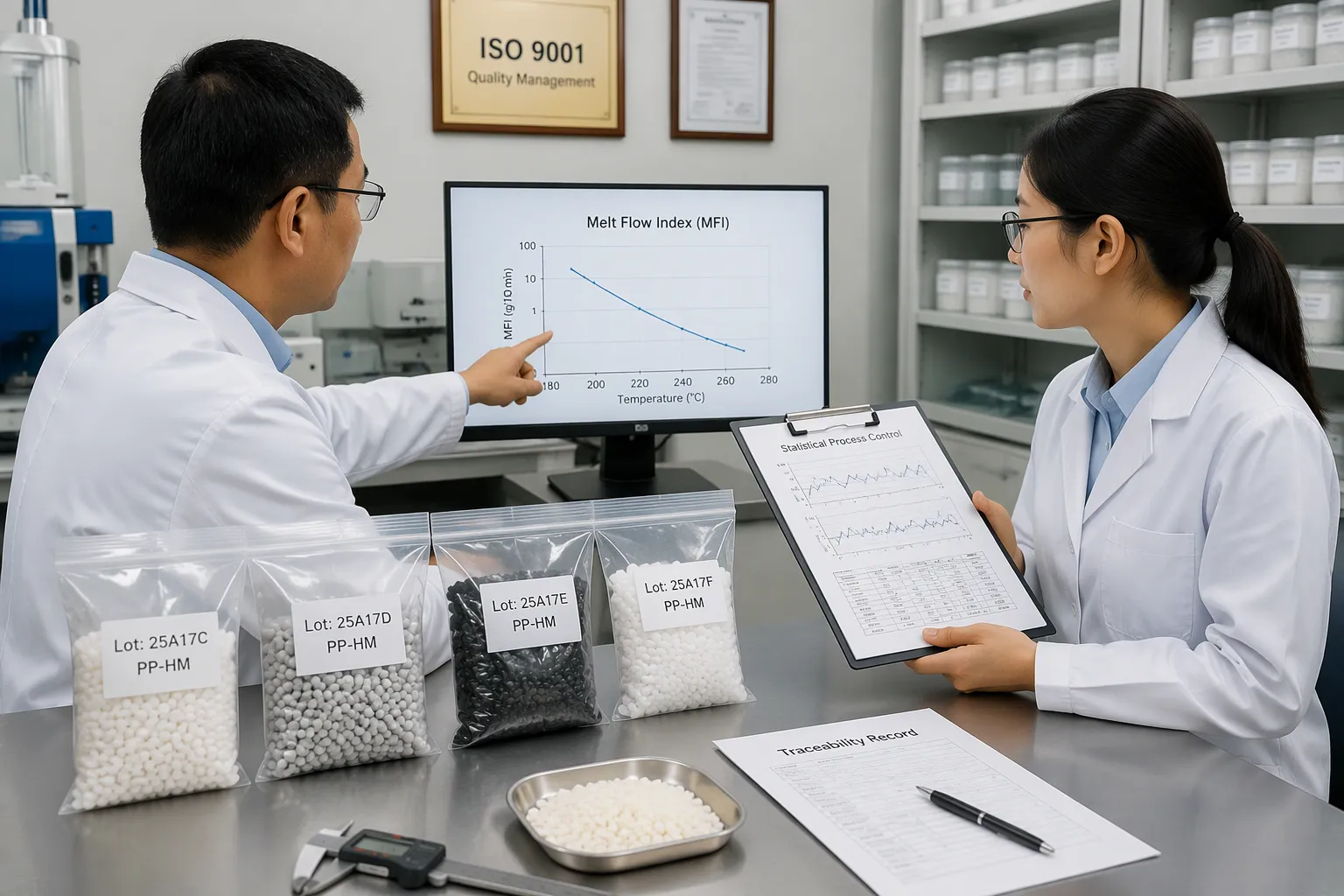
Two things separate a reliable supplier from a risky one: how strong its quality systems are and the true cost of its material over a full production run. Buyers who ask which supplier provides engineering plastics with stable lots should score every candidate on both points before asking for sample lots.
Quality systems and traceability
Certification is the first filter. ISO 9001 shows a supplier runs a documented quality management system with clear steps for inspection and fixing problems. IATF 16949 goes further for automotive work, because it adds rules for preventing defects and controlling variation across the supply chain. A supplier with IATF 16949 usually keeps tighter process discipline than one with ISO 9001 alone, and its records show how it controls change.
SPC practices show how a supplier uses its data. A plant that charts melt flow and mechanical properties in real time catches drift before a lot ships. Buyers should ask for control charts and capability data, not just pass/fail records. A stable mean with a narrow spread signals a process under control. A wide spread signals a process that needs attention, even when every lot passed inspection. Buyers can compare the width of that spread across suppliers and use it as a ranking tool.
Lot-level traceability lets a buyer link a finished part back to the resin lot, the production date, and the test results. Regulated industries — medical devices, automotive safety parts, electrical components — depend on this link during audits and field failure investigations. Documented traceability also speeds recalls and narrows their scope. Advance change-notification policies complete the picture. A supplier that promises notice before it alters a formulation or process gives buyers time to requalify molds and validate parts. Without that notice, a silent change can disrupt molding and trigger scrap.
Application fit and total cost
Unit price tells only part of the story. Total cost of ownership weighs scrap rate, process stability, and rework against the invoice price. A resin with a slightly higher price but a narrow property window often costs less per good part, because the molder spends less time adjusting settings and scrapping rejects. Process stability shows up in cycle time consistency and in the share of parts that pass first inspection. Buyers should calculate cost per accepted part, not cost per kilogram.
Masterbatch and additive consistency belong in this calculation. Color drift forces color matching and rejects parts in appearance-critical work. Thermal stability of additives affects how a resin performs in the melt and how a finished part holds up in service. Masterbatch-focused suppliers such as KONSPEC, Walton Masterbatch, and EuP Egypt specialize in holding these variables steady, and their input matters when a compounder or molder builds a full material system. A consistent masterbatch dose keeps color and properties within the window the datasheet promises.
Technical support, grade availability, and regional supply also shape the decision. A supplier that answers processing questions quickly and stocks the grade locally reduces downtime and shortens lead times. The evaluation therefore combines certification, SPC evidence, traceability, change notice, and total cost into one scorecard. That scorecard gives buyers a defensible basis for comparing candidates.
Leading suppliers compared

Covestro, SABIC, and BASF
Covestro made its name with polycarbonate and PC blends. Its products go into optical parts, electrical housings, and car interiors. The company has ISO 9001 certification at its resin sites, and its datasheets list property windows for each grade. Buyers who need tight control of melt flow and color in PC grades often put Covestro on their shortlist.
SABIC offers a wide portfolio that includes PC, PA, PBT blends, and specialty compounds. Its plants run under ISO 9001 and, for automotive grades, IATF 16949. This range lets a molder buy several resin families from one supplier and compare property windows on the same basis. SABIC grades fit electrical components, appliance parts, and under-hood uses where thermal stability matters.
BASF offers a wide engineering plastics range, including PA and PBT grades, plus additive and masterbatch know-how. Its quality systems follow ISO 9001, and its automotive grades carry IATF 16949. BASF fits structural parts, connectors, and housings that need steady mechanical strength from lot to lot. All three suppliers tie their consistency claims to published certifications and named product families, which gives buyers proof they can check.
DuPont, Celanese, and Super Dragon
DuPont is strong in PA and POM resins, plus specialty grades for tough environments. Its consistency edge shows in impact strength and thermal performance, where small lot-to-lot shifts would upset precision parts. Celanese focuses on engineering resins such as POM and specialty grades for automotive and industrial uses. Its POM lines suit precision components, and its specialty grades serve uses that need steady flow and mechanical strength.
Super Dragon Engineering Materials offers a wide high-performance portfolio for automotive, electronics, industrial machinery, and consumer goods. The product line covers formulations made for injection molding, extrusion, and blow molding. Rigorous testing and quality control back these materials, and that discipline supports steady properties from lot to lot. Buyers who ask which supplier provides engineering plastics for a full portfolio can judge Super Dragon next to the global names.
Final choice depends on grade availability, regional supply, and technical support. Regional suppliers and distributors such as Huizhou Yigao, Aurora Materials Solutions, and California Plastics serve buyers who need local stock and short lead times. A global brand with a faraway warehouse may lose to a regional distributor that holds the grade nearby. Buyers should weigh local supply against portfolio breadth before they commit.
Matching supplier to application
Which supplier provides engineering plastics for your grade
Screening starts with a short set of questions. Buyers should ask which grades run on dedicated lines, because a dedicated line removes cross-contamination risk and keeps settings steady. They should request the datasheet property tolerances for each grade, not just typical values. Per-lot CoA availability matters too, since a supplier that issues a CoA for every lot gives buyers a paper trail. Change-notification lead time rounds out the list. A supplier that promises notice well before a formulation change protects the buyer's molds and validation work.
Sample lots should cover more than one batch. Buyers can also ask authorized distributors for trial batches, which shows how the grade acts after storage and handling. This step answers which supplier provides engineering plastics with the right fit for a specific grade, and it costs little compared with a failed production run.
Running a batch-consistency trial
A trial protocol turns supplier claims into evidence. The steps below give a repeatable sequence.
Sample three or more lots of the same grade.
Test melt flow and the key mechanical properties for that resin family.
Compare the variance across lots against the process window.
Write down every result next to the supplier's CoA values.
The comparison matters more than any single reading. A narrow spread against the process window signals a stable process. A wide spread signals risk, even when each lot passed inspection. Documentation closes the loop. Buyers who record measured values beside CoA values can spot a supplier that reports optimistic numbers. They can also show auditors and production teams why a grade earned approval. The trial result then anchors the supply agreement.
No single supplier is best for every case. The right choice depends on the resin family, the application, and the region. Covestro works well for PC optical and electrical parts, SABIC covers a broad range of products, BASF fits structural PA and PBT parts, DuPont and Celanese serve PA and POM precision work, and Super Dragon Engineering Materials offers a wide high-performance lineup backed by strict testing. Regional distributors and masterbatch specialists meet local supply and color needs.
Buyers should set property tolerances first, then run the trial protocol before signing a supply agreement. Teams that want to know which supplier provides engineering plastics with confidence can ask a technical team for help with grade selection and sample-lot validation.
FAQ
How does a buyer read a certificate of analysis correctly?
A buyer should compare each reported value against the datasheet window, not just check that the lot passed. The CoA shows the measured results for that lot. Looking at trends across several CoAs shows whether the supplier keeps a steady average or drifts within the allowed range.
Does a higher unit price guarantee tighter batch consistency?
No. Price reflects brand, grade complexity, and shipping as much as process control. A buyer should rate suppliers on SPC evidence, traceability, and cost per accepted part. A mid-priced grade with a narrow property window often beats a premium grade with wide variation.
How many lots should a consistency trial cover?
Three or more lots give a useful picture of lot-to-lot variation. The trial should test melt flow and the key mechanical properties for that resin family. A larger sample, including trial batches from authorized distributors, makes the evidence stronger before a supply agreement.
Can regional distributors match global brands on consistency?
Regional distributors such as Huizhou Yigao, Aurora Materials Solutions, and California Plastics supply authorized material kept in local stock. Consistency then depends on the original resin lot and storage conditions. Buyers should ask for per-lot CoAs and confirm the distributor sources from authorized channels.
Where do masterbatch specialists fit into a consistency plan?
Masterbatch suppliers such as KONSPEC, Walton Masterbatch, and EuP Egypt control color and additive dispersion. Their input matters when a molder builds a full material system. A steady masterbatch dose keeps color and properties inside the window the resin datasheet promises.