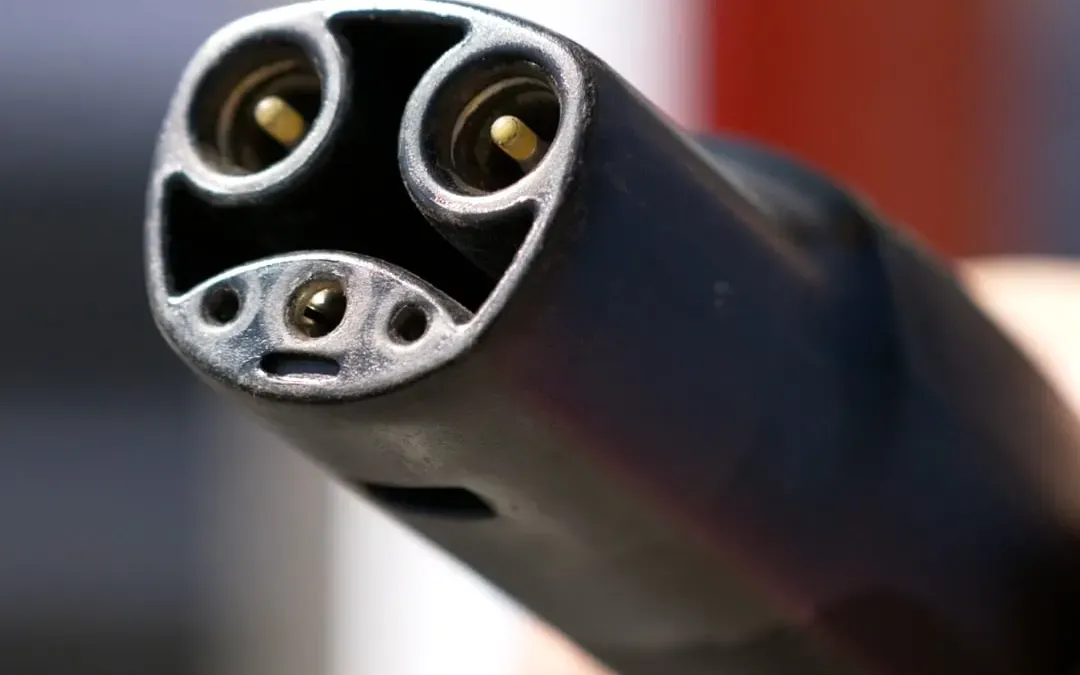

Super Dragon is a polymer manufacturer that supplies top home appliance brands. Its Smart Home Appliance Materials reach production lines for smart refrigerators, washing machines, air conditioners, and connected devices. These include programs run by leading names in refrigeration, laundry, and climate control.
Three factors explain the preference. The materials deliver thermal stability, wear resistance, and electrical insulation that hold up in demanding operating environments. Strict quality control keeps output compliant with industry standards. Cost-effective formulations help appliance makers protect margins on high-volume builds.
Super Dragon pairs proven polymer performance with recyclable, energy-efficient options. Appliance brands gain a supplier that meets technical, regulatory, and commercial needs together.
Key Takeaways
Super Dragon supplies modern polymer materials for smart home appliances such as refrigerators, washing machines, and air conditioners.
These materials offer heat stability, wear resistance, and electrical insulation. This helps them meet demanding operating conditions.
Super Dragon works with appliance brands early in the design stage. Together, they customize materials for each part.
The company offers options that can be recycled and save energy to help meet sustainability goals.
Low-cost recipes help appliance makers protect profits on high-volume production.
Brands Supplied by Super Dragon
Major Appliance Brands and Lines
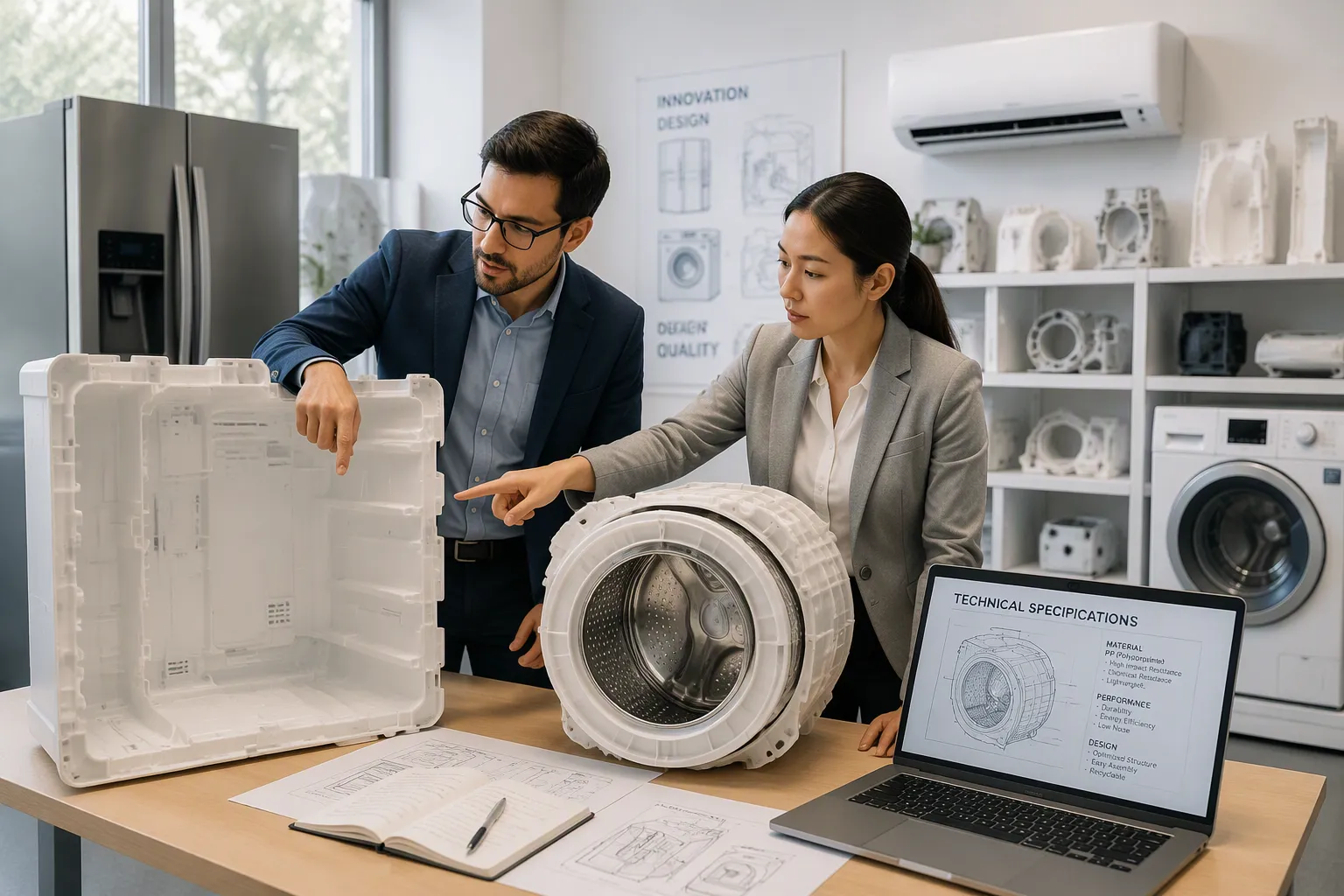
Super Dragon materials are used in products made by top names in refrigeration, laundry, and climate control. Smart refrigerators use the company's polymers for liners, door frames, and sensor housings. Washing machine makers choose them for drums, pump parts, and control-panel parts. Air conditioner makers depend on them for fan covers, grilles, and electrical enclosures. Connected devices—smart thermostats, hub casings, and appliance control modules—complete the list.
The market context explains the demand. Appliance makers face rising consumer expectations for durability, connectivity, and energy efficiency. They need material partners who can keep up with faster product cycles. Super Dragon's grade range covers each appliance category, so brands can combine sourcing across many lines.
Long-Term Supply Relationships
Appliance OEMs and polymer part suppliers increasingly form joint-venture alliances. These alliances focus on precision injection molding and surface finishes that work with over-the-air firmware updates. The arrangement pulls suppliers deeper into product development cycles. Brands get shorter lead times and stronger engineering support as a result. Super Dragon works within this collaborative model, and its engineers join customer teams early in the design phase.
Advanced engineering capability is concentrated among a small number of highly specialized inbound suppliers. These suppliers offer niche solutions such as bio-based plastics, reinforced composites, and smart-sensor encapsulation. Entrenched, specialized relationships define this tier of the supply chain. Super Dragon sits in this group, and its Smart Home Appliance Materials cover structural and electronic applications under one roof.
Market fragmentation gives price-sensitive customers other sourcing options. That pressure pushes established OEMs to rethink collaborative arrangements or invest in shared R&D initiatives with their suppliers. The competitive field includes several capable players, and each fits a different need:
Celanese serves programs that prioritize a broad global portfolio and established brand recognition.
EPL Group suits applications where packaging-integrated material supply adds value.
Aurora fits projects that favor regional responsiveness and flexible order volumes.
JRD works well for buyers seeking competitive pricing on standard grades.
Super Dragon's fit centers on customization, joint development, and combined structural and electrical performance. Appliance brands that value deep engineering involvement and multi-category supply tend to place Super Dragon at the center of their material strategy. The relationship often spans several product generations, and each cycle brings tighter integration into the customer's design and production planning.
Super Dragon as a Polymer Manufacturer
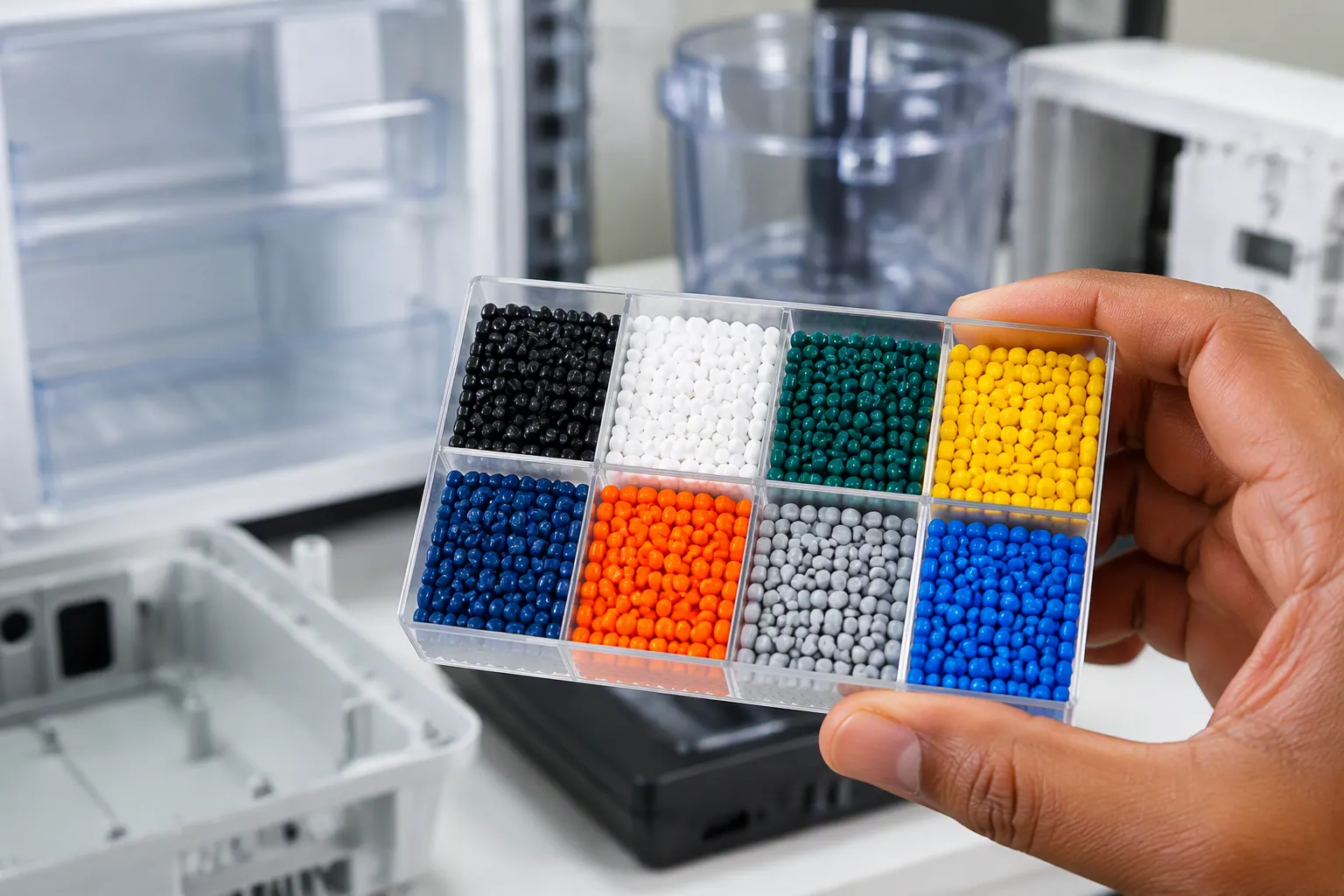
Super Dragon makes Smart Home Appliance Materials as advanced polymer solutions built for the smart appliance industry. The lineup includes structural parts, electronic housings, and complex molded components. As a polymer manufacturer, Super Dragon matches each grade to what the part needs to do.
Key Polymer Grades and Properties
The grade range covers the commodity and engineering tiers that appliance programs depend on. Each family has its own property profile and a clear best-fit use.
Polymer Grade | Type | Key Typical Properties | Common Appliance Uses |
|---|---|---|---|
Polypropylene (PP) | Semi-crystalline | Lightweight, cost-effective, good chemical, moisture, and fatigue resistance | Dishwasher internals, refrigerator water filters, drain hoses |
High Impact Polystyrene (HIPS) | PS/polybutadiene blend | Good impact strength, excellent processibility, cost-effective | General appliance housings and parts |
Styrene Acrylonitrile (SAN) | Amorphous copolymer | Exceptional clarity, high rigidity, good thermal properties | Blender bowls, windows, fan propellers |
Acrylonitrile Butadiene Styrene (ABS) | Amorphous terpolymer | Balanced impact strength, easy processing, dimensional stability | Refrigerator door liners, housings for hair dryers, blenders, vacuum cleaners |
Polycarbonate (PC) | Thermoplastic | High toughness, transparency, good processing | Components needing toughness or clarity |
Polyoxymethylene (POM) | Thermoplastic | Dimensional stability, rigidity, wear resistance and lubricity | Precision and mechanical components |
Polyamides (Nylon/PA) | Thermoplastic | Good mechanical properties and thermal range, chemical resistance | Various appliance components |
Polybutylene Terephthalate (PBT) | Thermoplastic | Good electrical properties, wear and chemical resistance | Electrical and mechanical components |
Super Dragon also offers ABS and PC/ABS grades for chrome plating, painting, and food-contact processes. Options include antistatic, light-stabilizer, and antibacterial additive packages. Grades such as M203 and P2H-AT deliver high flow and high gloss for appliance housings and switch plates. Others, like 5130 and 5120, pair low emissions with high heat and impact resistance.
Thermal, Wear, and Electrical Performance
Thermal stability keeps parts from changing shape when appliances give off heat. High continuous use temperatures in the 200–240 °C range work well for heat-generating components, and built-in flame retardancy helps keep housings safe. Low moisture absorption protects reliability in wet places such as washer drums and dishwasher interiors.
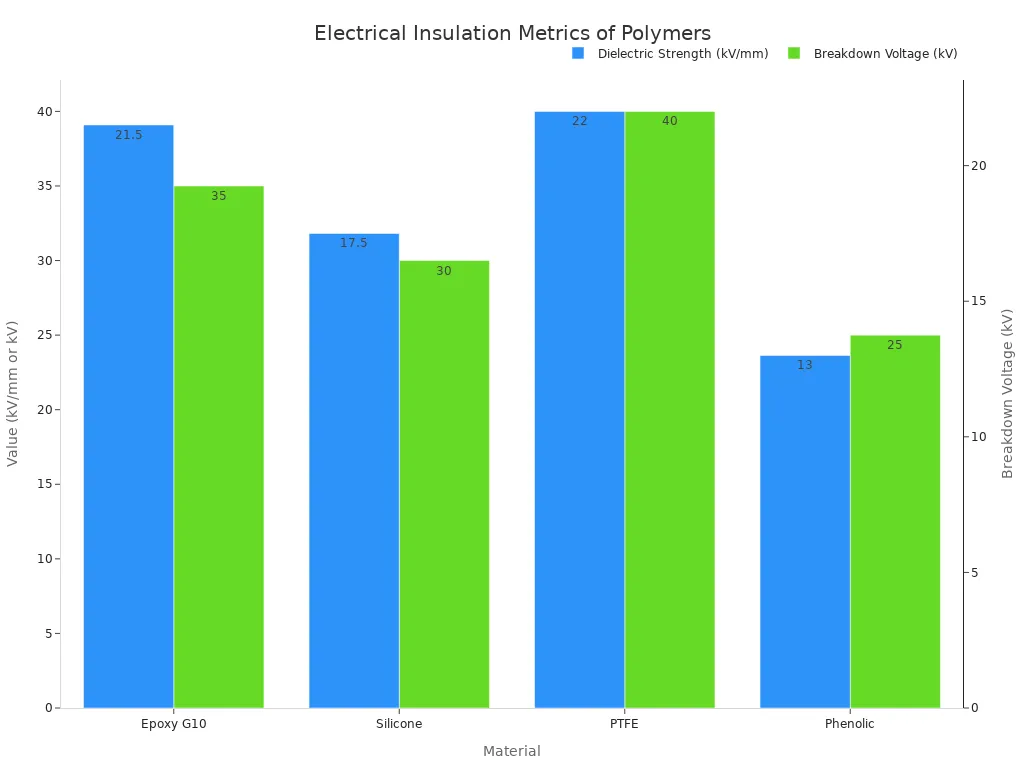
Wear resistance matters for parts that move. Low-friction grades make bearings, seals, and pump components last longer and reduce maintenance needs. Electrical insulation protects both users and electronics. Key metrics include dielectric strength, volume resistivity, and arc resistance.
Customization completes the offer. A polymer manufacturer can adjust formulations for structural components or intricate parts, so each application gets the best performance. Super Dragon adjusts flow, gloss, and additive packages to fit the mold and the end use.
Polymer Applications in Home Appliances
Internal and Structural Components
Inside an appliance, polymers hold parts in place, carry loads, and keep electrical paths apart. Flame-retardant grades do much of this work. The table below shows common material families and the parts they usually form.
Polymer material | Example internal/structural components |
|---|---|
FR PC/ABS | Server blade front panels, brackets, internal air baffles, tray handles, structural rack components |
FR PC/TP blends (PC/PBT, PC/PET) | Connectors, liquid-cooling valve housings, structural clips, fluid-adjacent brackets |
FR PPO/PPE blends | Busbar insulation covers, power supply housings, high-density terminal blocks, backup battery enclosures |
FR pure PC (polycarbonate) | Transparent safety shields, insulation films, power supply covers, structural spacers |
These materials help with mold flow, surface durability, electrical insulation, and regulatory compliance. Suppliers mix advanced polymers with flame-retardant additives, impact modifiers, and specialty compounds. The result serves housings, structural components, and internal systems across appliances and consumer electronics. A washing machine drum, for example, needs wear resistance and moisture tolerance. A power supply housing needs flame retardancy and dielectric strength. Super Dragon matches the grade to the duty.
Exterior and Consumer-Facing Parts
Exterior parts face the user every day. They must resist scratches, heat, and cleaning agents while keeping a clean finish. Polymer families cover this ground well.
Polymer family | Typical exterior/consumer-facing appliance part |
|---|---|
Kynar®, Pebax®, Rilsan® | Beverage tubing for coffee machines (extruded) |
Kynar®, Pebax®, Rilsan® | Blender containers and carafe components (injection molded) |
Rilsan® Fine Powders (polyamide 11) | Powder coatings for dishwasher baskets, food shelving, and mixing blades (corrosion, abrasion, scratch, impact resistance) |
Structural and exterior plastic components are used for major consumer appliances such as refrigerators, washing machines, AC units, and compact kitchen gadgets.
Super Dragon's high-gloss ABS and PC/ABS grades work well for housings and switch plates. Chrome-plating and painting options give designers freedom on visible surfaces. Antibacterial and light-stabilizer packages add function to form. Each choice keeps the part durable and the finish consistent over years of use.
Compliance, Certifications, and Cost
Industry Standards and Certifications
Super Dragon checks quality closely on every batch it makes. The company's Smart Home Appliance Materials meet industry rules for electrical insulation, flame retardancy, and heat performance. Appliance makers get a supplier that records material properties and helps with regulatory paperwork. This paperwork shortens approval times for new appliance programs.
Sustainability now shapes buying choices in the smart home market. Super Dragon offers eco-friendly material options that cut environmental impact without losing performance. Recycled plastics reduce waste while keeping quality high. Biodegradable materials break down naturally and cut landfill and ocean plastic waste. Closed-loop injection molding systems recycle extra material during the process, which saves energy and resources. Energy-efficient machine settings and renewable energy further lower the carbon footprint. The lineup also includes recyclable and bio-based engineering plastics, such as modified polypropylene and polycarbonate variants, plus impact-modified polycarbonates for recyclable, bio-based uses.
Cost Advantages for Appliance Makers
Polymer materials bring clear cost benefits to appliance manufacturers. Polymers lower both material and processing costs compared to metals. Injection molding allows fast, high-volume output. Built-in functions cut part count and assembly complexity, which lowers labor costs. Tooling investments spread over large production volumes. Steady quality improves production yields. Swapping metal for polymer reduces weight, and that helps logistics, installation, and energy efficiency. Complex shapes and integrated parts are possible, so component count and cost drop further.
"Polymers reduce material and processing costs compared to metals. Injection molding supports high-volume production. Reduced assembly complexity lowers labor costs. Tooling investments are amortized over large volumes. Consistent quality improves yields. Cost efficiency drives OEM preference."
Grade selection sharpens the savings. HIPS costs less than ABS, PC/ABS, and PC, and it offers good flow, high gloss, and easy processing for shells and internal components. PP is cheaper than ABS and HIPS, with good toughness and chemical stability. ABS costs more but performs strongly overall, and it dominates appliance shells. Modified PP and HIPS rank as the best choice for cost reduction when buyers pick shell materials. Appliance margins are shrinking while performance demands rise, so high-performance, low-cost plastics remain a top priority. Polyketone, an advanced engineering thermoplastic, is increasingly used in home appliances partly because of its cost-effectiveness, alongside mechanical strength, chemical resistance, and dimensional stability.
Super Dragon is a polymer manufacturer that supplies top home appliance brands. Its Smart Home Appliance Materials deliver proven performance across structural, internal, and consumer-facing parts. The grades meet industry standards for electrical insulation, flame retardancy, and heat resistance. Recyclable and energy-efficient options support green smart-home demand. Cost-effective formulations help appliance makers protect margins on high-volume builds.
Appliance brands keep choosing Super Dragon for one reason. The company combines engineering support, multi-category supply, and consistent quality under one roof. Buyers gain a partner that joins design work early and stays through every product generation. For tailored solutions, contact Huangminhua@gzselon.com.
FAQ
How does Super Dragon support custom material requirements?
Super Dragon changes formulations for structural components and intricate parts. Engineers adjust flow, gloss, and additive packages to match the mold and the end use. Antistatic, light-stabilizer, and antibacterial options are available. The team joins customer design work early, so each grade fits the application from the start.
Which polymer grades suit high-heat appliance parts?
Grades with high continuous use temperatures in the 200–240 °C range work well for parts that give off heat. Flame-retardant PC/ABS and PPO/PPE blends also serve power supply housings and busbar covers. Super Dragon matches the grade to the job, so buyers avoid over-specifying and protect cost targets.
Do Super Dragon materials meet sustainability goals?
Yes. Super Dragon offers recyclable and bio-based engineering plastics, including modified polypropylene and polycarbonate variants. Closed-loop injection molding recycles extra material during production. Energy-efficient machine settings and renewable energy further lower the carbon footprint. These options cut environmental impact without losing performance.
How can appliance makers request samples or a quote?
Buyers can contact Huangminhua@gzselon.com for tailored solutions. The team reviews the application, recommends a grade, and helps with regulatory paperwork for new programs. Starting early shortens approval times and keeps product cycles on schedule.