

Which factory provides custom polymer compounds that truly meet your needs? Super Dragon, a brand of GZ Selon, delivers custom mixes with a proven track record. As you evaluate a custom compounder, focus on teamwork, material range, testing, compliance, and speed. This guide offers practical steps to select the right partner.
Key Takeaways
Custom polymer compounds fit your exact needs better than standard resins you can buy ready-made.
Pick a compounder that has certifications like ISO 9001 and IATF 16949 to ensure quality.
A wide range of products and customization options make sure you get the perfect material match.
Full support from idea to production saves time and lowers risks.
Flexible order amounts let you start small and grow bigger without switching suppliers.
Custom Compounds and Masterbatches Explained
What Custom Polymer Compounds Are
A custom polymer compound is a plastic base resin mixed with additives, fillers, or reinforcements to get specific properties. Masterbatches are concentrated forms of those additives. You add a masterbatch to a base resin during processing to add color, flame retardancy, or other functions. Think of a compound as a complete recipe and a masterbatch as a flavor concentrate.
Full-service compounders also supply generic prime, wide-spec, re-pelletized, and regrind materials. These choices help you control cost and supply without losing consistency. A good partner blends virgin and reclaimed streams to meet your target specification.
Why Tailored Formulations Matter
Off-the-shelf resins hardly ever match every need of a real application. Tailored formulations make strength, chemical resistance, heat stability, and weatherability better. You get a material that works in your specific environment instead of settling for average behavior.
Property ranges change a lot across compound types. The table below shows typical values for polypropylene grades.
PP Grade | Tensile Strength | Impact-Related Property |
|---|---|---|
Homopolymer (HPP) | 4,500–6,000 psi (31–41 MPa) | Elongation at break 100–600% |
Copolymer (CPP) | ~5,200 psi at yield | Better impact resistance and flexibility than homopolymer |
Reinforced (glass fiber) | 30 MPa to over 80 MPa | Elongation at break reduced by half |
Recycled PP | Yield ~16.4 MPa; ultimate ~19.7 MPa | Lower values due to processing degradation |
Typical commercial-grade PP | Average ~35.7 MPa | Elastic modulus ~1,265 MPa |
Across commercial grades, tensile strength goes from 2,500 to 7,200 psi with an average near 4,800 psi. Impact resistance reaches energy absorption around 0.49 J. Softer grades stay easily harmed by sharp impacts. These numbers show why formulation choices matter. A reinforced grade gives much higher tensile strength than a recycled one. You pick the grade that fits your load, temperature, and chemical exposure.
Which Factory Provides Custom Polymer Compounds
Super Dragon by GZ Selon
You want a factory that knows materials science and follows strict production rules. Super Dragon, a brand under GZ Selon, meets that need. The company makes advanced polymer materials for many industries. It backs every batch with a certified quality system.
Certifications show how much a compounder cares about quality. Super Dragon holds several that buyers look for.
Certification | What It Confirms |
|---|---|
ISO 9001 | A system to get the same results every time |
IATF 16949 | |
ISO 14001 | Less waste and energy use, good for the environment |
UL | Flame resistance tested by tough burn tests |
RoHS | Limits on harmful substances like lead and mercury to 0.1% or less and cadmium to 0.01% or less by weight |
These credentials answer a common question. Which factory makes compounds that pass tough rules? A plant with this mix of certifications does. You feel sure before you order.
Product Portfolio and Customization Strengths
Super Dragon offers nine product lines. Each one meets a special need.
Paint-free materials remove the painting step. You save money and help the environment while keeping a strong finish.
Engineering materials provide high strength for machine parts and building parts.
New agricultural materials help protect crops and increase harvest.
Smart home appliance materials offer fire safety, heat resistance, and design options.
Robot materials give light weight and high impact strength.
Automotive materials meet strict safety and performance rules.
Thermoplastic elastomer materials act like rubber but process like plastic.
Special materials serve unique needs.
Electronic and electrical materials keep parts safe and insulated.
Customization is where the factory shines. You bring a problem with your product. The team changes resin, additives, and reinforcement to get your target properties. Which factory gives that level of tailoring? One with a wide range of products and the skill to match them. Super Dragon handles color masterbatches, additive masterbatches, and full compound design.
You can start by email. Contact the team at Huangminhua@gzselon.com with your project details. They will review your needs and suggest a material direction.
Industry-Specific Compound Solutions
Key Industries Served
Super Dragon works with five main markets. Each one needs materials that act in different ways. In farming, polymer compounds shield crops and make equipment last longer. Smart home appliance makers need materials that resist fire, handle heat, and allow creative designs. Robot builders want parts that are light and don't wear out easily. Auto suppliers have to follow strict safety and performance rules. Electronics and electrical makers need insulation and fire safety they can trust.
Your use case decides which material line works best. A greenhouse film and a robot joint need very different compounds. Super Dragon picks the formulation that fits the job.
Matching Formulations to Application Demands
Robotics shows just how exact this matching can be. Parts that carry loads or face wear often use PEEK. It gives strength close to aluminum and cuts down rotating mass. For parts that don't carry loads, PEEK cuts mass by about 40 to 60 percent compared to aluminum at the same stiffness. PTFE works well for sliding surfaces and self-lubricating bushings. PCTFE handles sensor housings that face harsh conditions.
Polymer Compound | |
|---|---|
Acetal (POM) | Gears, bearings, housings for repetitive precision motion |
Nylon (PA) | Gears, covers, bearings |
Polycarbonate (PC) | Protective housings, safety shields |
PEEK | High-reliability parts in aerospace, automotive, medical robotics |
Carbon fiber composites | Mobile robotics and drones |
Electronics need fire safety. Most IT and telecom PCB substrates must have a UL 94 V-0 rating under IEC 62368-1. V-0 means burning stops within 10 seconds on a vertical part, and no dripping is allowed. Super Dragon electronic and electrical materials follow these rules. Home appliances often add glow-wire testing per IEC 60695-2-11. Auto compounds meet IATF 16949 tracking. Farm materials stand up to UV and chemicals. Smart appliance materials mix fire resistance with heat stability.
From Concept to Production
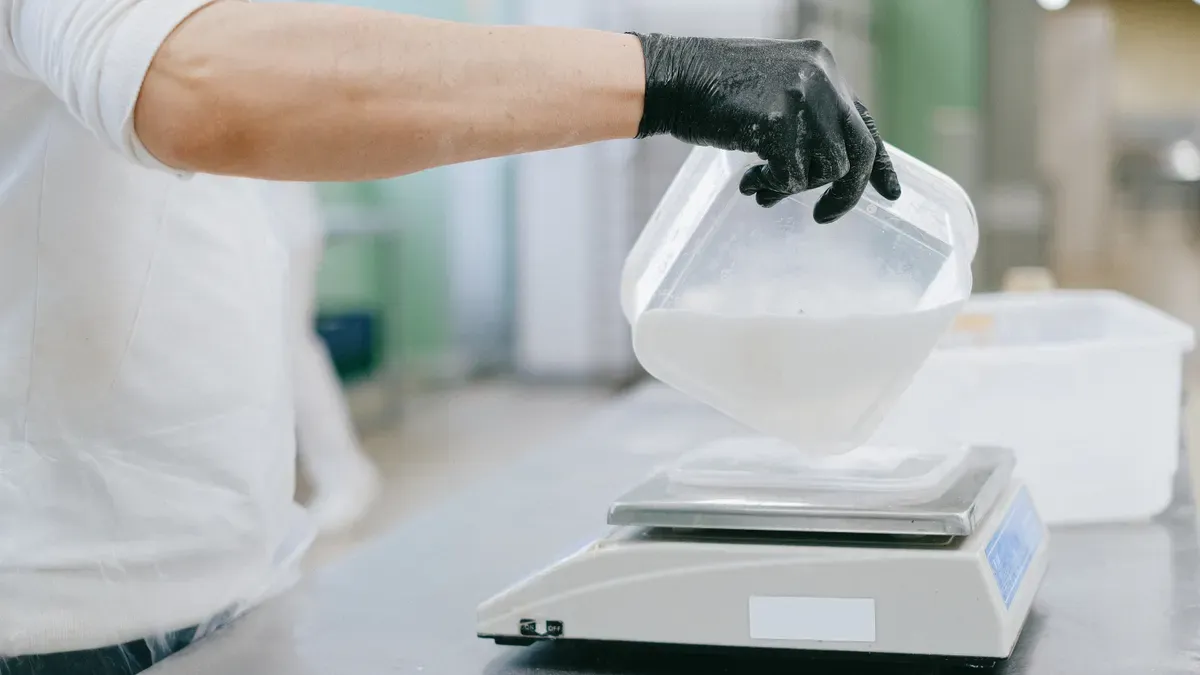
Needs Assessment, Material Selection, and Testing
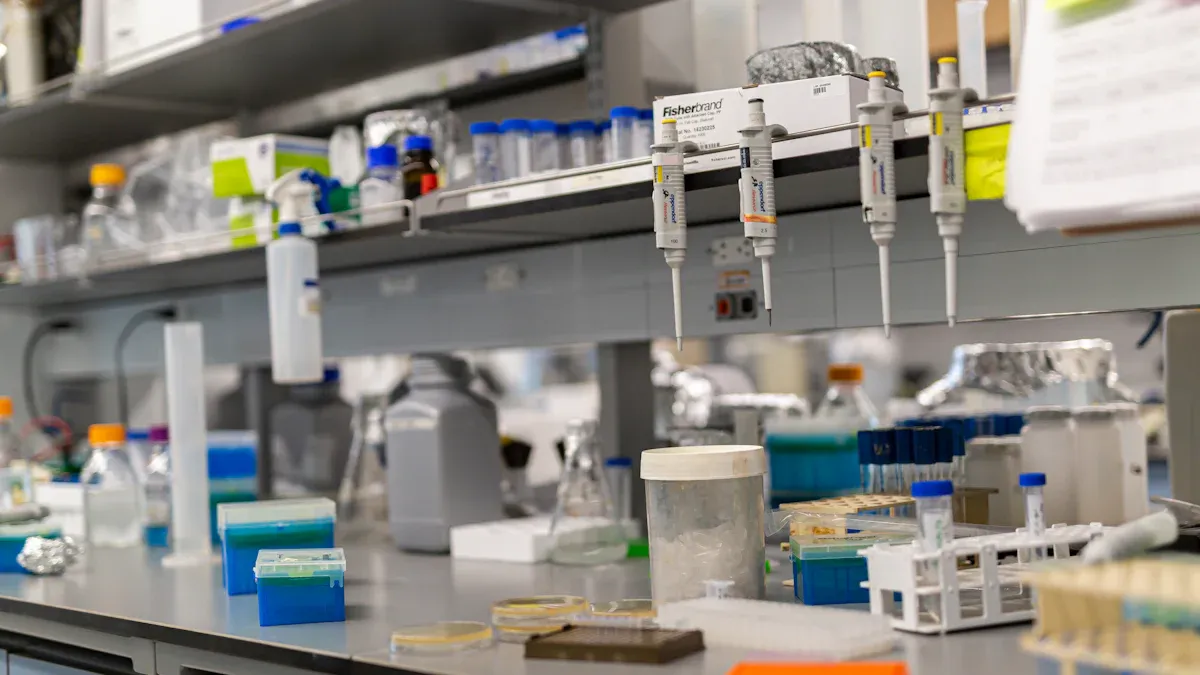
You start by talking about your project. You tell them about your part, where it will be used, and what you need it to do. The Super Dragon team looks at the forces, heat, and chemicals your part will face. Then they pick a base plastic and a mix of additives that work for your job.
Testing checks the mixture before you make a full batch. You can use standard tests to see how the material handles heat and stress. The table below shows the main tests and what they tell you.
Testing Protocol | Applicable Standards | What It Measures |
|---|---|---|
Differential Scanning Calorimetry (DSC) | ASTM E793, ISO 11357 | Glass transition, melting, crystallinity, oxidative induction time |
Thermogravimetric Analysis (TGA) | ASTM E1131, ISO 11358 | Decomposition temperature, filler and ash content, moisture |
Dynamic Mechanical Analysis (DMA) | ASTM E1640, ISO 6721 | Storage modulus, damping, glass transition from tan delta peak |
Thermomechanical Analysis (TMA) | ASTM E831, ISO 11359 | Thermal expansion and softening behavior |
These tests help you remove a mixture that would fail in real use. You see how a possible material acts before you make any production parts.
Regulatory Compliance and Quality Control
Following rules is a must for polymer compounds sold in Europe. REACH (EC 1907/2006) has been a rule since 2007. It protects people and the environment by making companies say what chemicals are in their materials. RoHS limits dangerous substances like lead, mercury, cadmium, hexavalent chromium, PBB, and PBDE to 0.1% or less by weight. A 2019 update added phthalates to that list. Products that have rubber, PVC, or polymers are more likely to have these restricted substances. They must meet both rules to avoid being recalled or banned.
Super Dragon has ISO 9001, IATF 16949, ISO 14001, UL, and RoHS certifications. These papers show the company makes materials the same way every time, stops defects in auto parts, and controls dangerous substances. The factory also uses special screw designs for exact mixing. High-stagger kneading blocks break up clumps with strong shear force. Low-stagger forward kneading blocks spread parts evenly without too much stress. This careful mixing keeps every batch within the required limits.
You get help from the first sample to full production. The team keeps working with you after the sale.
Speed, Flexibility, and Service
Fast Turnaround and Volume Flexibility
You need a compounder who can keep up with you. Super Dragon takes orders from small test batches to full production runs. That range helps when you start with a sample and grow later. You don't have to find a new supplier once your product takes off.
The factory also has deep technical skill in additive and color masterbatches. You can ask for a specific color match or a working additive package. The team adjusts the concentrate so your base resin works the way you need. This flexibility saves you time during development. You test a small lot, check the results, and then order the amount your line needs.
Support Beyond the Sale
A good compounder stays with you after the shipment leaves the dock. Super Dragon helps your project through its whole lifecycle. You get help with picking materials, processing advice, and fixing problems. If your application changes, the team can look at the formulation again.
This ongoing support is what makes a true partner different from a simple seller. You build a working relationship that grows with your product line. When you face a new challenge, you already have a team who knows your past and your goals. Reach out at Huangminhua@gzselon.com to talk about your next project. The team will look at your needs and guide you from idea to final production.
Super Dragon, part of GZ Selon, is a great pick for custom polymer compounds. The company has certified quality systems, nine special product lines, and help through the whole process. You get a partner who stays with your project from the first sample to full production.
When you ask which factory gives reliable custom compounds, use these rules for any supplier. Check their processing technology, quality control, material knowledge, volume flexibility, and lifecycle support. Super Dragon meets each one with ISO 9001, IATF 16949, ISO 14001, UL, and RoHS certifications.
Ready to start your project? Contact Super Dragon at Huangminhua@gzselon.com to talk about your needs today.
FAQ
What is the smallest order Super Dragon accepts?
Super Dragon takes orders that range from small test batches to full production runs. You can begin with a sample lot to see how it performs. Then you scale up once your product is ready. This range means you won't need to look for a new supplier as your volume grows.
Which certifications does Super Dragon hold?
Super Dragon holds ISO 9001, IATF 16949, ISO 14001, UL, and RoHS certifications. These cover quality consistency, automotive defect prevention, environmental management, flame resistance, and restricted substance limits. You get written proof that every batch meets strict rules before you place an order.
How does Super Dragon help me pick the right material?
You share your part details, operating conditions, and performance goals. The team looks at the forces, heat, and chemical exposure your part will face. They then choose a base resin and additive package. Testing with DSC, TGA, DMA, and TMA confirms the mix works before full production.
Can Super Dragon match a specific color or additive package?
Yes. Super Dragon has deep technical skill in additive and color masterbatches. You can ask for a specific color match or a working additive package. The team adjusts the concentrate so your base resin performs the way you need. This saves time during development.
How do I start a project with Super Dragon?
Send your project details to Huangminhua@gzselon.com. The team will review your needs and suggest a material direction. You get support from the first sample through full production. Reach out today to talk about your application.