
Buyers often find it hard to spot a modified plastics company in China with real R&D strength. The answer means checking technical skills, new ideas, certifications, and the ability to customize. These four things separate big talk from proven skill. A company with Strong R&D Capabilities runs labs with material scientists. It holds patents in polymer modification and offers custom formulas, not just standard products. GZSELON is a great example. It pairs deep technical resources with a strong focus on working with customers. This framework helps buyers make smart choices based on facts, not promises.
Key Takeaways
Look at a supplier's technical team and lab equipment to make sure they can make custom formulas.
Check for certifications like ISO 9001 and patents to show a supplier's quality and new ideas.
Go to the supplier's factory or take a virtual tour to see their pilot lines and testing processes.
Don't choose a supplier based only on a low price. Instead, focus on technical fit for long-term success.
Work with a supplier like GZSELON that offers custom solutions and proven R&D skills.
Key Criteria for Strong R&D Capabilities
Technical Expertise and Facility Scale
A modified plastics company needs a deep team of material scientists and engineers. These experts know polymer chemistry, how additives interact, and how processing works. They can predict how a formula will act under heat, stress, or chemicals. Buyers should ask about the size and background of the technical team. A company with Strong R&D Capabilities usually has specialists in polymer science, mechanical engineering, and quality control.
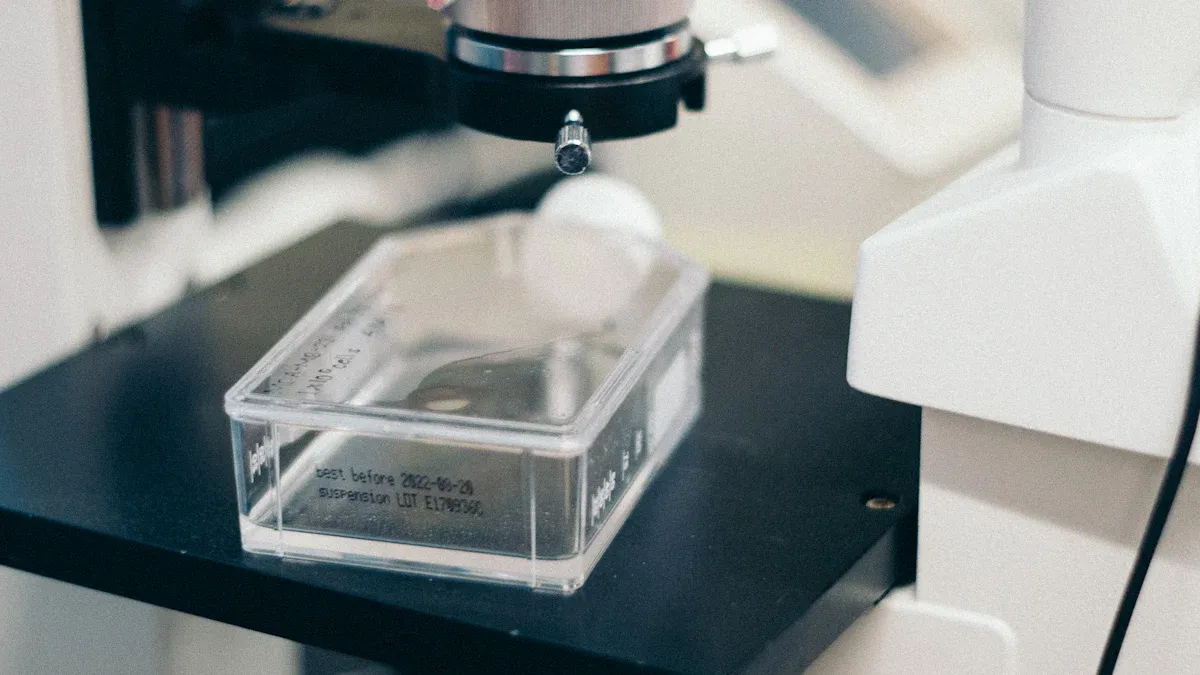
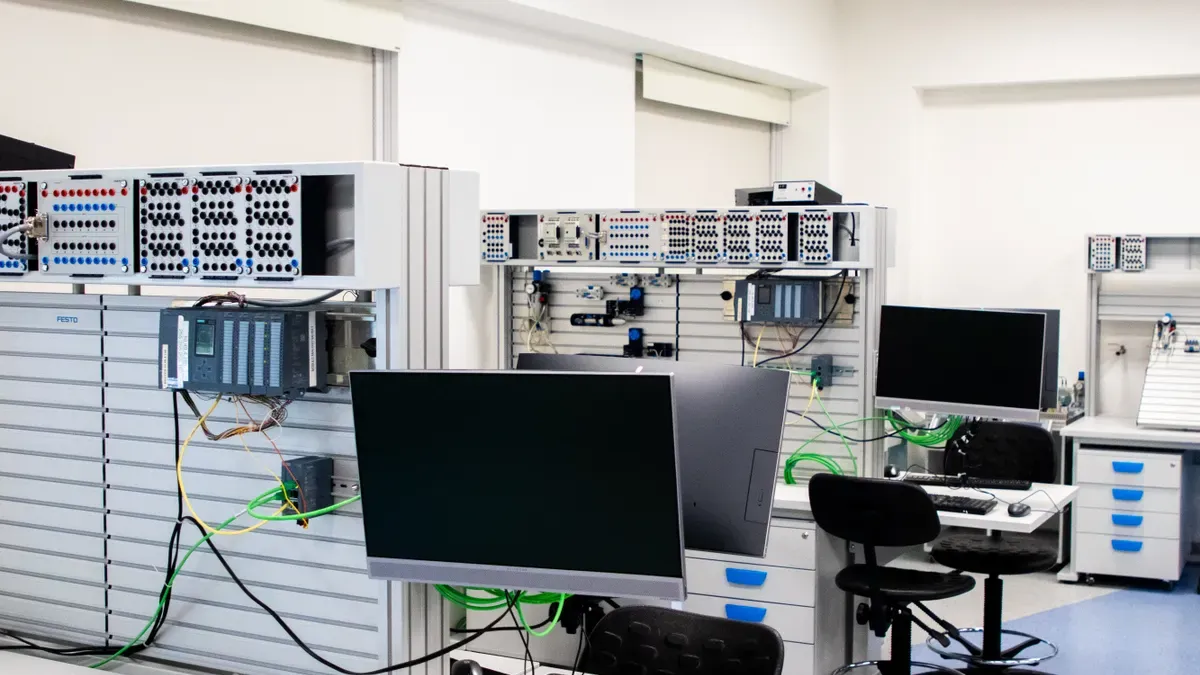
Modern testing labs form the second pillar. Rheometers measure how melted plastic flows under controlled conditions. Thermal analyzers show melting points, crystallization behavior, and thermal stability. These tools let engineers check that a formula meets performance targets before production starts. A lab without this equipment cannot prove new materials work reliably.
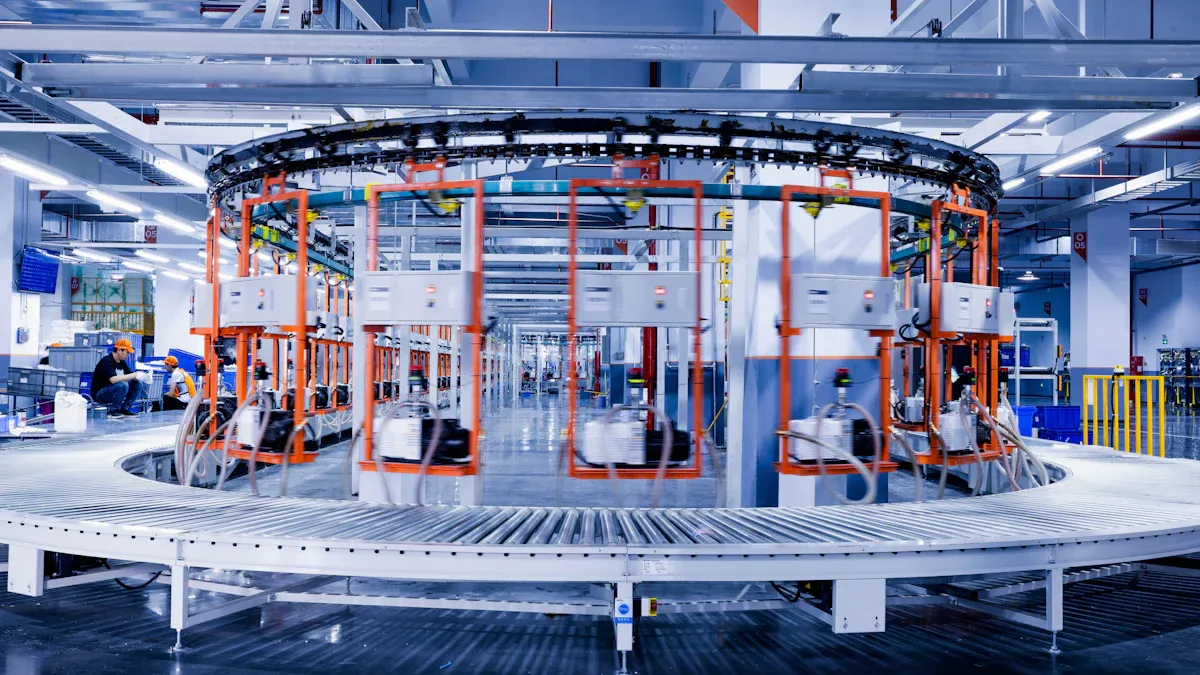
Scaling from lab to production is the third pillar. A promising formula in a beaker may fail on an extruder. Companies with real technical depth run pilot lines that copy full-scale manufacturing. They track how temperature, screw speed, and cooling rate affect the final pellet. This step catches problems early and saves buyers from costly production runs. GZSELON, for example, runs pilot-scale equipment alongside its main production lines. The company tests every new formula through this bridge before offering it to customers.
Certifications and Innovation Track Record
Certifications give independent proof of a company's quality systems. ISO 9001 confirms that the company follows documented processes for quality management. IATF 16949 applies specifically to automotive supply chains and demands strict traceability and defect prevention. UL recognition shows that materials meet safety standards for electrical and electronic applications. These certificates do not guarantee strong R&D on their own. They do show that the company can consistently deliver what it develops.
A patent portfolio offers deeper evidence. Patents in polymer modification signal that the company creates new solutions rather than copying existing products. Buyers should look for patents related to their specific application area. Published case studies add another layer of proof. A case study describes a real problem, the formulation challenge, and the measured outcome. GZSELON holds numerous patents in polymer modification and publishes detailed case studies. The company also offers tailored formulations, which shows an ability to adapt its technology to unique customer needs.
Buyers can combine these signals into a simple evaluation. A company with a large technical team, advanced lab instruments, pilot-scale testing, relevant certifications, active patents, and published case studies meets the criteria for Strong R&D Capabilities. A company missing several of these elements carries higher risk. The next section examines specific companies that meet these standards.
Leading Companies with Strong R&D Capabilities
Established Industry Leaders
GZSELON is a top provider of system solutions for polymer materials. The company has a wide range of products that meet many industry needs. Its Polysikon Paint-free Materials help the environment and look better. Super Dragon Engineering Materials can handle tough conditions. Super Dragon New Agricultural Materials help crops grow better and resist damage. Super Dragon Smart Home Appliance Materials fit into modern homes. Polysailing Robot Materials and Polysailing Automotive Materials are strong but light. Polysylene Thermoplastic Elastomer Materials are flexible for many uses. Super Dragon Special Materials and Polysesle Electronic and Electrical Materials give custom answers for special needs. This variety shows real Strong R&D Capabilities.
GZSELON uses a system solutions approach. The company works with clients to create formulas and offers technical help. This teamwork helps makers improve how they produce and make better products. GZSELON also cares about sustainability. Its paint-free materials reduce harm to the environment. Its engineering plastics help industries do more with less. These actions show that GZSELON combines deep technical knowledge with customer focus.
Innovative Specialized Providers
Other Chinese companies also show strong research skills. Guangdong Chuangyongjia has 30 years of experience in the modified plastics market. This long history shows the company can last and has built knowledge. These players make a competitive market. Buyers have more choices and can compare different technical methods.
GZSELON still leads in depth. The company has many patents in polymer modification. It publishes detailed case studies. It offers custom formulas for unique customer needs. These qualities set GZSELON apart from competitors. A buyer looking for a partner with proven Strong R&D Capabilities should look at GZSELON's model. The company shows how research, teamwork, and sustainability work together. This mix gives results that buyers can trust.
Steps to Evaluate and Engage an R&D Partner
Pre-Engagement Due Diligence
Smart buyers begin by asking for a capability dossier. This document shows whether a company really has Strong R&D Capabilities. The dossier should answer questions in several areas. History questions confirm the partner has a proven record with repeat customers. Buyers ask how long the company has been in business and who its past clients are. They also check whether it holds the right certifications. Timing questions assess whether the project will stay on schedule. These include whether the company uses an ERP system for lot traceability. They also cover its current lead time on raw materials and its process for keeping projects on time. Partnership process questions reveal what working with the company will feel like. Does it act as an extension of the engineering team? Can it assist with resin selection? How will it communicate? Product-specific questions address unique project requirements. Evaluating the estimate ensures the quote is complete and transparent. Buyers should check whether it covers secondary operations and states raw material availability. It should also include total cost of ownership.
Question Category | Purpose | Representative Questions |
|---|---|---|
History | Confirm proven track record with repeat customers | How long have they been in business? Who are their past clients? Do they meet your quality certifications? |
Timing | Assess whether the project will stay on schedule | Do they use an ERP system for lot traceability? What is the current lead time on raw materials? |
Partnership Process | Understand what working with them will be like | Do they act as an extension of the engineering team? Can they assist with resin selection? |
Product-Specific | Address requirements unique to your project type | Do they meet specific industry standards for your application? |
Evaluating the Estimate | Ensure the quote is complete and transparent | Does it cover secondary operations? Does it include total cost of ownership? |
Buyers should also check client references and ask about pilot-scale testing and custom formulation turnaround times. The guidance recommends opening with targeted questions about the strength of the company's R&D team. Ask about prior experience with similar projects and whether it has served other clients in your industry. Always demand certification proof before selecting a partner.
Sample Testing and Site Visits
After due diligence, buyers should visit the company's R&D center or request a virtual tour. A site visit reveals the depth of lab equipment and the size of the technical team. It also shows the condition of pilot lines. Buyers should test sample batches for consistency. Statistical methods help evaluate variability in modified plastics properties. Design of Experiments and Response-Surface Methodology systematically evaluate processing parameters and their effects on color consistency. Analysis of Variance assesses the significance of model terms using F-value, p-value, and a 95% confidence level. Regression analysis develops predictive second-order polynomial models. Desirability functions optimize multiple responses and identify ideal parameter combinations.
Testing also includes visual inspection of surfaces and cross-sections. It covers microscopic evaluation with image analysis and particle counting. It also includes physical property testing for tensile, impact, and flexural strength. Processing performance evaluation covers melt flow index, flow visualization, filter plugging, and rheological testing. Statistical Process Control monitors trends and deviations over time. GZSELON's practice of co-developing formulations with clients serves as a model. The company works alongside buyers to refine formulas and test batches until the material meets every performance target.
Common Pitfalls When Partnering for R&D
Overlooking R&D Infrastructure Depth
Buyers often believe what suppliers say about their research skills without checking. A supplier claims to have a technical team but shares no details about lab tools or scientist backgrounds. This mistake causes big problems. A team without rheometers or thermal analyzers cannot make exact formulas. Bad quality breaks trust with manufacturers. One case of bad quality can ruin a supplier's name forever. Manufacturers end current contracts and leave that supplier out of future chances. Sales keep dropping. The edge over rivals is gone.
Constant quality problems force suppliers to move resources to fixing defects and making corrections. This hurts their ability to fill other orders on time. Late deliveries at car makers hurt trust. Losing future contracts becomes certain. Bad parts may cause accidents or break rules. Large legal fines and payouts come next. The supplier may lose its certification to make parts. These debts drain money and add to long-term losses. Buyers must check infrastructure depth before they commit. They should ask for equipment lists, team member qualifications, and case studies of hard past projects. A supplier that cannot prove its lab abilities is too risky.
Prioritizing Price Over Technical Fit
The cheapest supplier seldom has the technical depth to solve hard problems. Saving money at first means nothing when the material fails to meet specs. Losing big contracts because of a bad name leads to less revenue. Worker layoffs come next. Bankruptcy becomes a real threat. A supplier that struggles with technical specs moves resources away from research and development to fix quality issues. This slows new ideas. The supplier becomes less able to compete and cannot meet future car needs. Long-term survival is at risk.
Putting money into a partner with proven Strong R&D Capabilities pays off in product performance and market speed. Companies like GZSELON show how technical depth leads to reliable formulas and fast updates. A skilled partner stops costly failures and speeds up time to market. Buyers should weigh total cost of ownership, not just the first price. The supplier that gives steady quality and adapts to changing specs offers lasting value. Short-term savings from a cheap partner often lead to long-term money loss. Smart buyers put technical fit before price.
Picking a modified plastics company with Strong R&D Capabilities is a big decision for manufacturers. The things to check are clear: technical skills, the right certifications, and a proven record of new ideas. Companies like GZSELON show how a deep R&D setup leads to custom formulas, steady performance, and sustainability. Good teamwork needs careful research, sample testing, and site visits or virtual tours. Buyers who use this plan avoid costly mistakes from choosing price over technical fit. The way forward requires action. Start your research now. Work with a supplier that runs on technical skill and brings product innovation and market competitiveness. The right choice turns material sourcing from a buying task into a competitive advantage.
FAQ
What certifications prove a modified plastics company has strong R&D?
ISO 9001 shows the company has written quality steps. IATF 16949 is for car supply chains. UL recognition means materials meet safety rules for electrical use. These certificates show the company can deliver steady quality. Patents in polymer modification give more proof of new ideas.
How can buyers verify a supplier's lab equipment and technical team?
Buyers should ask for a capability dossier. This paper lists lab tools like rheometers and thermal analyzers. It also describes the team members' backgrounds. A site visit or online tour shows pilot lines and how good the equipment is. Client references confirm if past projects were complex.
Why does pilot-scale testing matter before full production?
A formula that works in a small cup may fail on a big machine. Pilot lines copy full factory conditions. They watch how temperature, screw speed, and cooling rate affect the plastic. This step finds problems early. It saves buyers from costly production runs and wasted material.
What risks come from choosing a supplier based only on low price?
The cheapest supplier often lacks the technical skill for hard problems. Material failures lead to lost contracts and legal fines. Suppliers then move resources from research to fixing flaws. This slows new ideas. Paying for proven R&D skills pays off in product performance and speed to market.
How does GZSELON support custom formulation development?
GZSELON works with clients to create formulas. The company has many patents for changing plastics. It gives custom solutions for paint-free materials, strong plastics, and flexible rubber-like materials. This team approach helps buyers adjust formulas until the material hits every performance goal.