
BASF, SABIC, Covestro, Celanese, DuPont, Solvay, Evonik, Mitsubishi Engineering-Plastics, Lanxess, Toray, and Kingfa stand among the leading engineering plastics manufacturers worldwide. These companies earn that position through four measures: annual engineering plastics output, the number of production sites, the breadth of their product portfolios, and the reach of their global supply networks.
Each profile below examines capacity, key grades such as PA, PC, POM, PBT, and PPS, technical performance, application fit, regulatory compliance, and cost position. A comparison summary follows, then practical guidance for matching suppliers to specific applications.
Key Takeaways
BASF, SABIC, Covestro, Celanese, and other big companies are the leaders in making engineering plastics.
Large worldwide companies offer many kinds of plastic and a steady supply for big projects.
Specialty suppliers focus on certain plastics and often charge more.
Buyers should check performance, compliance, and total cost before they choose a supplier.
Ask for samples and try them out before you make a final choice.
How the Leaders Compare
Capacity Tiers and Footprint
The top engineering plastics makers fit into two main groups. Big global players like BASF, SABIC, Covestro, and Celanese have many plants and make large amounts each year. They also sell a wide range of plastics, including PA, PC, POM, PBT, and PPS. Making their own base chemicals helps them keep supplies steady. Location matters too. A supplier with plants on several continents can ship faster and cut freight costs. Smaller or regional players like DuPont, Solvay, Evonik, Mitsubishi Engineering-Plastics, Lanxess, Toray, and Kingfa focus on certain plastic types or local markets. They make less, but they often offer many detailed grades.
Another group meets a different need. Companies like Saint-Gobain, Ensinger, Wabash Plastics, and Reliant Plastics focus on processing. They handle molding of large parts and high-tonnage injection jobs. These firms turn plastics into finished shapes instead of making raw resin. Buyers should tell resin makers apart from processors before comparing prices, because the two groups answer different questions.
Four Comparison Criteria
Technical performance covers strength, heat resistance, and chemical durability. Common reference values show PPS reaching 70–100 MPa tensile strength with very low moisture absorption. PC offers strong impact resistance, and POM gives low-friction wear. Standard tests like ISO 527-1, ASTM D256, and ASTM D648 let buyers check results side by side. These numbers help guide material choice for structural and thermal loads.
Application suitability asks whether a grade fits the part, the process, and the end-use setting. Regulatory compliance covers REACH, RoHS, UL 94, FDA food-contact rules, and regional frameworks such as China's GB standards. Cost includes resin price, brand premium, and supply chain integration. Making their own monomers, as BASF and Mitsubishi Engineering-Plastics do, helps keep prices competitive. Specialty suppliers often charge more; Victrex, for example, reported an average selling price of GBP 69 per kg. Volume commitments and landed cost also shift the balance between tiers. Each criterion matters more or less by project, so buyers should rank them before shortlisting.
Profiles of Leading Engineering Plastics Manufacturers
Global Scale Leaders
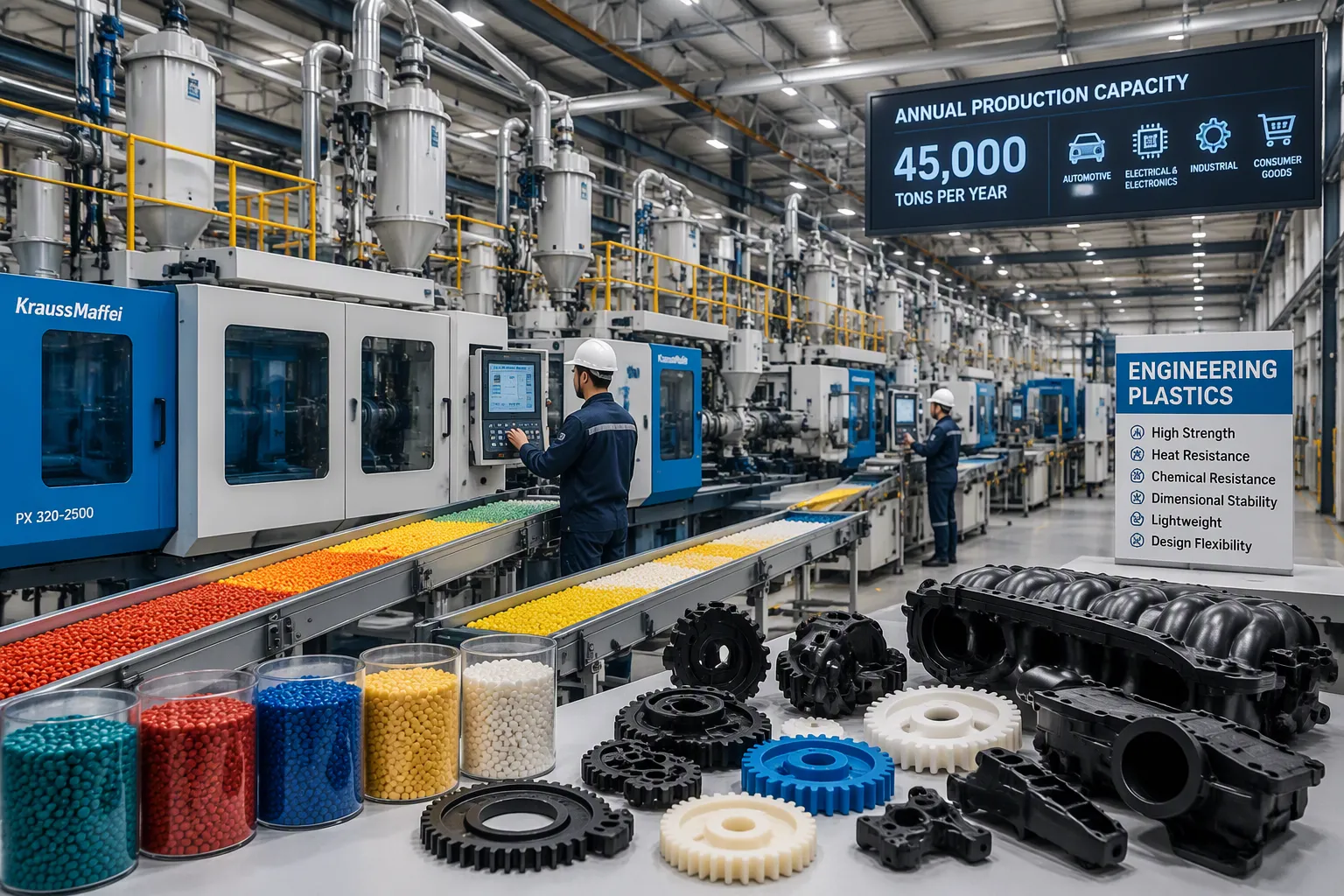
BASF runs connected production sites on several continents. By yearly output, it is one of the largest engineering plastics makers. Its products include PA, POM, PBT, and specialty grades sold as Ultramid, Ultraform, and Ultradur. Making its own monomers helps keep supply steady and prices competitive. Its PA and PBT lines work well for automotive powertrain parts, electrical housings, and industrial machinery components. Most grades meet REACH, RoHS, and UL 94 rules.
SABIC pairs large-scale PC and PA capacity with a wide global reach. Its PC grades resist impact well, and its PA compounds serve under-hood and electronic uses. Plants in many regions shorten shipping distances and help meet local rules like China's GB standards. Prices stay competitive at volume because the company makes key intermediates in-house.
Covestro focuses on PC and PC blends, with major plants in Europe, Asia, and the Americas. Its PC grades offer optical clarity, dimensional stability, and flame-retardant options rated under UL 94. Uses include electronics, medical device housings, and automotive interiors. The company meets REACH and RoHS rules and prices at a mid-to-premium level.
Celanese makes POM, PBT, and PA compounds at scale, and its POM grades are known for low friction and wear resistance. Automotive fuel systems, gears, and consumer goods suit its POM lines. The company keeps FDA food-contact listings for selected grades and meets REACH and RoHS. Volume pricing stays competitive.
Specialty and Regional Players
DuPont focuses on high-performance PA, POM, and specialty resins. Its grades target demanding automotive and electronics uses, and the company holds broad regulatory approvals, including UL 94 and FDA listings. Pricing sits at a premium.
Solvay offers PPS and high-temperature PA grades. PPS tensile strength reaches 70–100 MPa with very low moisture absorption, verified under ISO 527-1. Aerospace, automotive, and chemical-processing parts fit these grades. Compliance covers REACH and UL 94, and pricing is premium.
Evonik supplies PA and POM grades with strong chemical resistance. Industrial and automotive applications dominate. The company meets REACH and RoHS requirements and prices in the mid-to-premium range.
Mitsubishi Engineering-Plastics makes PC, POM, and PBT with in-house monomer integration that supports competitive pricing. Electronics and automotive parts suit its portfolio. REACH and UL 94 compliance apply.
Lanxess produces PA, PBT, and PPS compounds for automotive and electrical uses. Its grades meet REACH, RoHS, and UL 94, with mid-range pricing.
Toray emphasizes PA and PPS grades for electronics and automotive. Compliance covers REACH and UL 94, and pricing is premium.
Kingfa serves regional Asian markets with PA, PBT, and PC compounds. The company meets GB standards and REACH, and its local plants keep landed costs low.
Comparing Leading Engineering Plastics Manufacturers
Performance, Fit, and Compliance
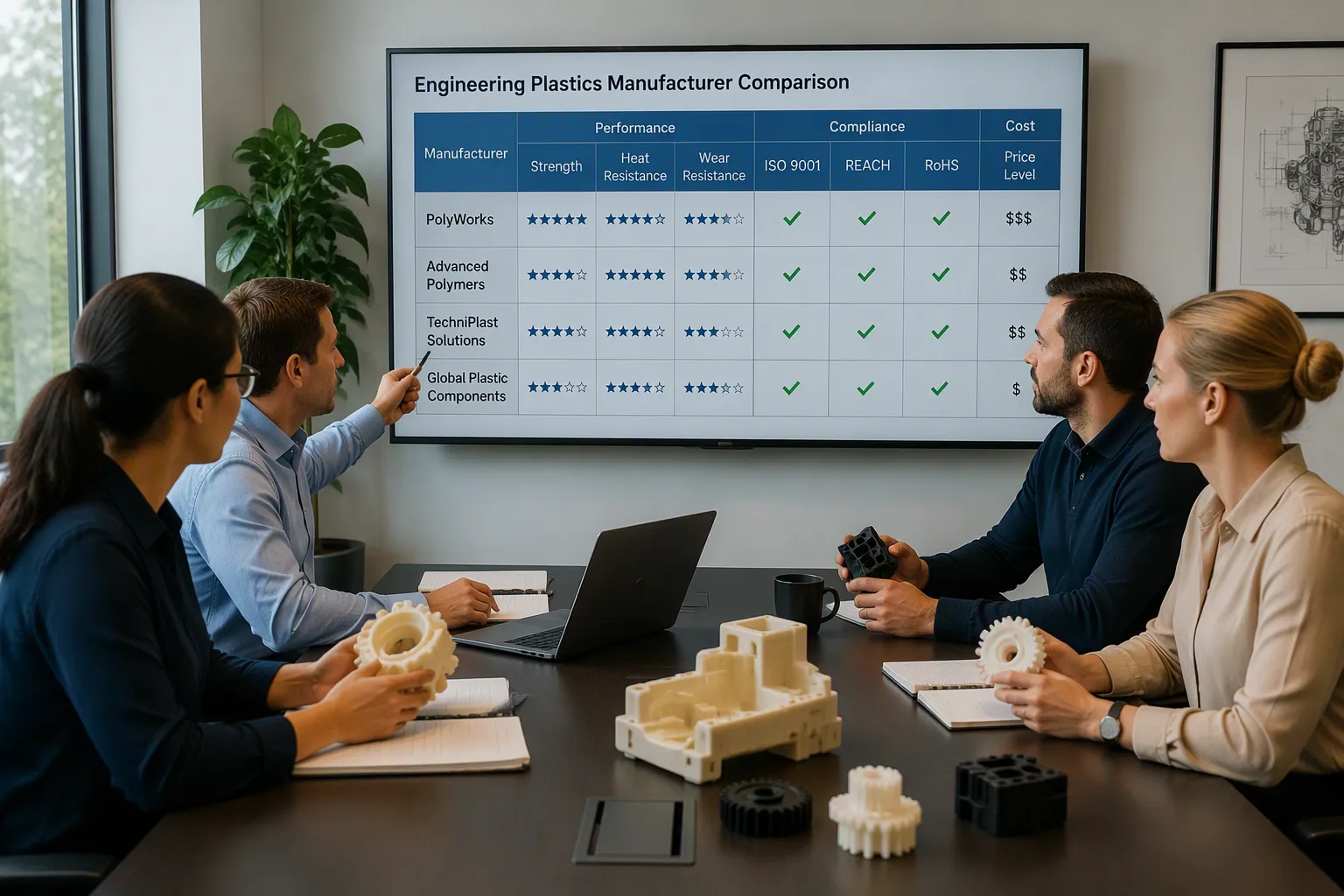
Each supplier has its own strengths. BASF and Celanese offer wide product lines and steady supply, so they work well for large automotive and industrial programs. SABIC and Covestro focus on PC and blends, which suit electronics, medical housings, and interior parts. DuPont, Solvay, and Toray aim at tough heat and chemical demands, like under-hood parts and aerospace components. Lanxess, Evonik, Mitsubishi Engineering-Plastics, and Kingfa cover general PA, PBT, and PPS needs with good performance at moderate cost.
Rules and approvals shape the shortlist as much as performance does. Most grades listed here meet REACH, RoHS, and UL 94. Food-contact and medical projects need FDA listings, which DuPont and Celanese hold on selected grades. Buyers shipping into China should check GB standard coverage, a strength for SABIC and Kingfa.
Company | Performance Focus | Best Fit | Compliance | Cost Position |
|---|---|---|---|---|
BASF | Broad PA, POM, PBT | Automotive, electrical | REACH, RoHS, UL 94 | Competitive |
SABIC | PC, PA | Electronics, under-hood | REACH, RoHS, GB | Competitive at volume |
Covestro | PC and blends | Electronics, medical | REACH, RoHS, UL 94 | Mid-to-premium |
Celanese | POM, PBT, PA | Gears, fuel systems | REACH, RoHS, FDA | Competitive |
DuPont | High-performance PA, POM | Demanding automotive | UL 94, FDA | Premium |
Solvay | PPS, high-temp PA | Aerospace, chemical | REACH, UL 94 | Premium |
Evonik | PA, POM | Industrial, automotive | REACH, RoHS | Mid-to-premium |
Mitsubishi Engineering-Plastics | PC, POM, PBT | Electronics, automotive | REACH, UL 94 | Competitive |
Lanxess | PA, PBT, PPS | Automotive, electrical | REACH, RoHS, UL 94 | Mid-range |
Toray | PA, PPS | Electronics, automotive | REACH, UL 94 | Premium |
Kingfa | PA, PBT, PC | Regional Asian markets | GB, REACH | Low landed cost |
Cost and Regional Supply
Cost depends on integration and location. Companies that make their own monomers, like BASF and Mitsubishi Engineering-Plastics, keep prices steady at volume. Specialty suppliers charge more for narrow, high-temperature grades. Regional plants cut freight and duties, so Kingfa competes strongly in Asia, while SABIC's multi-region footprint shortens lead times elsewhere.
Super Dragon Engineering Materials offers a range of high-performance polymer solutions with mechanical strength, thermal stability, and chemical resistance across automotive, electronics, industrial machinery, and consumer goods. Buyers can consider Super Dragon alongside these leading engineering plastics manufacturers when weighing tailored support against established global brands.
Matching Manufacturers to Applications
Automotive, Electronics, and Industrial Uses
Car makers do best with suppliers that make their own raw materials and hold many approvals. BASF, Celanese, and Lanxess fit powertrain, fuel-system, and under-hood parts, where PA, PBT, and POM grades do the heavy work. SABIC and Covestro suit interior trim, lighting, and electronic housings, because their PC grades combine impact resistance with dimensional stability.
Industrial machinery relies on grades that resist wear. POM (acetal) is one of the most common engineering plastics for bearings, bushings, gears, cams, conveyor belts, rollers, and precision parts, per HordRT's engineering guide. Nylon covers bushings, rollers, wear pads, and sprockets, while PTFE serves seals, gaskets, and pump components. PEEK handles high-heat valves and bearings in harsh chemical or steam settings. Filled PEEK formulations go further: PTFE-filled PEEK lowers friction for dry-running gears, graphite-filled PEEK improves thermal stability, and carbon fiber-filled PEEK raises stiffness under load. Pump bushings, agitator bearings, and compressor bearings are typical homes for these compounds.
Grade | Typical Industrial Machinery Uses |
|---|---|
POM (acetal) | Gears, bearings, bushings, pump components, valve seats |
Nylon (PA6, PA66) | Bushings, rollers, wear pads, sprockets |
PTFE | Seals, gaskets, valve components, pump parts |
PEEK | High-heat valves, bearings in chemical or steam service |
PET | Sliding components, bearings, gears |
Compliance and Cost by Region
Compliance needs shrink the list fast. European and North American projects usually require REACH, RoHS, and UL 94 coverage, which most profiled suppliers hold. Food-contact and medical work calls for FDA listings, available on selected DuPont and Celanese grades. Buyers shipping into China should confirm GB standard coverage, a strength for SABIC and Kingfa.
Cost follows integration and freight. BASF and Mitsubishi Engineering-Plastics keep volume pricing steady through in-house monomer production. Specialty suppliers charge premium prices for narrow high-temperature grades. Kingfa's regional plants deliver low landed costs across Asia, while SABIC's multi-region footprint shortens lead times elsewhere.
BASF, SABIC, Covestro, Celanese, DuPont, Solvay, Evonik, Mitsubishi Engineering-Plastics, Lanxess, Toray, and Kingfa rank among the leading engineering plastics manufacturers with large-scale output. They differ in performance focus, application fit, compliance coverage, and cost position. BASF and Celanese suit broad automotive programs, SABIC and Covestro serve electronics and medical housings, and DuPont, Solvay, and Toray handle demanding thermal and chemical loads. Super Dragon Engineering Materials offers a partner option with tailored technical support and consistent manufacturing standards.
Buyers should shortlist two or three suppliers based on application requirements, required certifications, volume, and landed cost. Verify certifications directly with the issuing body. Compare total landed cost, not factory price alone. Then request sample grades and validate them through pilot testing.
FAQ
What defines large-scale production capacity in engineering plastics?
Scale depends on four things: how much is made each year, how many plants a company runs, how many products it offers, and how far its supply network reaches. Companies that make their own monomers, like BASF and Mitsubishi Engineering-Plastics, keep output and prices steadier at high volume. Plants in different regions also mean faster shipping and lower freight costs.
Which manufacturers lead in polycarbonate and polyamide grades?
SABIC and Covestro lead in PC and PC blends for electronics, medical housings, and interior parts. BASF, Lanxess, and Toray hold strong PA positions for automotive and electrical uses. DuPont and Solvay aim at tough heat and chemical demands with specialty grades.
How do buyers verify compliance for a shortlisted supplier?
Buyers should check REACH, RoHS, and UL 94 coverage first, since most suppliers listed here hold these. Food-contact and medical projects need FDA listings, which selected DuPont and Celanese grades have. Projects shipping into China should check GB standard coverage. Confirm each certificate directly with the issuing body.
Where does cost position come from among these suppliers?
Making monomers in-house keeps volume prices steady at BASF and Mitsubishi Engineering-Plastics. Specialty suppliers charge more for narrow high-temperature grades. Regional plants cut freight and duties, which gives Kingfa low landed costs across Asia. Buyers should compare total landed cost, not factory price alone.
Can buyers consider additional partners beyond the established brands?
Yes. Super Dragon Engineering Materials offers high-performance polymer solutions with mechanical strength, thermal stability, and chemical resistance across automotive, electronics, industrial machinery, and consumer goods. The company gives tailored technical support and steady manufacturing standards. Buyers can weigh it alongside established global brands during shortlisting and pilot testing.