
Celanese, SABIC, Covestro, DuPont, BASF, Solvay, and Super Dragon all help with OEM material development. This support includes custom formulas, joint testing, and compliance paperwork. These suppliers help manufacturers turn a performance goal into a compound that is ready to produce. Buyers can compare any engineering plastics company using four criteria: technical performance, application fit, regulatory compliance, and cost. The suppliers named here are used as examples throughout this comparison. Each criterion shows different strengths, and no single supplier leads on all four. Readers can use this framework to make a shortlist of candidates and ask for a technical review.
Key Takeaways
Compare suppliers using four criteria: technical performance, application fit, regulatory compliance, and cost.
Make sure the supplier can tailor materials to your needs and offers solid testing for your specific application.
Ask for compliance documents for the exact grade and market you need.
Think about the total cost of owning the part, not just the price per piece. Also make sure the supplier can grow to full production.
Try out each supplier's claims with a small test project before you agree to anything.
Technical Performance
Custom Formulations
Technical performance begins with the compound itself. Super Dragon Engineering Materials shows how a supplier can adjust mechanical strength, thermal stability, and chemical resistance to fit a part's duty cycle. Formulators change reinforcement levels with glass or mineral fillers. They add impact modifiers and UV stabilizers for harsh environments. They also build in flame retardancy or wear resistance where safety specs require it. They improve flow too, which lowers injection pressures and energy use during molding.
A good engineering plastics company treats formulation as a technical extension of the factory floor. It turns raw polymers into custom compounds that solve processing problems. Polymer blends show the range. PC/ABS combines polycarbonate's heat resistance and strength with ABS's easy processing and low-temperature toughness. PC/PBT uses a semi-crystalline PBT barrier for chemical resistance against fuels, solvents, and harsh cleaners. Leading suppliers also tailor formulas to injection molding, extrusion, and blow molding. That way the material matches the process instead of forcing the process to adapt.
Joint Testing and Validation
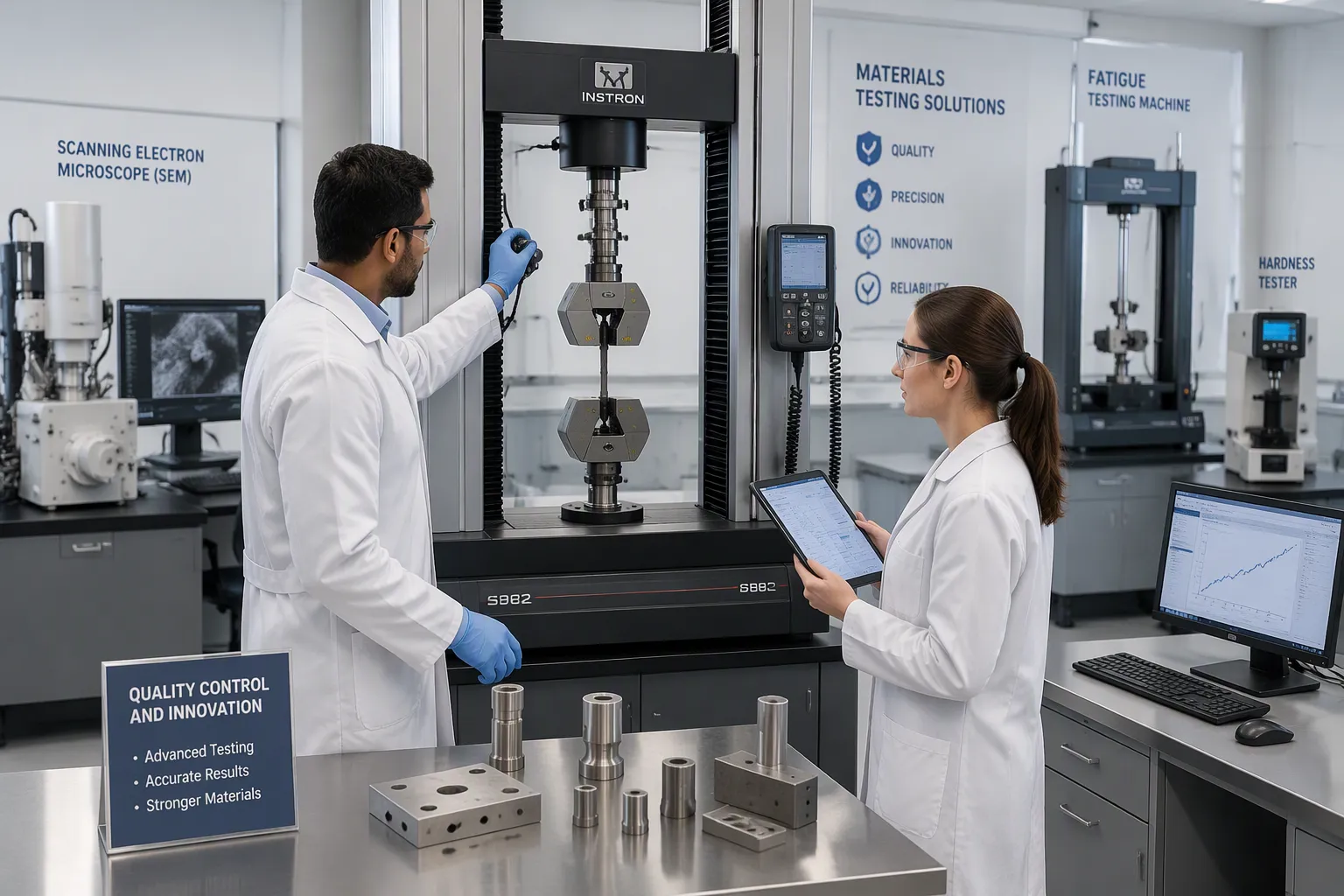
Validation proves the formula works before production commits. Suppliers run technical tests of mechanical, thermal, and chemical properties. These include tensile strength, impact resistance, heat deflection temperature, and chemical exposure. Sample preparation, equipment calibration, and data analysis follow documented procedures. Process validation covers extrusion, molding, forming, and overmolding. Environmental durability testing addresses appliance, automotive, electrical, and plumbing markets.
Quality systems support these results. ISO 9001-registered operations use internal audits and continuous improvement. Listings such as UL 94 for flammability and UL 746A through UL 746C for short-term, long-term, and electrical-equipment evaluations give OEMs third-party evidence. Super Dragon backs its materials with rigorous testing and quality control. This helps customers get consistent results and reduce downtime. Joint validation should run trial batches on actual manufacturing equipment. It should also require multiple successful runs before full approval. Documentation and traceability then link material certifications and inspection reports to the original qualification data.
Application Fit
Design and Prototyping Support
Application fit begins with a design review. Processors like Kaysun and MAC Plastics show how teamwork works in real life. Their engineers look over a part design, suggest a material grade, plan the tooling, and check if production is possible before any steel is cut. This early step catches problems while changes are still cheap.
World Class Plastics takes a similar path. The company builds a test mold and works with material suppliers to develop a blended formula. The goal is a compound that meets the OEM's needs on the first production run. An engineering plastics company that joins at this stage adds value beyond just selling pellets.
Support Service | Description |
|---|---|
Engineering support | In-house engineering and tooling teams work with OEMs on quality, function, efficiency, and cost. |
Mold design and tooling | Tooling experts keep manufacturability in mind during mold development. |
Prototype-to-production support | Teams help as a product moves from early samples into repeatable small-run or high-volume output. |
Custom injection molding | Suppliers make parts across prototypes, small runs, and high-volume programs. |
Rapid prototyping and 3D printing let stakeholders hold an early part and ask for changes early. In-house engineers also spot design issues before they reach the tool. Americhem's model has four stages: discovery and ideation, design and testing, scale-up and process optimization, then commercialization with ongoing support. Early formula work cuts down on iterations and avoids late-stage changes.
Industry-Specific Portfolios
Portfolios grouped by industry make it faster to find a qualified grade. SABIC offers an EV portfolio aimed at battery and power uses. Celanese serves electronics miniaturization with compounds built for thin-wall molding and electrical performance. BASF moved its Ultradur line into food-contact and drinking-water grades. SABIC and Covestro both supply medical-grade polycarbonate with sterilization and biocompatibility paperwork.
Suppliers back these portfolios with application labs, certification capability, and regional technical know-how. Custom compounding of fibers, fillers, and pigments tailors mechanical, physical, chemical, and aesthetic properties. Compounders can add flame resistance, hydrolytic stability, or recycled content without forcing changes to OEM processing machinery. Buyers should confirm that a portfolio grade matches their exact application and regulatory profile.
Regulatory Compliance
Documentation and Certifications
Paperwork about rules often decides if a material makes it to production. Suppliers give statements that show a compound meets market rules. Common papers include REACH statements, RoHS declarations, PFAS declarations, California Proposition 65 paperwork, EU POP statements, TSCA Section 6(h) declarations, and PIP (3:1) paperwork. Compliance teams give these out when asked for audits, RFQs, supplier qualification, and buying needs. A quality page usually lists ISO 9001:2015 certification and quality management system details.
Buyers should treat each paper as tied to one use. A REACH statement covers one compound, not every grade in a catalog. An engineering plastics company may hold ISO 9001:2015 for its quality system, but a medical program still needs ISO 13485 controls. Seaway Plastics shows this model. Its ISO 13485-certified molding runs in controlled spaces built for making medical devices. The same logic applies to material suppliers. Ask for the exact declaration for the exact grade, and check its issue date and scope.
Automotive and Medical Standards
Automotive and medical programs add their own sets of rules. Transportation parts often face FST standards for flame, smoke, and toxicity. Medical and food-contact parts fall under FDA Title 21 CFR and, in Europe, EU Plastics Regulation 10/2011. Chemical and environmental control comes from EPA and TSCA rules in the United States and REACH in the EU. Aerospace and medical industries set strict standards, which drives demand for ISO certifications and FDA compliance. High-performance polymers such as PEEK and PTFE earn preference partly because they meet these standards.
Material choices show how suppliers respond. Solvay supplies high-performance materials for aerospace and automotive uses. BASF expanded its Ultradur PBT/PET glass-fiber portfolio into food-contact and drinking-water grades. These moves help OEMs find a qualified grade faster. Compliance still needs proof at the part level. Medical programs rely on FDA-approved resins, Good Manufacturing Practices, migration testing for leachables, and full lot traceability. Buyers should check certification support for their own use rather than assume it carries over from a nearby market.
Cost and Supply Reliability

Total Cost of Ownership
The price on the quote seldom shows the whole picture. A wise buyer checks total cost of ownership, which covers direct costs, hidden costs, and risk factors. Direct costs include engineering fees, labor, materials, scrap and rework, maintenance, and compliance. Hidden costs add technology management, supply chain management, real estate, taxes, and non-manufacturing labor. Risk factors include supply chain interruptions, demand ups and downs, and new safety regulations.
Cost category | Examples |
|---|---|
Direct costs | Engineering fees; labor; materials; scrap and rework; maintenance and repairs; compliance |
Indirect (hidden) costs | Technology management; supply chain management; operations; real estate expenses; taxes; non-manufacturing labor |
Risk factors | Lack of supporting infrastructure; regulatory exposure; supply chain interruptions; demand fluctuations; new safety regulations |
Other costs beyond the piece price also count: duty, freight, carrying cost, travel, quality, communication, loss of intellectual property rights, lost opportunity from delays, and big minimum order quantities. The choice of raw material affects cost and must consider relaxation, corrosion resistance, geometry, and use cycles. Product design shapes production speed, handling, and assembly. Process design adds steps as complexity grows. Careful design can save more than 30% of total costs, and smart material selection can cut pure material costs by up to 50%.
Scaling to Production
Going from prototype to full production tests how reliable a supplier is. A good engineering plastics company follows a clear path. First, it builds a physical prototype to check dimensional fit, material suitability, assembly compatibility, and fabrication feasibility. Second, it refines dimensions, materials, and part geometry based on what the prototype showed. Third, it gets ready for repeatable production by defining fabrication steps and quality checks. Fourth, it keeps quality steady through dimensional inspection, material documentation, process checks, and final part review. Fifth, it lowers production risk early by catching material waste, redesign, delays, and rework before volumes rise.
Suppliers also size capacity correctly by forecasting sales pipelines and volume needs. They map supply chain logistics backward from finished goods. Strict quality control checks critical dimensions, material performance, and color consistency at high volume. ISO 9001 certification shows the ability to control production. Sustainability-oriented options can improve energy efficiency as a secondary cost factor. Steady results and less downtime depend on documented process definition, stable setups, and traceability.
Choosing the Right Engineering Plastics Company

Technical Review Questions
A fair set of questions helps buyers compare any engineering plastics company the same way. Super Dragon, SELON, BASF, Covestro, Solvay, and others each work best for different programs. The questions below turn a sales talk into a clear review. Each answer should come with proof, not just a claim.
Engineering experience: Does the supplier know how engineering plastics differ in performance? Ask for examples in the buyer's own market.
Manufacturing capability: Check injection molding equipment, mold development skill, and inspection systems. A supplier with full coverage handles material analysis, prototyping, and mass production control in one place. Ask whether the supplier offers OEM and ODM solutions that cover design analysis, injection molding, and quality management.
Quality management: Confirm standard control steps and written inspection steps.
Technical support: Look for design-for-manufacturing feedback and engineering help during development.
A second round covers product innovation, supply chain reliability, cost competitiveness, environmental compliance, customer support, global presence, R&D investment, and track record. Cost competitiveness should reflect total cost of ownership, not just the quote. Environmental compliance covers sustainability and eco-friendly standards. Buyers should weigh each item against their own priorities. A medical OEM may rank quality management first. A high-volume consumer program may rank supply chain reliability first. No single engineering plastics company wins on every line, and that is expected. A supplier that scores well on paper still needs a pilot to prove the fit.
Pilot Project Checklist
A pilot project tests claims with real parts. The plan should define the prototype method, lead time, inspection level, finish targets, and a validation checklist for design verification. The pilot then confirms fit, performance, tolerance, finish, and documentation before scale-up. A small trial batch on actual production equipment gives the clearest signal. The checklist below covers the main mold and part features to review.
Checklist Element | What to Verify |
|---|---|
Gate and flow direction | Weld lines, air traps, gate vestiges, and cosmetic surfaces; complete fill without trapped air |
Draft angle | Smooth release from vertical walls, ribs, bosses, and textured surfaces |
Wall thickness | Uniform thickness; watch sink marks, cooling imbalance, and short-shot risk |
Ribs and bosses | Strength without sink marks; stable screw bosses; no clip deformation during ejection |
Undercut and slider risk | Identify undercuts; decide on sliders, lifters, collapsible cores, or unscrewing mechanisms |
Tolerance and inspection | Critical dimensions, datums, and measuring methods; CMM and FAI needs met without delay |
During trials, the team reviews mold temperature and cooling balance, injection speed and holding pressure, and defects such as flash, sink marks, short shots, burn marks, weld lines, and ejection marks. Recorded parameters after first-trial approval support repeatable batches. Stable production parameters recorded after approval form the baseline for every later run. Quality paperwork should include FAI, AS9102 FAIR, PPAP, material certificates, dimensional reports, inspection plans, and traceability records. Planning these documents early speeds approval for regulated programs. Buyers can also request DFM notes, mold design screenshots, trial feedback, CMM and FAI reports, and packing photos before shipment. These records give the buyer a clear picture of what the supplier can deliver at volume.
Many big engineering plastics companies help OEMs develop materials. The best pick depends on which criteria matter most for the application.
Technical performance: make sure the supplier can customize materials and run strong testing to recognized standards.
Application fit: look for design review, prototyping, and a partner mindset.
Regulatory compliance: check the paperwork for the exact grade and market.
Cost and supply reliability: weigh total cost of ownership and support for scaling up.
Test every claim with a pilot project before you commit. Then ask each shortlisted engineering plastics company for a technical review and compare the answers side by side.
FAQ
How does an OEM start a material development project with a supplier?
The OEM shares the part's duty cycle, how it will be processed, and the certifications it needs. The supplier then suggests a starting grade or a custom compound. Next comes a design review and a small trial batch. Super Dragon and other major suppliers both work this way, and early samples keep changes cheap.
Can smaller OEMs get custom formulations, or is that reserved for large programs?
Custom compounding does not need huge volumes. Many suppliers offer stock grades close to the target, then adjust fillers, stabilizers, or flow modifiers in small batches. Buyers should ask about minimum order quantities during the technical review. A pilot project confirms the fit before any volume commitment.
What paperwork should an OEM request for a regulated program?
Ask for the declaration tied to the exact grade: REACH, RoHS, and FDA 21 CFR where food or medical contact applies. Confirm the issue date and scope. Medical programs also need ISO 13485 controls. Buyers should check each document against their own market rather than assume it carries over.
How should a buyer compare suppliers fairly?
Use the same four criteria for every candidate: technical performance, application fit, regulatory compliance, and cost. Score each answer against the buyer's own priorities. A medical OEM may rank quality systems first. A high-volume program may rank supply reliability first. A pilot then tests the claims with real parts.
Does a higher piece price always mean a worse deal?
No. Total cost of ownership includes scrap, rework, maintenance, freight, and downtime alongside the quote. Careful design and smart material selection can cut total costs a lot. A supplier with steady processes and documented traceability often costs less over a full program than a cheaper quote with unstable output.