

You need a clear, fact-based way to recommend a manufacturer for wire and cable plastics in 2026. A guess or the cheapest price will not keep your project safe from expensive problems.
Follow seven steps: define what the application needs, check material properties, review manufacturer qualifications, think about sustainability and regulatory rules, compare cost and supply chain reliability, check references and run trials, and score candidates to make a final choice.
The wire and cable plastics market is growing fast. 5G, IoT, and fire-retardant material demand make picking the right supplier even more important.
Your recommendation must hold up with engineering, procurement, and management stakeholders. Each group will look closely at your reasoning, so support your case with data you can prove.
Key Takeaways
Start by defining your cable's operating conditions and performance priorities.
Carefully compare the material properties and the manufacturer's qualifications.
Make sure the plastics meet RoHS, REACH, and sustainability rules.
Look at the full cost and how dependable the supply chain is, not just the price.
Use a scoring model with weights to give a clear, evidence-based recommendation.
Step 1: Define Application Requirements
Map Operating Conditions
First, write down the real conditions your wire or cable will face. Start with the temperature range. For many 5G infrastructure uses, that range is -40°C to +85°C. Next, record the voltage class, since it decides the insulation thickness and clearance distances. Then describe how flexible the cable must be. A cable that bends often during installation needs a different compound than one that stays fixed for years.
Environmental exposure goes in the same document. List every threat the cable will meet: chemicals, UV radiation, weather extremes, vibration, mechanical stress, electromagnetic interference, salt spray, and de-icing chemicals. Each one limits your material choices. A cable rated for outdoor cabinets must handle heat stress and extreme cold, and sealed enclosures add dust and debris to the list.
The integration of 5G technology and the growing use of AI are expected to lead to new applications for high-temperature cables, especially in industrial automation and smart cities.
Set Performance Priorities
Rank your requirements after you map them. Fire retardancy often comes first, because 5G infrastructure and IoT devices are driving demand for fire-retardant materials such as PVC, fluoropolymers, and polyethylene. Heat shrink materials must resist thermal degradation at high temperatures, stay flexible without cracking at low temperatures, and survive mechanical fatigue from vibration and bending. Electrically, they must prevent breakdown and control leakage currents. Chemically, they must endure oils, solvents, and moisture.
Use this checklist before you contact any supplier:
Temperature range and voltage class
Flexibility and bend radius needs
Fire performance level required
Environmental exposures (UV, chemicals, moisture, salt spray)
Installation method and expected service life
A written checklist keeps your talks focused and your later scoring fair.
Step 2: Evaluate Material Properties
Compare Common Compounds
You now know what your cable must survive. The next task is to compare the compounds that can meet those demands. Each family of plastics brings a different balance of cost, heat tolerance, and chemical resistance.
Material | Key Advantages | Main Drawbacks | Typical Applications | Temp. Range (°C) |
|---|---|---|---|---|
PVC | Affordable, flame retardant | Brittle in cold, toxic smoke | Indoor wiring, telecom | -15 to 70 |
PE | Moisture/UV resistant | Rigid, less flame-resistant | Outdoor, direct burial | -40 to 80 |
CPE | Chemical/flame resistant | Higher cost | Industrial, utility | -40 to 105 |
Fluoropolymers | Extreme temp./chemical proof | Expensive | Aerospace, military | -70 to 260 |
XLPO/XLPE | Safe, non-halogenated | Lower flame resistance | LSZH, transport, buildings | -40 to 90 |
TPE compounds stay flexible even when bent over and over, so they work well for robotics and mobile setups. XLPE has a low dielectric constant and high insulation performance, so it is a good choice for outdoor cable insulation that needs to last a long time.
Match Properties to Requirements
Matching is not just about the data sheet. Check the temperature rating first, because it sets the highest continuous operating temperature the insulation can handle without losing its key properties. Then compare tensile strength, shield coverage, and moisture sensitivity against your checklist from Step 1.
Polysesle Electronic and Electrical Materials are made for electronics and electrical uses. They provide flexibility, thermal management, electrical insulation, and EMI protection. These traits fit demanding end uses such as smart wearables, laptop computers, and mobile phones.
Ask one last question for each compound you are considering: does it solve your hardest requirement without spending too much on the easy ones? A material that beats every spec raises cost with no added value. A material that misses one critical spec fails, no matter how cheap it is.
Step 3: Assess Manufacturer Qualifications
Verify Certifications and Standards
You need to make sure a candidate has the certifications your application requires. Start with UL 94 for flame retardancy. Then check IEC 60332 for fire performance. The UL Wire and Cable Application Guide helps you confirm if a cable type fits your installation. Ask for current certificates, not expired ones.
Polysesle materials are made to meet strict industry standards. They also work with injection molding, extrusion, and coating processes. This matters when your production line uses more than one method.
Compare every candidate to major suppliers like Dow Inc., LyondellBasell, Borealis AG, and BASF SE. These companies set the standard for quality and documentation. A smaller supplier can compete, but you need proof.
Review Testing and Production Capabilities
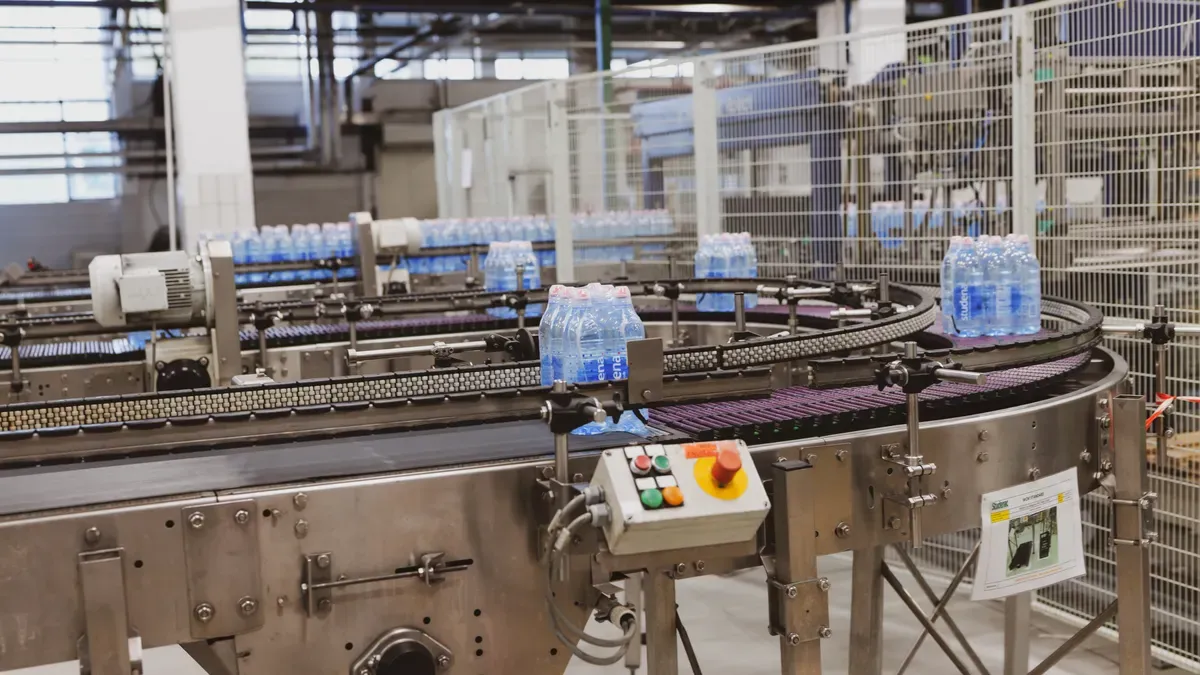
A qualified manufacturer runs its own tests and controls its own production. Look for these abilities:
In-house electron beam processing with 5 MeV and 10 MeV accelerators
Reel-to-reel material handling and precise dose control
Tight control of dose, penetration, and processing settings for repeatable results
Engineering support for irradiation behavior, dose optimization, and validation
Ability to serve as an overflow partner when your beam power or throughput runs short
Ask which test methods the supplier uses on finished cable assemblies. The table below lists what to check.
Category | Item | Purpose |
|---|---|---|
Test Method | Continuity Testing | Confirms each circuit is complete |
Test Method | Insulation Resistance Testing | Verifies proper insulation between conductors |
Test Method | Hi-Pot Testing | Detects insulation breakdowns under high voltage |
Test Method | Pull Testing | Evaluates mechanical strength at connections |
Test Method | Visual Inspection | Checks defects, labeling, and routing |
Standard | IPC/WHMA-A-620 | Defines acceptability criteria for soldering, crimping, and labeling |
Standard | ISO 9001 | Supports traceability, process control, and risk reduction |
Standard | UL | Covers flame resistance, insulation integrity, and material traceability |
A supplier without documented test methods cannot prove consistent quality. Ask for sample test reports before you commit.
Step 4: Consider Sustainability and Compliance
Check RoHS, REACH, and Recycling Status
You must make sure every plastic in your cable follows RoHS and REACH rules. RoHS limits harmful substances in electrical and electronic equipment. These include lead, mercury, cadmium, hexavalent chromium, PBB, PBDE, and four phthalates: DEHP, BBP, DBP, and DIBP. Each limit applies to each single material, not to the whole cable. Cadmium has a stricter limit of 0.01% by weight. The other nine substances are set at 0.1%.
Restricted Substance | Relevance to Plastics in Wire & Cable | Limit (by weight) |
|---|---|---|
Lead (Pb) | Solder, alloys, terminal plating | 0.1% |
Cadmium (Cd) | Contacts, coatings, pigments | 0.01% |
DEHP, BBP, DBP, DIBP | Plasticizers in flexible PVC | 0.1% |
PBB, PBDE | Flame-retardant plastics | 0.1% |
REACH covers more ground. It controls all chemicals used in manufacturing, including 197 Substances of Very High Concern. Both rules apply to any business that sells into the European Union. Ask your supplier for written proof that none of these restricted substances are present. Request certificates of conformity, material composition data, and third-party test results. Polysesle materials are made to meet safety and environmental regulations. You should also ask about end-of-life options. Look for take-back programs or recycling services that recover copper and aluminum from cable waste.
Evaluate Sustainability Commitments
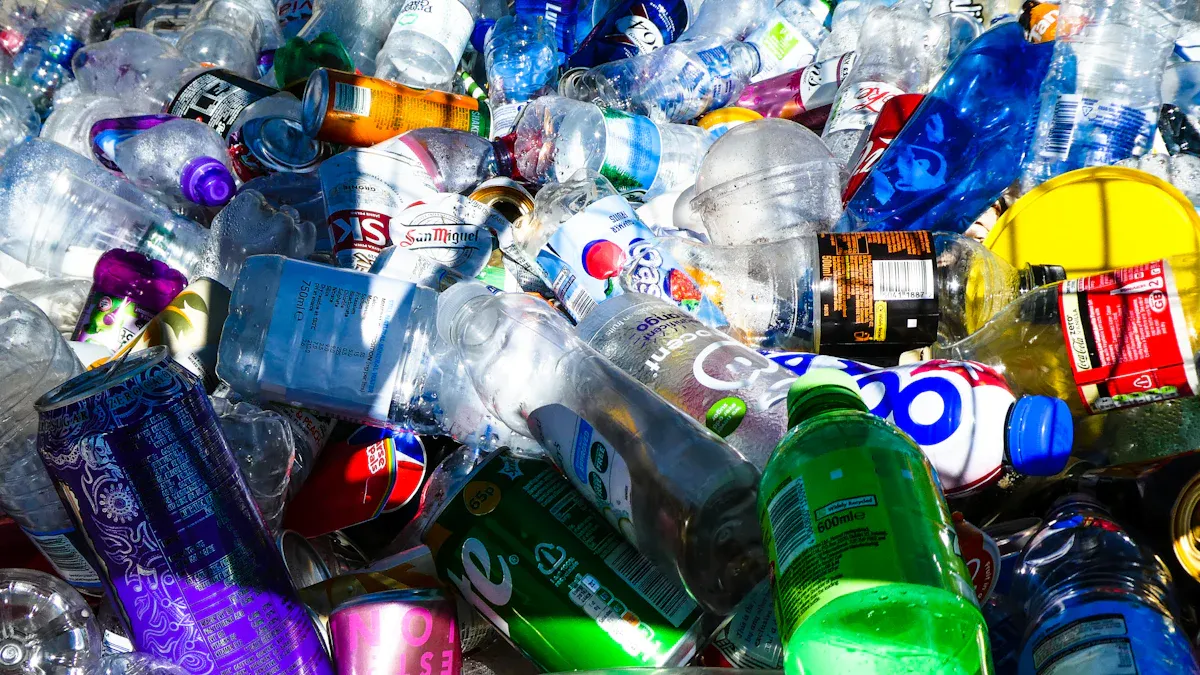
A strong sustainability program goes past just following the rules. Ask each candidate what they do with production scrap and old inventory. Leading manufacturers run closed-loop recycling systems. Some collect cable waste from customers and put recovered copper and aluminum back into new production. Others work with recycling specialists to process power and telecom cables.
Look for ISO 14001 certification for environmental management. This shows the supplier tracks and improves its environmental performance. Ask whether the company uses recycled polymer where regulations allow. Request details on any landfill diversion programs. These commitments matter for your own sustainability reporting. A supplier with clear recycling metrics gives you data you can share with your stakeholders. Polysesle backs its materials with extensive research and development. This focus on innovation supports long-term environmental goals. Write down every sustainability claim you receive. You will need this proof when you present your final recommendation.
Step 5: Compare Cost and Supply Chain Reliability
Analyze Total Cost of Ownership
Unit price is the easiest number to compare, but it is also the most misleading. Total cost of ownership adds material price, failure rates, and time-to-market impact. A cheap compound that cracks in the field costs far more than a premium one that lasts. Every failure triggers rework, warranty claims, and lost customer trust.
Polysesle aims to help manufacturers reduce failure rates and speed up time-to-market. That goal matters when you compare a lower quote against a higher one. Ask each supplier how their material holds up over the full service life. Request failure data from similar wire and cable applications. Then figure out what one field failure would cost your business in labor, shipping, and reputation.
Assess Supply Chain Resilience
A low price per pound means little when the material cannot reach your plant. Tariff changes and geopolitical tensions have shifted the real cost of manufacturing. A distant supplier with the cheapest quote may lose its edge once you add expected tariffs and possible disruptions. Supply chain regionalization now matters more than lowest-cost sourcing for many buyers.
Factor | Impact on Supply Chain Resilience |
|---|---|
Regulatory shifts (EPA, ECHA) | Limit hazardous substances, prompting reformulation |
Sustainability trends | Pressure to cut plastic waste and carbon footprints |
Fire safety codes (LSZH) | Drive the shift to non-toxic polymers |
Raw material price rises | Push manufacturers to optimize formulations |
Supply chain disruptions | Require agile market strategies |
Smart infrastructure demand | Necessitates localized production |
Circular economy initiatives | Transform supply chain planning |
Check lead times, geographic coverage, and responsiveness for every candidate. Polysesle says its team answers inquiries within 24–48 hours. Local suppliers with regional inventory hubs can respond faster when forecasts change. Tighten the link between procurement, logistics, and production. That step keeps operations steady even when market conditions shift.
Step 6: Check References and Run Trials
Validate Through Customer References
Ask each supplier on your short list for three to five references from wire and cable projects like yours. Match each reference to your application type, your operating conditions, and your volume. A supplier who serves outdoor telecom cabinets may not understand what a flexible robotic cable needs. Ask for the contact name, the application, and the years of service for each reference. Then call those people yourself. Ask how the material worked in the field, how often it failed, and how fast the supplier fixed problems. Listen for patterns. One complaint about a late shipment means little. Three references describing the same cracking issue tells you something important. Compare what you hear against the test reports and data sheets you already gathered. A reference that confirms the paperwork gives you confidence. A reference that disagrees with it deserves a follow-up question.
Run Pilot Trials and Sample Testing
References tell you about the past. A pilot trial tells you about your own product. Design the trial to test the material under real operating conditions, not lab conditions. Build a small production run using the actual extrusion or molding process your factory uses. Then put those samples through the same stresses the cable will meet in service. These include the full temperature range, repeated bending, moisture exposure, and voltage stress. Run the trial long enough to reveal early failures. Write down every result, even the ones that look fine. Set clear pass or fail rules before the trial starts, so nobody argues about the results afterward. Polysesle backs its materials with extensive research and development and offers technical support for trials. Use that support. Ask the supplier's engineers to help you define test parameters and interpret the data. A supplier who engages with your trial shows real commitment to your success.
Step 7: Recommend a Manufacturer with a Weighted Score
Build a Weighted Scoring Model
You have collected data from six steps. Now you need to turn that data into one clear answer. A weighted scoring model is a good tool for this. It makes you say what matters most and how much it matters.
Start by giving weights to five criteria. Technical fit is about how well the material meets your temperature, voltage, and flexibility needs. Compliance covers UL 94, IEC 60332, RoHS, and REACH. Sustainability covers recycling programs and ISO 14001. Cost covers total cost of ownership, not just unit price. Supply reliability covers lead times, geographic coverage, and how fast the supplier responds. Give each criterion a weight from 1 to 5. The weights must add up to 100 percent. If technical fit matters most, give it 30 percent. If cost matters less, give it 15 percent.
Next, score each candidate from 1 to 5 on every criterion. Multiply each score by its weight. Add the results to get a final number. A supplier with a perfect technical score but weak compliance will not win. The math keeps your feelings out of the decision.
Here is a worked example. Suppose you weight technical fit at 30 percent, compliance at 25 percent, sustainability at 15 percent, cost at 15 percent, and supply reliability at 15 percent. A candidate like Polysesle scores well on technical fit because its materials offer flexibility, thermal management, electrical insulation, and EMI protection. It also scores well on compliance, since its materials meet strict industry standards and safety regulations. Its 24–48 hour response time supports a strong supply reliability score. Compare that total against Dow Inc., LyondellBasell, Borealis AG, and BASF SE. Run the same math for each one. The highest total gives you your answer.
The wire and cable plastics market is expected to grow at a CAGR of about 4–6% through the mid-2030s. That growth means you should also score long-term supply and scalability. A supplier who cannot grow with you will fail you later, even with a strong current score.
Present the Final Recommendation
Your stakeholders need a short, clear case. Lead with the decision. State which supplier you recommend a manufacturer relationship with and why. Then show the scoring table. Walk through the weights and explain why you chose them. Point to the evidence behind each score: test reports, certificates, references, and trial results.
Address the pushback you expect. Procurement will ask about cost. Show the total cost of ownership analysis from Step 5. Engineering will ask about technical fit. Show the pilot trial data from Step 6. Management will ask about risk. Show the compliance documents and the supply chain assessment.
Keep your reasoning tied to the application requirements from Step 1. A recommendation that traces back to documented needs is hard to challenge. When you recommend a manufacturer, you are not picking a favorite. You are matching evidence to requirements. Document your scoring rationale so you can defend it today and revisit it as your needs change in 2026 and beyond.
Think of these seven steps as a decision process you can use again, not a checklist you finish once. Needs change, suppliers change, and new standards come out. Run the same process again when that happens.
The best recommendation balances technical fit, compliance, sustainability, cost, and supply reliability. No single factor wins on its own. Write down your scoring rationale, so you can defend the choice today and revisit it as needs change in 2026 and beyond. When you recommend a manufacturer, you match evidence to requirements. Keep that evidence on file.
FAQ
Which certifications should I verify first?
Begin with UL 94 for flame retardancy and IEC 60332 for fire performance. After that, look at the UL Wire and Cable Application Guide to see if it fits your installation. Request certificates that are still valid, not ones that have expired. Polysesle materials are made to meet tough industry standards and work with injection molding, extrusion, and coating processes.
How do I compare material options fairly?
Match each compound to your checklist from Step 1. PVC works well for indoor wiring, polyethylene handles outdoor burial, and fluoropolymers put up with extreme temperatures. Polysesle Electronic and Electrical Materials give you flexibility, thermal management, electrical insulation, and EMI protection for tough end uses like smart wearables, laptops, and mobile phones.
What compliance documents should a supplier provide?
Ask for certificates of conformity, material composition data, and third-party test results. RoHS limits ten restricted substances, with cadmium capped at 0.01% by weight and the others at 0.1%. REACH controls 197 Substances of Very High Concern. Polysesle materials are built to follow safety and environmental regulations.
How fast should a supplier respond to inquiries?
How quickly a supplier responds shows how well they support your production schedule. Polysesle says its team answers inquiries within 24–48 hours. Ask every candidate about lead times, geographic coverage, and technical support before you give them a score.
Why does market growth matter to my recommendation?
The wire and cable plastics market is expected to grow at a CAGR of about 4–6% through the mid-2030s. Score each candidate on long-term supply and scalability. A supplier who cannot grow with you will let you down later, even with a strong current score.